Best Flux for SMD Soldering: 9 Picks in 2026

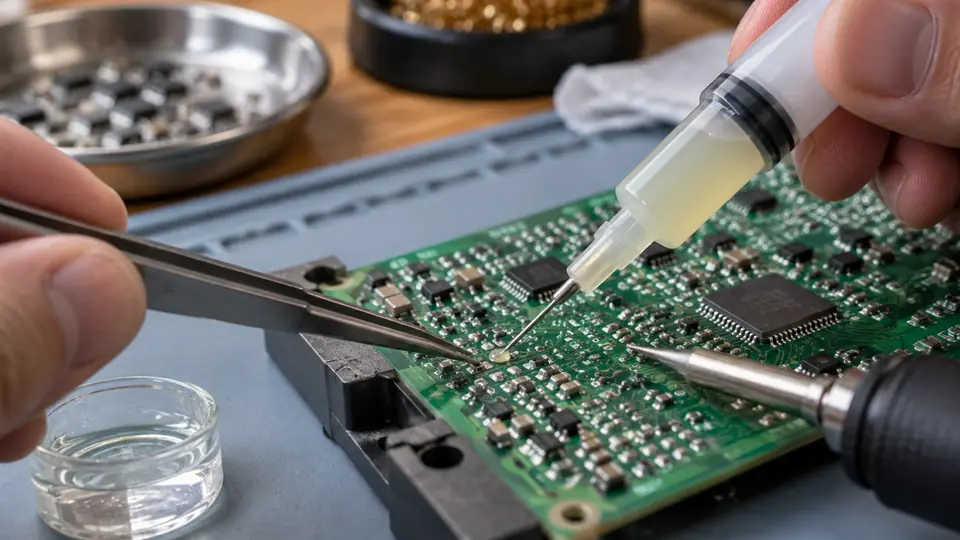
Small SMD pads can turn a routine repair into a sticky, smoky battle when solder refuses to wet the surface. The right flux helps remove oxidation, improves solder flow, and keeps tiny joints from becoming blobs or cold connections. For this job, the useful choices are electronics-specific rosin, RMA, RA, or no-clean formulas in liquid, paste, or gel form. Plumbing flux belongs elsewhere, and a product that simply says “flux” without identifying its electronics use deserves a closer look.
Application style matters as much as chemistry. Liquid flux spreads across a wider area and suits general PCB work, while paste in a syringe stays put on a small SMD pad. A no-clean label can reduce cleanup, but it does not mean every residue should be ignored in every application. Buyers should also check whether the formula is lead-free, halogen-free, non-corrosive, and suitable for rework. A repair bench handling tiny BGA or phone-board components may benefit from precise syringe control, while a general electronics setup may prefer a larger jar or dropper.
This comparison weighs flux type, placement control, residue claims, stated chemistry, quantity, and usefulness for SMD and SMT work. The BEEYUIHF liquid RMA flux earns the top position for its controlled dropper format and broad electronics compatibility, while the four-syringe paste pack is a stronger fit for repeated precision work.
Quick Answer
Best Overall: BEEYUIHF Liquid Solder Flux Dropper offers a useful balance of liquid application control, RMA rosin chemistry, and SMD compatibility.
Best for Precision Paste Application: No Clean Solder Flux Paste for Electronics Repair comes with four 10cc syringes and fine tips for placing flux on small pads.
Best Premium-Positioned Option: Chipquik CHIP Quik SMD291 is a focused 10cc syringe option specifically labeled for SMD soldering, desoldering, and rework.
Best for Low-Temperature SMD Work: Sn42/Bi58 Lead Free Solder Paste Kit combines flux with a listed low-melting solder paste and desoldering wick for component replacement projects.
Best Flux for SMD Soldering Comparison Table
| Product | Format | Stated Chemistry or Feature | Best For |
|---|---|---|---|
| BEEYUIHF Liquid Solder Flux Dropper | 30 mL liquid | RMA, no-clean, halogen-free | General SMD and PCB work |
| No Clean Solder Flux Paste, 4 Pack | Four 10cc syringes | High-activity rosin, no-clean | Small pads and frequent repairs |
| Liquid Solder Flux Dropper, RMA | 30 mL liquid | RMA, no-clean, neutral pH | Liquid application and rework |
| Essmetuin No Clean Flux Paste | 10cc bottle | High-activity rosin | Controlled hand application |
| Sn42/Bi58 Solder Paste Kit | Flux, solder paste, wick | 138°C listed solder paste | Low-temperature component work |
| BEEYUIHF Rosin Solder Flux | Two jars, 40g total | RMA, ROH0 stated | Jar-based bench work |
| Inventec AMTECH NC-559-V2 | 10cc syringe | No-clean flux | Compact syringe format |
| Chipquik CHIP Quik SMD291 | 10cc syringe | No-clean flux | SMD rework and desoldering |
| SRA Solder 135 Rosin Paste | 2 oz jar | RA, acid-free electronics flux | PCB and wire work |
The detailed reviews below separate fluid droppers, syringe pastes, jar formulas, and combination kits so you can match the flux to the way you actually solder.
1. BEEYUIHF Liquid Solder Flux Dropper — Best Overall
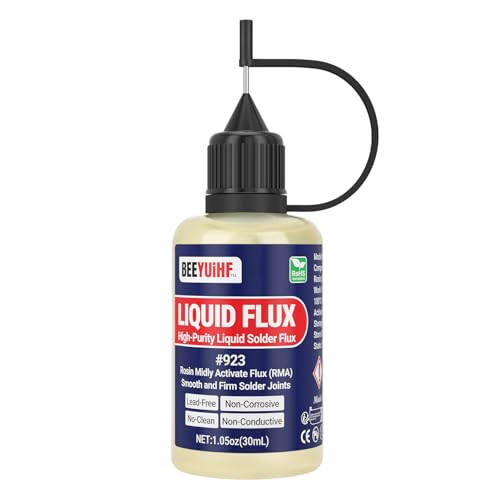
A liquid dropper is a practical choice for SMD work that moves between individual pads, connector pins, and larger PCB areas. The BEEYUIHF listing identifies this #923 formula as RMA rosin flux with a neutral pH and no chloride, halogen, or lead content. Those details matter because the flux is aimed at electronics repair rather than pipe joining, and the liquid can reach oxidation around a small component without forcing a thick mound onto the board.
The 30 mL squeeze bottle includes two tapered tips and a sealing cap. A gentle squeeze should let the user place a small amount before heating, while the tapered options give more control than simply tipping a jar onto a board. The listing describes use with both leaded and lead-free solder, plus soldering, desoldering, rework, and reflow processes. Residue is described as non-conductive once dry, though “no-clean” should still be treated as an application claim rather than a universal ban on post-solder cleaning.
Pros
- RMA rosin formula is identified for electronic soldering.
- Liquid format spreads easily across pads and component leads.
- Includes two tapered tips and a sealing cap.
- Listed as lead-free, halogen-free, chloride-free, and non-corrosive.
- Suitable for SMD, PCB, desoldering, and rework applications.
Cons
- Liquid can spread farther than intended on densely packed boards.
- The listing does not provide a detailed residue-cleaning procedure.
This is the most balanced pick for a bench that handles varied electronics rather than one narrowly defined repair. Choose it for broad coverage and a bottle that is easier to guide than an open jar. A syringe paste may be better for a single microscopic pad where staying in place matters more than spreading, but the dropper is the more flexible everyday format.
To buy this product, click here.
2. No Clean Solder Flux Paste for Electronics Repair — Best for Precision Paste Application

Paste is often easier to keep on a small SMD pad than a thin liquid, and this product leans into that advantage with four 10cc syringes and two fine tips. The listing describes a high-activity rosin formula that helps remove oxidation and improve wetting. For a board repair involving a tight row of pins, that placement control can mean fewer stray pools of flux around neighboring components.
The four-syringe format also changes the storage equation. Instead of repeatedly opening one large container, the user has several smaller units to seal and rotate through. Product information identifies the formula as lead-free, halogen-free, and non-corrosive when used as directed, with up to 12 months of shelf life before use under stated storage conditions. The listing says slight thickening can occur in very cold environments, a small detail that matters if a syringe sits in an unheated workspace.
Pros
- Four separate 10cc syringes provide substantial working quantity.
- Fine tips support controlled placement on small pads.
- Paste stays in place better than a freely spreading liquid.
- Listed as lead-free, halogen-free, and no-clean.
- Suitable for PCB, SMD, SMT, desoldering, and general repairs.
Cons
- Paste may thicken in cold conditions.
- Storage and resealing require care to prevent drying.
This is a strong pick for repeated SMD work, especially where precise placement matters more than covering a broad area. It also makes sense for a shared repair drawer because separate syringes can reduce the need to expose the entire supply. Choose a liquid RMA product instead if you frequently brush flux over larger connector rows or PCB sections.
To buy this product, click here.
3. Liquid Solder Flux Dropper, RMA — Best Liquid Alternative

This 30 mL liquid flux follows a familiar electronics-repair formula: the listing describes advanced RMA rosin, neutral pH, and compatibility with tin-lead, lead-free, gold, silver, and copper alloys. Those claims give it a broad target audience, from refreshing an oxidized copper pad to helping solder wet a small SMD lead. Its liquid consistency is especially useful when the flux needs to flow underneath or around a component during rework.
The product information also describes low volatility, a mild odor, and anti-oxidation use across soldering, desoldering, rework, and reflow. These are listing claims, so they should not be read as independent laboratory results, but they do explain the intended role. The single dropper has enough capacity for regular bench work without the bulk of a large jar, although the supplied information does not clearly identify multiple dispensing tips.
Pros
- 30 mL liquid format suits broad pad and lead coverage.
- RMA rosin chemistry is identified for electronics use.
- Listed for both leaded and lead-free solder alloys.
- Neutral pH and non-corrosive residue claims support PCB applications.
- Suitable for soldering, desoldering, rework, and reflow.
Cons
- The listing does not clearly specify included dispensing-tip options.
- Liquid placement may be less localized than syringe paste.
Pick this option if you prefer liquid flux and want an RMA formula aimed squarely at electronics. It sits below the top pick mainly because the BEEYUIHF bottle gives clearer dispensing details. Buyers working on tiny, crowded boards may prefer paste, while those servicing connectors, wires, and larger pad fields will likely appreciate the fluid spread.
To buy this product, click here.
4. Essmetuin No Clean Soldering Flux Paste — Best Budget Paste

Essmetuin takes the compact paste route with a 10cc container and a push-type dispensing design. The listing says the high-activity rosin helps remove oxide from the soldering surface, while the paste format gives the operator a more deliberate application than a thin dropper. That is useful around SMD pads where one extra bead can bridge neighboring contacts and turn a simple repair into cleanup work.
The formula is listed as lead-free, non-corrosive, and non-conductive in dry conditions. It is also described for PCB, SMD, SMT, phone, appliance, meter, and hand-soldering repairs. The broad application language is useful, but the product information does not provide a detailed activity classification or specific cleaning process. Treat the no-clean claim as a convenience feature, then inspect the board after heating and clean it when the assembly or application calls for it.
Pros
- Push-type design supports measured paste delivery.
- High-activity rosin is intended to help remove surface oxide.
- Listed for SMD, SMT, PCB, phone, and appliance repair.
- Lead-free formula is identified in the product information.
- Dry residue is described as non-conductive.
Cons
- Only 10cc is included.
- The listing gives limited detail about chemistry classification and cleanup.
This makes sense for occasional SMD repairs where a small, inexpensive paste container is preferable to a larger multi-pack. It is also a reasonable drawer item for touch-ups and handwork. Frequent rework sessions may justify the four-syringe pack, while users who want maximum application spread should select a liquid formula.
To buy this product, click here.
5. Sn42/Bi58 Lead Free Solder Paste Kit — Best for Low-Temperature Component Work

This kit is aimed at a specific SMD task rather than routine flux application alone. It combines 10cc of no-clean flux, 30g of Sn42/Bi58 solder paste, and solder wick. The listing gives the solder paste a melting point of 138°C and describes it for small components and boards that cannot withstand higher temperatures. That low-temperature focus can be useful during certain replacement jobs, where limiting heat exposure is part of the repair plan.
The included wick adds a practical rework step after the component is removed or excess solder needs to be cleared. The flux itself is listed as lead-free, halogen-free, non-corrosive, and free-flowing. Since this is a combination kit, it takes up more bench space than a single syringe and the solder paste alloy becomes part of the buying decision. Confirm that the alloy and process suit the board and component before applying heat.
Pros
- Includes flux, solder paste, and desoldering wick.
- Sn42/Bi58 solder paste has a listed 138°C melting point.
- Targeted at small-component and lower-temperature work.
- Flux is listed as lead-free, halogen-free, and non-corrosive.
- Supports component removal and replacement in one kit.
Cons
- The bundled solder alloy may be too specialized for general flux needs.
- The kit includes supporting consumables that some buyers may already own.
Choose this kit for component replacement projects where the specified low-melting solder paste is useful. It is less suitable for someone who simply wants a general-purpose flux syringe and already has preferred solder and wick. The included materials make it convenient for a focused repair, but a dedicated flux product gives more freedom over the solder alloy.
To buy this product, click here.
6. BEEYUIHF Rosin Solder Flux — Best Jar Format

Some repairers prefer a jar because a small brush, probe, or component lead can pick up a controlled amount without handling a syringe. This BEEYUIHF product supplies two jars with 40g listed in the package and uses the #7523 RMA rosin formula. Product information also identifies a ROH0 classification under J-STD-004 and J-STD-004B, along with lead-free, chloride-free, and non-toxic claims.
The listing gives a suggested soldering temperature range of 100 to 400°C. That range describes the stated operating guidance, not a promise that every joint should be heated across it. SMD work still depends on pad size, tip geometry, solder alloy, board thermal mass, and component limits. The jar format and moderate viscosity may suit users who apply flux with a tool, though it is less immediately precise than a fine syringe tip.
Pros
- Two-jar package provides 40g of listed rosin flux.
- RMA #7523 formula is identified for electronics repair.
- Product information states ROH0 classification.
- Moderate viscosity and high tack are listed features.
- Suitable for SMD, BGA, LED, PCB, IC, and CPU work.
Cons
- Jar application is less targeted than a syringe nozzle.
- The listed temperature range does not describe actual joint temperature.
This is a good fit for a bench where flux is applied repeatedly with a dedicated tool and quantity matters. It can also suit BGA or larger rework jobs where a slightly tackier rosin helps hold material in place. For one tiny pad under a microscope, syringe paste remains easier to meter with less chance of touching nearby contacts.
To buy this product, click here.
7. Inventec AMTECH NC-559-V2 — Best Compact Specialized Syringe

The AMTECH NC-559-V2 listing is brief, but it identifies a familiar compact format: a 10cc syringe of no-clean flux. That makes it appealing for a repair drawer or a workstation where a small amount of paste needs to stay close to the iron, hot-air tool, or inspection setup. The syringe format is naturally better suited to targeted placement than an open liquid bottle, although the available product information does not describe the included nozzle, activity classification, or residue behavior in detail.
Its narrow product focus can be a benefit for someone who already knows the consistency and application style they want. It is less informative for a first-time buyer comparing chemistry, cleaning requirements, or included accessories. Since the listing does not provide broader technical specifications, treat the model name and no-clean designation as the supported basis for evaluation rather than assuming a particular reflow profile or compatibility with every SMD process.
Pros
- Compact 10cc syringe format suits targeted application.
- Listed as a no-clean flux.
- Easy to store in a small electronics repair kit.
- Product name specifically identifies the NC-559-V2 formulation.
- Suitable in format for controlled SMD rework application.
Cons
- The listing provides very limited chemistry and performance detail.
- Included nozzle and accessory information is not clearly stated.
This option is best for a buyer who already has a preferred process and wants a compact no-clean syringe rather than a broad kit. It ranks below the more fully described formulas because chemistry, tip details, and cleanup guidance matter on delicate boards. Check the current listing carefully before ordering if the dispensing nozzle or residue profile is central to your setup.
To buy this product, click here.
8. Chipquik CHIP Quik SMD291 — Best for SMD Rework

Chipquik’s product information keeps the focus tight: SMD291 no-clean flux in a 10cc syringe, supplied with a plunger and nozzle. It is listed for soldering, desoldering, and rework, which maps directly to the moments where flux earns its place on a repair bench. A syringe is helpful when a repair involves one or two fine pads and the operator wants the paste near the joint rather than spread over an entire board.
The trade-off is limited published detail. The listing does not identify the flux chemistry, halogen status, activity level, residue behavior, or storage guidance. That does not make the product unsuitable, but it leaves more unanswered questions than the higher-ranked formulas. Buyers who already recognize the SMD291 designation may value the concise, purpose-specific format, while those comparing chemistry should favor a product with clearer specifications.
Pros
- Product is specifically identified as SMD291 no-clean flux.
- 10cc syringe supports localized application.
- Plunger and nozzle are listed as included.
- Suitable for soldering, desoldering, and rework.
- Compact format fits a focused repair setup.
Cons
- The listing does not state detailed flux chemistry or activity classification.
- Residue and cleaning guidance are not clearly supplied.
Choose this product if the SMD291 formulation is already part of your preferred workflow and the simple syringe format suits your repairs. It is less compelling as a blind purchase for someone comparing no-clean behavior from scratch. The clear SMD and rework labeling helps, but the sparse technical description keeps it behind products with more decision-useful information.
To buy this product, click here.
9. SRA Solder 135 Rosin Paste — Best for Larger Bench Quantity
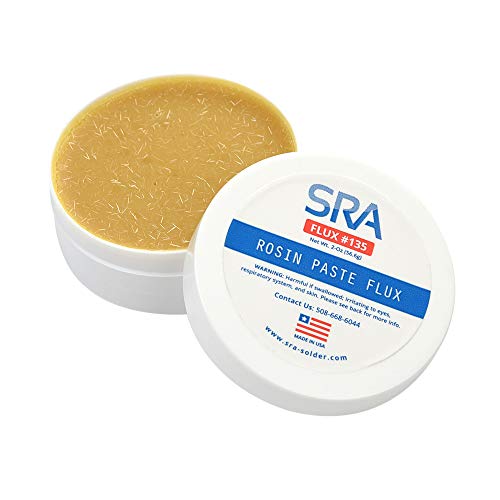
SRA 135 uses a semi-solid paste or wax consistency in a 2 oz jar, giving the user a different application feel from liquid droppers and syringe gels. The listing identifies it as type RA rosin flux with an active temperature range of 93 to 315°C and describes it for circuit boards, copper wire, and leaded or lead-free solder. That broader work range makes it useful for a bench that handles SMD repairs alongside wires, connectors, and general electronics projects.
The jar quantity is generous for a buyer who dislikes replacing small syringes, and the semi-solid texture can make it easier to pick up a controlled dab with a tool. RA is a more active classification than RMA, so the application should match the board, residue expectations, and cleaning practice. The listing calls the product acid-free and suitable for electronics, but the active range should not be treated as a guarantee of actual component or joint temperature.
Pros
- 2 oz jar supplies more paste than the small syringe options.
- RA rosin flux classification is identified.
- Listed for leaded and lead-free solder.
- Semi-solid consistency supports controlled dabbing.
- Suitable for PCBs, copper wire, and varied electronics projects.
Cons
- RA chemistry may require more application-specific residue judgment than a mild RMA formula.
- Jar application is less convenient for extremely fine pad placement.
This is a sensible selection for a general electronics bench that uses flux regularly and wants a larger jar. It may be excessive for occasional micro-repairs, where a 10cc syringe is easier to store and direct. Pick it over the smaller options when quantity and broad PCB or wire use matter more than the narrowest dispensing control.
To buy this product, click here.
Buying Guide: Choosing Flux for SMD Soldering
Match the Flux Format to the Pad Size
Liquid flux is useful when it needs to spread across a connector row, oxidized lead, or several nearby pads. Paste and gel are easier to localize, which is valuable around fine-pitch SMD components. A tapered bottle tip can still work well for controlled placement, but a syringe usually gives a more stationary bead. The right format depends on whether coverage or precise placement is the bigger challenge.
Understand R, RMA, and RA Labels
RMA means rosin mildly activated, while RA identifies rosin activated flux. The products above include RMA and RA examples, along with no-clean descriptions. Activity level affects how a product is intended to deal with oxidation and how carefully residue should be evaluated afterward. Do not treat every rosin formula as interchangeable, and do not assume a no-clean label means the board never needs inspection or cleaning.
No-Clean Does Not Mean No Inspection
No-clean flux is intended to leave residue that often requires less post-solder cleanup, but the correct process depends on the board, flux amount, soldering heat, and application. A large puddle can leave more visible residue than a tiny dab. After finishing an SMD repair, inspect the area under good lighting and follow the product instructions for cleaning, especially on sensitive or densely populated assemblies.
Lead-Free and Halogen-Free Are Separate Details
Lead-free describes the flux product or, separately, the solder alloy, while halogen-free describes a different formulation characteristic. Several products here list both, but those terms should not be blended together. If the solder itself is lead-free, it still has its own melting behavior and heat requirements. Flux chemistry should support the job, but it does not remove the need to set up the iron or rework tool appropriately.
Application Control Can Prevent Bridges
Excess flux can make a repair messy, while too little may leave oxidation interfering with wetting. Fine syringe tips, tapered bottle tips, and semi-solid jars each offer a different way to meter the amount. For a 0.5 mm pitch component, a small bead placed directly beside the leads is usually easier to manage than coating the entire board. The dispensing tool becomes part of the flux decision, not an afterthought.
Check the Included Quantity and Accessories
A 10cc syringe may be convenient for a compact kit, while a 30 mL bottle or 2 oz jar can make more sense for frequent bench use. Combination products may include solder paste or wick, but those extras also commit you to a particular alloy or rework method. Confirm whether nozzles, tapered tips, caps, and plungers are included rather than assuming they come with every syringe or jar.
Use Flux With Appropriate Bench Safety
Flux fumes and heated residue still call for sensible ventilation and fume control. Keep the work area suitable for hot tools, avoid touching heated flux or solder, and follow handling guidance for the solder alloy in use. A no-clean formula does not replace ventilation, eye protection, careful heat management, or proper board-cleaning practices.
Best Flux for SMD Soldering FAQ
What type of flux is best for SMD soldering?
RMA rosin and no-clean paste are strong starting points for many SMD repairs because they are available in controlled syringe or liquid formats and are commonly presented for electronics work. The best choice depends on pad density, oxidation, residue expectations, and whether you need liquid spread or paste placement. Avoid using plumbing flux on circuit boards.
Is liquid or paste flux better for small SMD components?
Paste usually stays closer to a small pad, making it easier to avoid flooding nearby components. Liquid flux spreads more readily and can be useful for connector rows, broad PCB areas, or desoldering. A fine tapered bottle tip can improve liquid control, but a syringe is usually the more localized format.
Does no-clean flux really need to be cleaned?
No-clean flux is intended to reduce or sometimes eliminate routine cleanup, but the residue should still be inspected. Excess application, visible deposits, board sensitivity, and the requirements of the finished assembly can change the decision. Follow the specific product directions and use an appropriate electronics cleaning process when cleanup is needed.
Can I use flux with lead-free solder?
Yes, several products in this roundup are listed for lead-free solder or lead-free electronics use. Flux supports wetting and oxide removal, but it does not determine the solder’s melting behavior. Lead-free solder may require different heat management than leaded solder, so match the iron or rework settings to the solder and the components.
Is higher-activity flux always better?
No. Higher activity can be useful against stubborn oxidation, but the flux type must suit the board, residue requirements, and cleaning process. An RMA formula may be a better everyday choice for general electronics, while an RA product may suit a different task. Use the least aggressive formula that reliably supports the joint and follow its instructions.
How much flux should I apply to an SMD joint?
Start with a small amount placed directly at the pad or component lead. Add more only if solder does not wet or move as expected. A syringe paste should form a small bead rather than cover the entire component, while liquid flux may require only a drop or light coating. Excess flux can increase residue and make inspection less tidy.
Can flux repair a cold solder joint?
Flux can help solder wet an oxidized surface, but it does not fix every cause of a cold joint. Poor heat transfer, contaminated surfaces, insufficient solder, movement during cooling, or an incorrect soldering technique may still be involved. Reheat the joint carefully with suitable solder and flux, then inspect the result for a smooth connection and unwanted bridges.
Final Verdict
The BEEYUIHF Liquid Solder Flux Dropper is the strongest overall choice here because it combines a 30 mL liquid format, stated RMA rosin chemistry, tapered dispensing tips, and broad SMD, PCB, desoldering, and rework use. It suits the mixed workload most electronics benches see, where one repair involves a fine pad and the next involves a connector or larger lead. The four-pack syringe paste is the better alternative for repeated small-pad work, since its high-activity paste stays in place and its fine tips support controlled application.
For a compact established workflow, Chipquik SMD291 offers a focused 10cc no-clean syringe, while the Sn42/Bi58 kit brings a listed 138°C solder paste and wick for lower-temperature component replacement. SRA 135 is the quantity-oriented jar choice, and the BEEYUIHF #7523 jars suit users who prefer RMA rosin with a tackier jar format. Match the flux activity, consistency, quantity, and cleanup expectations to the board in front of you. A tiny SMD repair rewards control more than a large quantity, while a busy general bench may value a bottle or jar that stays ready for the next job.

- Jesse
Jesse is the editor behind Soldering Gear, where he covers soldering irons, stations, rework equipment, and the tools that belong on a practical electronics bench. His work focuses on comparing product specifications, features, compatibility, and intended uses so readers can make more informed buying decisions.
- Best Soldering Iron for Microsoldering: 9 Picks in 2026 November 10, 2026
- Best Soldering Station for PCB Repair: 9 Picks in 2026 November 9, 2026
- How to Desolder Electronics November 8, 2026
- Best Hot Air Rework Station for PCB Repair: 9 Picks in 2026 November 7, 2026
- Soldering Iron Tip Shapes Explained November 6, 2026