Best Solder Paste for SMD: 9 Picks in 2026

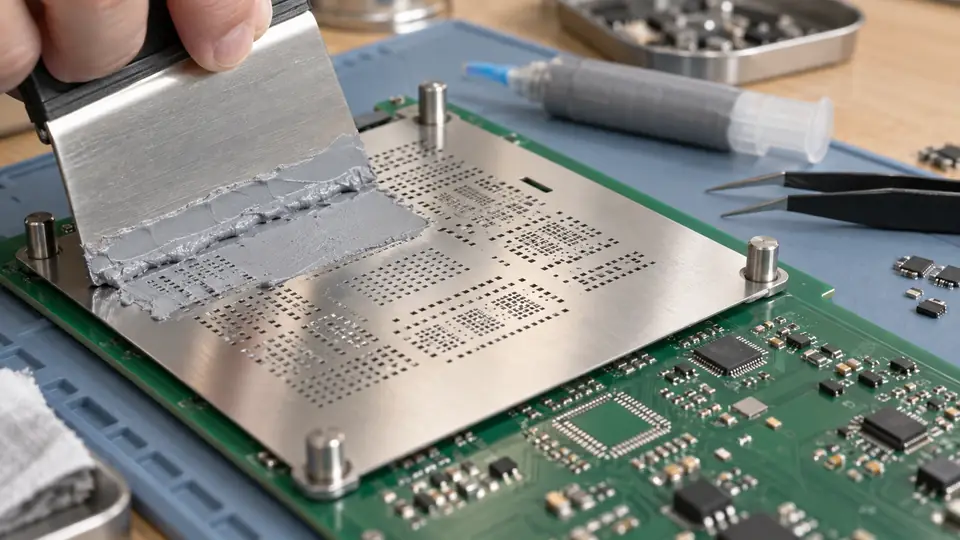
Solder paste for SMD work has to do several jobs at once. It must place cleanly on small pads, hold components in position, melt at a temperature suited to the board, and leave a joint that does not turn into a lumpy gray mess under magnification. The alloy matters, too. A Sn42/Bi58 lead-free paste melts at 138°C, while Sn63/Pb37 paste melts at 183°C, so choosing by package size or “no-clean” wording alone can lead to a poor match for the board and components.
The biggest split in this group is between low-temperature bismuth paste, traditional tin-lead paste, and flux-only products. Low-temperature Sn42/Bi58 formulas can reduce thermal stress on heat-sensitive boards, while Sn63/Pb37 offers a familiar eutectic alloy for SMD, BGA, and general electronics work. Flux paste can help solder flow, but it does not replace solder paste because it contains no solder alloy. Storage, particle size, dispensing control, lead content, and the amount of material included all deserve attention before the syringe cap comes off.
The SoPagre Sn42/Bi58 50g syringe takes the top spot for its combination of low-temperature operation, lead-free composition, SMD focus, and relatively substantial quantity. Buyers who prefer a leaded eutectic alloy may be better served by the SoPagre Sn63/Pb37 paste, while the Wonderway 20g syringe is a sensible compact choice for occasional board repair. The comparison below puts those differences in one place.
Quick Answer
- Best Overall: SoPagre Sn42/Bi58 SMD Welding Paste 50g for lead-free, low-temperature SMD work.
- Best for Traditional Electronics Rework: SoPagre Sn63/Pb37 Solder Paste for its 63/37 alloy and stated 183°C melting point.
- Best Compact Option: Wonderway Sn42/Bi58 T4 Solder Paste 20g for smaller repair jobs and limited storage.
- Best Repair Bundle: Sn42/Bi58 Solder Paste Repair Kit for buyers who also need flux and solder wick for SMD removal.
Best Solder Paste for SMD Comparison Table
| Product | Best For | Alloy or Type | Key Detail |
|---|---|---|---|
| SoPagre Sn42/Bi58 SMD Welding Paste 50g | Overall lead-free SMD use | Sn42/Bi58 | 138°C, 10.5% flux |
| SoPagre Sn63/Pb37 Solder Paste | Leaded SMD and BGA work | Sn63/Pb37 | 183°C, 50g |
| Wonderway Sn42/Bi58 T4 Solder Paste 30g | General lead-free repair | Sn42/Bi58 | 138°C, 30g |
| SoPagre Sn42/Bi58 Low-Temperature Syringe | Small heat-sensitive components | Sn42/Bi58 | 138°C, no-clean |
| Sn63/Pb37 Electronics Solder Paste Kit | Controlled leaded SMD work | Sn63/Pb37 | 183°C, T5 particles |
| Wonderway Sn42/Bi58 T4 Solder Paste 20g | Occasional repairs | Sn42/Bi58 | 138°C, compact quantity |
| Sn42/Bi58 Solder Paste Repair Kit | SMD replacement and removal | Sn42/Bi58 | Paste, flux, and wick |
| Lead-Free Rosin Flux Paste 4-Pack | Adding flux to existing solder | Flux only | Four 10cc syringes |
| Essmetuin No-Clean Flux Paste | Supplemental SMD flux | Flux only | 10cc bottle |
The detailed reviews explain where each formula fits, where it falls short, and which alloy or dispensing format makes the most sense for your board.
1. SoPagre Sn42/Bi58 SMD Welding Paste 50g — Best Overall

The SoPagre 50g syringe is the strongest fit for readers who specifically want lead-free solder paste for SMD work. Its Sn42/Bi58 alloy is listed with a 138°C melting point, substantially below the 183°C figure given for the tin-lead products in this roundup. That lower temperature can be useful around small components or boards where limiting thermal exposure is a priority, although the correct reflow profile still depends on the board, component package, paste placement, and heating method.
The listing also identifies 10.5% flux content, a no-clean formulation, strong viscosity, and a push-type syringe intended to help the paste flow smoothly. A 50g quantity makes this more suitable for repeated repair sessions than a small syringe that may sit nearly empty after a few boards. The product information names phones, SMD and BGA boards, connectors, sensors, and general electronics among its applications, so it covers the kind of compact repair work where controlled application matters most.
Pros
- Lead-free Sn42/Bi58 alloy is suited to low-temperature SMD work.
- Published melting point is 138°C.
- 50g quantity supports repeated board repair sessions.
- 10.5% flux content and no-clean formulation are clearly identified.
- Push-type syringe supports controlled paste placement.
Cons
- The listing does not clearly specify storage conditions or shelf life.
- The low-temperature bismuth alloy may not suit buyers who specifically require Sn63/Pb37 solder.
This is the best starting point for a lead-free SMD setup that needs a lower melting point and a larger working quantity. It is less suitable for a buyer whose process is already built around a different alloy or who needs documented particle size, stencil-printing data, or a detailed reflow profile. Confirm the current listing and handling instructions before ordering, then match the paste to your board and heating process.
To buy this product, click here.
2. SoPagre Sn63/Pb37 Solder Paste — Best for Leaded SMD Work

For a repair bench that uses traditional tin-lead solder, the SoPagre Sn63/Pb37 paste is a more direct match than the lead-free alternatives. The 63% tin and 37% lead eutectic alloy is listed with a 183°C melting point, and the product information specifically calls out SMD, BGA, circuit boards, connectors, sensors, and phone work. That gives the paste a clear place in rework jobs where the alloy choice has already been decided.
The listing describes the composition as providing strong joints and good wetting, while the 50g can gives plenty of material for more than a single small repair. The lower melting behavior of a eutectic 63/37 alloy is useful because it transitions at a defined temperature rather than passing through a broad plastic range. Still, leaded solder requires careful handling, suitable ventilation, and appropriate hygiene. The no-clean wording does not remove the need to inspect the board or clean residue where the application demands it.
Pros
- Uses a clearly identified Sn63/Pb37 alloy.
- Published melting point is 183°C.
- 50g quantity suits repeated SMD and BGA repair.
- Product information specifically names phones, sensors, connectors, and circuit boards.
- Leaded eutectic formulation is a familiar choice for traditional electronics rework.
Cons
- Contains lead, so handling and cleanup require appropriate precautions.
- The listing does not specify particle size or detailed storage guidance.
Choose this paste over the bismuth formulas when your board process, existing solder, or rework preference calls for Sn63/Pb37. It makes less sense for buyers who need a lead-free workflow or who want the lowest possible melting temperature. A suitable reflow method remains important because the 183°C alloy figure describes melting behavior, not a guaranteed temperature at every pad.
To buy this product, click here.
3. Wonderway Sn42/Bi58 T4 Solder Paste 30g — Best Mid-Size Lead-Free Option

The 30g Wonderway syringe sits in a useful middle ground. A small 20g package can be convenient for a one-off repair, while a multi-pack can be more material than an occasional user wants to store. This version supplies 30g of Sn42/Bi58 paste, with the product information listing 10.5% flux content, a 138°C melting point, strong viscosity, and no-clean performance.
The push-style delivery is aimed at smoother flow and reduced waste, a practical detail when the pads are tiny and a heavy squeeze can spread paste across neighboring contacts. Its stated applications cover circuit boards, ICs, phones, televisions, household appliances, and industrial equipment. Those broad claims do not establish a particular reflow profile or particle classification, but they do show that the paste is positioned for general electronics repair rather than a single specialized assembly process.
Pros
- Lead-free Sn42/Bi58 alloy melts at the listed 138°C point.
- 30g quantity balances occasional and recurring use.
- 10.5% flux content is stated in the product information.
- Push-type packaging can help control application.
- No-clean formulation is convenient for many repair workflows.
Cons
- Storage and shelf-life information is not clearly provided.
- The listing does not identify a detailed particle-size grade.
This version is a sensible pick for a repair drawer that needs more than a small syringe without moving into a four-pack. It offers the same alloy family and melting point as the smaller Wonderway option, so the choice mainly comes down to quantity and project frequency. Buyers running a tightly documented assembly process should seek confirmation of the paste’s storage, stencil, and reflow details before committing.
To buy this product, click here.
4. SoPagre Sn42/Bi58 Low-Temperature Syringe — Best for Small Heat-Sensitive Components

Some SMD jobs feel like threading a needle with a hot tool nearby. In that situation, a lead-free paste with a listed 138°C melting point gives the process a lower-temperature starting point than a 183°C tin-lead formula. This SoPagre syringe uses Sn42/Bi58 alloy and is described for small components, soft boards, phones, BGA and SMD circuit boards, and other electronics maintenance work.
The product information lists 10.5% flux content, no-clean behavior, strong viscosity, and a push-type design. Those details point toward manual placement where the operator wants the paste to stay near the pad rather than run freely across a dense footprint. The listing does not provide particle size or a full storage profile, so it is better treated as a practical repair consumable than as a fully documented production material.
Pros
- Lead-free Sn42/Bi58 composition suits low-temperature applications.
- 138°C melting point is clearly listed.
- Push-type syringe supports targeted application.
- Strong viscosity may help keep paste on small pad areas.
- Product information specifically mentions SMD, BGA, phones, and soft boards.
Cons
- Particle size and detailed reflow information are not specified.
- Quantity details are less prominent than the alloy and application claims.
Pick this option when the low-temperature alloy and syringe format matter more than a detailed manufacturing specification sheet. It is especially relevant to small repair work where a controlled bead is preferable to a larger jar. A buyer who needs repeatable stencil printing should confirm the exact packaging and process data first.
To buy this product, click here.
5. Sn63/Pb37 Electronics Solder Paste Kit — Best for Controlled Leaded Application

This product combines Sn63/Pb37 paste with a separate 10cc no-clean flux container, giving the user more control over how much additional flux is applied during a repair. The paste itself is listed at 30g, with 10.8% flux content and T5 particles measuring 15 to 25 microns. That particle detail is the clearest specification in this roundup for buyers thinking about fine SMD placement.
The 183°C melting point places it alongside the other tin-lead option, but the stated T5 particle range helps distinguish it from listings that identify only the alloy. The push-type design is intended to flow smoothly and reduce waste. Extra flux can be useful for touch-up or rework, though it also means the operator must decide when additional application is appropriate rather than assuming more flux always produces a better joint.
Pros
- Uses a clearly identified Sn63/Pb37 alloy.
- Lists T5 particles at 15 to 25 microns.
- Includes separate 10cc no-clean soldering flux.
- Paste quantity is identified as 30g.
- Push-type packaging supports measured dispensing.
Cons
- Contains lead and requires appropriate handling practices.
- The listing does not provide a complete storage or shelf-life specification.
This is a strong choice for someone who values particle information and wants extra flux available for rework. It ranks below the larger SoPagre Sn63/Pb37 container for buyers who prioritize quantity, but it may be more useful at a bench where occasional flux touch-ups are common. Inspect the board after heating, since no-clean status does not mean every residue should be ignored in every application.
To buy this product, click here.
6. Wonderway Sn42/Bi58 T4 Solder Paste 20g — Best Compact Choice

A 20g syringe makes sense for the occasional board repair, especially when a larger container could sit unused between projects. This Wonderway paste uses the same Sn42/Bi58 lead-free alloy family seen elsewhere in the roundup, with a listed 138°C melting point and 10.5% flux content. The product information also describes no-clean performance and strong viscosity.
The push-style applicator is aimed at smoother flow and less waste, which matters when a small amount of paste must be placed across a fine-pitch footprint. The listing names circuit boards, ICs, phones, televisions, appliances, and industrial equipment as applications. It does not identify a particle-size class or storage period, so its strongest advantage is straightforward compact dispensing rather than detailed process documentation.
Pros
- Compact 20g quantity suits occasional repair work.
- Lead-free Sn42/Bi58 alloy is listed with a 138°C melting point.
- 10.5% flux content is identified.
- No-clean formulation reduces routine residue handling for many jobs.
- Push-type package is intended to reduce application waste.
Cons
- Smaller quantity is less suitable for frequent rework.
- Particle size and shelf-life information are not clearly specified.
This is the practical choice for a drawer, toolbox, or small electronics bench where solder paste is needed now and then. The 30g Wonderway version is a better fit for repeated work, while the SoPagre 50g option gives more material for a busier schedule. Choose the 20g syringe when keeping the package compact matters more than maximizing quantity.
To buy this product, click here.
7. Sn42/Bi58 Solder Paste Repair Kit — Best for SMD Replacement Work

Replacing a small SMD component often creates a second problem after the new part is soldered: removing the old material without spreading heat or leaving a rough pad. This kit addresses that broader repair sequence with Sn42/Bi58 paste, a 10cc no-clean flux, and solder wick. The paste is listed as lead-free with a 138°C melting point, while the flux is described as halogen-free and non-corrosive.
That combination makes the kit more useful for repair benches than a paste-only syringe when desoldering is part of the job. The wick is described as leaving a small amount of residue, but the product information does not identify its width or length. Likewise, the listing gives a 30g paste quantity but does not provide a particle-size classification. It is a convenience-oriented kit, not a substitute for choosing paste based on a documented stencil or reflow process.
Pros
- Includes Sn42/Bi58 lead-free solder paste.
- Paste melting point is listed as 138°C.
- Includes separate 10cc no-clean flux.
- Includes solder wick for SMD and SMT removal work.
- Flux is described as halogen-free and non-corrosive.
Cons
- Wick dimensions and detailed paste particle size are not specified.
- Bundle components may be unnecessary for buyers who only need fresh paste.
Choose this kit if the workbench regularly moves from removal to pad cleanup to component replacement. It gives up the focused simplicity of a single syringe, yet the included wick and flux can save a separate purchase for basic repair work. Buyers who already keep those supplies on hand should choose a paste-only option with the alloy and quantity they prefer.
To buy this product, click here.
8. Lead-Free Rosin Flux Paste 4-Pack — Best Supplemental Flux for SMD Work

This product is flux paste rather than solder paste, so it does not supply the alloy or metal powder needed to form a solder joint by itself. Its relevance is practical for SMD work where a separate solder paste, solder wire, or rework process needs additional flux at a small pad. The listing describes high-activity rosin flux, lead-free and halogen-free construction, no-clean use, and a syringe format with two fine tips.
Four 10cc syringes can be useful for a busy repair drawer, and the paste format is intended to stay where it is placed instead of behaving like a runny liquid. The product information gives a shelf-life claim of up to 12 months before use when stored away from heat and sunlight, and it warns that cold conditions may thicken the paste. Treat those statements as listing information, reseal each syringe after use, and remember that flux selection does not replace choosing a compatible solder alloy.
Pros
- Four 10cc syringes provide multiple containers for repair work.
- Fine tips support placement around small pads and tight gaps.
- Listing identifies high-activity rosin flux.
- Lead-free, halogen-free, and non-corrosive claims are clearly stated.
- Product information describes no-clean use and minimal residue.
Cons
- This is flux paste, not solder paste, so it cannot create a joint without solder.
- Activity classification beyond the listing’s high-activity description is not provided.
This belongs in the comparison for readers who already have solder paste or wire and need controlled supplemental flux for SMD rework. It should not be selected as the primary consumable for stencil printing or paste-based reflow. The four-syringe format is the reason to choose it over a single small flux container, while alloy-specific buyers should stay with one of the solder pastes above.
To buy this product, click here.
9. Essmetuin No-Clean Flux Paste — Best Small Supplemental Flux

Essmetuin is aimed at the moment when solder refuses to wet a small pad cleanly and a little extra flux may help remove surface oxidation. The listing describes high-activity rosin, lead-free composition, no-clean use, and suitability for PCB, SMD, SMT, phone, appliance, and meter repair. It also identifies a push-type design intended to support smoother flow and less waste.
The 10cc bottle keeps the package focused and compact, making it easier to justify for a small repair kit than a four-pack. The product information describes the flux as non-corrosive and non-conductive in dry conditions, but it does not identify a formal flux classification, cleaning chemistry, or detailed storage period. Use it as a supplement alongside suitable solder, not as a replacement for metal-bearing solder paste.
Pros
- High-activity rosin is listed for oxidation removal and wetting support.
- Suitable applications include PCB, SMD, SMT, phone, and appliance repair.
- No-clean formulation is clearly identified.
- Push-type packaging is intended to limit waste.
- Compact 10cc format suits a small repair setup.
Cons
- It is flux only and contains no solder alloy.
- The listing does not clearly identify a formal flux classification or shelf life.
This makes sense beside solder wire or solder paste when a small amount of extra flux is useful during touch-up work. The four-pack above offers more containers, while Essmetuin is the simpler choice for a single compact bottle. Buyers seeking a complete SMD paste should choose one of the alloy-based products instead.
To buy this product, click here.
Buying Guide
Choose the Alloy Before Comparing Package Size
Sn42/Bi58 and Sn63/Pb37 serve different process preferences. The bismuth-based products in this roundup list a 138°C melting point and are lead-free, which can suit work where a lower-temperature alloy is preferred. The tin-lead products list 183°C and are aimed at traditional electronics rework. A larger syringe is not a better choice if its alloy does not match the board, existing solder, or handling requirements.
Low Temperature Does Not Mean No Thermal Planning
A 138°C melting point describes when the alloy melts, not the exact temperature every pad or component experiences. Heat transfer depends on the board, pad size, component mass, tip or heater, and heating method. A low-temperature paste can reduce the required process temperature, but it still deserves controlled heating and careful inspection after reflow.
Particle Information Helps With Fine SMD Work
The Sn63/Pb37 electronics kit is the only product here that clearly lists T5 particles at 15 to 25 microns. That detail gives a better indication of the material’s powder classification than a title that simply says “SMD.” The other products may still suit manual repair, but buyers planning stencil printing or repeatable fine-pitch work should confirm particle size and process guidance before ordering.
Separate Solder Paste From Supplemental Flux
Solder paste contains solder alloy mixed with flux. Flux paste contains the chemical aid that improves wetting, but it does not provide the metal needed to form the joint. The four-pack and Essmetuin products can support touch-up work alongside solder, yet neither should be mistaken for a paste suitable for depositing solder on a bare SMD footprint.
Syringe Control Matters Around Dense Pads
Push-type packaging appears across many of these products because a syringe can place a small bead near the intended footprint. That does not guarantee perfect dosing. Pressure, nozzle size, paste condition, and hand control still affect placement. Apply less than you think you need, especially around fine-pitch contacts where excess material can bridge neighboring pads.
Read No-Clean Claims Carefully
No-clean means the product is marketed for low-residue use, but it does not mean the board should never be inspected or cleaned. Residue can still matter around sensitive circuits, connectors, exposed contacts, or work that must look clean. Follow the product’s handling information and inspect the finished joint under suitable lighting or magnification.
Lead Content Changes the Handling Decision
Sn63/Pb37 paste contains lead, while the Sn42/Bi58 products and the listed flux products are identified as lead-free. Leaded solder can be an appropriate electronics material, but it requires sensible handling, hand hygiene, ventilation, and waste practices. If a lead-free process is required, choose the alloy accordingly rather than relying on the phrase “no clean.”
Best Solder Paste for SMD FAQ
What Is the Best Solder Paste for SMD Work?
The SoPagre Sn42/Bi58 50g syringe is the strongest overall fit in this selection for lead-free, low-temperature SMD work. It lists a 138°C melting point, 10.5% flux content, no-clean behavior, and a larger 50g quantity. The best choice changes if your process requires Sn63/Pb37 or a documented particle classification.
Is Sn42/Bi58 Better Than Sn63/Pb37 for SMD?
Neither alloy is automatically better for every board. Sn42/Bi58 is lead-free and listed at 138°C, while Sn63/Pb37 is leaded and listed at 183°C. Choose based on the required alloy, thermal process, existing solder, handling rules, and component or board requirements.
Can Flux Paste Be Used Instead of Solder Paste?
No. Flux paste helps remove oxidation and improve wetting, but it contains no solder alloy unless the product specifically says otherwise. The lead-free rosin flux and Essmetuin products reviewed here should be paired with solder wire or solder paste rather than used alone.
What Does No-Clean Solder Paste Mean?
No-clean indicates that the formulation is intended to leave relatively low or manageable residue after soldering. It does not guarantee that residue is invisible, harmless in every application, or impossible to clean. Inspect the board and follow the product’s handling guidance, especially around connectors and exposed contacts.
Is Lead-Free Solder Paste Safer Than Leaded Paste?
Lead-free and leaded materials have different handling considerations, but “safer” should not be treated as a complete technical verdict. The Sn63/Pb37 products contain lead and require appropriate hygiene, ventilation, and waste handling. Lead-free products still involve heat and flux fumes, so they also require sensible soldering practices.
How Much Solder Paste Should Be Applied to an SMD Pad?
Use enough paste to form the intended joint without flooding neighboring pads. The correct amount depends on pad geometry, stencil thickness, component pitch, and whether the work is manual or stencil-based. A syringe can help place small amounts, but start conservatively and inspect for bridging after heating.
Does a Lower Melting Point Protect Components?
A lower melting point can reduce the temperature required to liquefy the alloy, but it does not eliminate thermal risk. Heating time, board construction, component size, and the tool or reflow method still matter. Treat the listed 138°C or 183°C value as an alloy property, not a guarantee of component temperature.
Final Verdict
The SoPagre Sn42/Bi58 50g syringe is the strongest overall choice here because it aligns closely with lead-free SMD work, lists a 138°C melting point, provides a substantial quantity, and uses a syringe format suited to controlled application. For traditional leaded electronics work, the SoPagre Sn63/Pb37 paste is the better match, with its clearly stated alloy and 183°C melting point. The Sn63/Pb37 kit is also appealing when its listed T5 particle range and included supplemental flux matter more than maximum quantity.
Smaller projects have good alternatives. The Wonderway 20g syringe keeps the purchase compact, while the Sn42/Bi58 repair kit adds flux and wick for component replacement jobs. The two flux products belong in a different part of the bench because they supplement solder rather than replace it. Match the alloy to your process, treat no-clean claims as a residue-management aid rather than a guarantee, and verify storage and handling details before putting any syringe into regular SMD production.

- Jesse
Jesse is the editor behind Soldering Gear, where he covers soldering irons, stations, rework equipment, and the tools that belong on a practical electronics bench. His work focuses on comparing product specifications, features, compatibility, and intended uses so readers can make more informed buying decisions.
- Best Soldering Iron for SMD: 9 Picks in 2026 October 15, 2026
- Best Hot Air Rework Station for SMD: 9 Picks in 2026 October 14, 2026
- What Tools Do You Need for Soldering Electronics? October 13, 2026
- Best USB-C Soldering Iron: 9 Picks in 2026 October 12, 2026
- How to Choose Solder for Electronics October 11, 2026