Jesse
Jesse is the editor behind Soldering Gear, where he covers soldering irons, stations, rework equipment, and the tools that belong on a practical electronics bench. His work focuses on comparing product specifications, features, compatibility, and intended uses so readers can make more informed buying decisions.
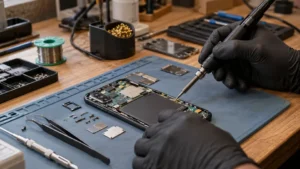
Phone repair puts unusual demands on a soldering iron. The joints are small, nearby components can be heat-sensitive, and a bulky tool can make a simp…
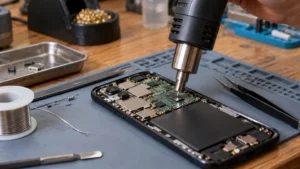
A phone repair bench needs more control than a general-purpose heat gun can provide. Small pads, shielded components, adhesive, connectors, and densel…
A soldering iron may fail to melt solder because the tip is oxidized, the station is set too low, the tip is installed incorrectly, or the iron cannot…
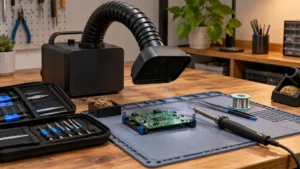
Soldering smoke has a way of drifting straight toward your face, settling over the bench as a sharp chemical haze while you work. A portable solder fu…
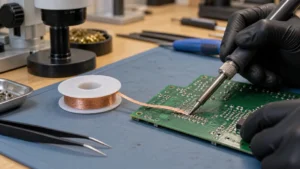
Desoldering wick looks simple on the bench: lay copper braid over a solder joint, press a heated iron on top, and watch the molten solder disappear in…
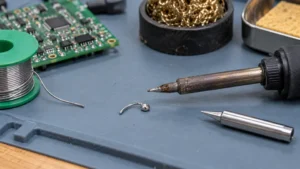
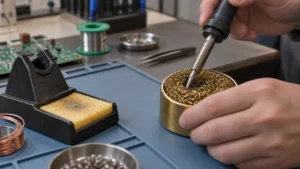
A soldering iron tip transfers heat properly only where solder can wet its surface. If the working area looks dark, rejects molten solder, or makes he…
Lead-free solder is a broad category, and the right spool depends heavily on what sits at the end of your iron. Fine PCB work calls for a narrower wir…
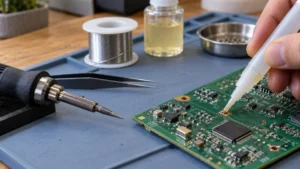
A small bead of flux can decide whether a solder joint turns smooth and shiny or sits stubbornly on the pad like a cold lump. That is why buyers searc…
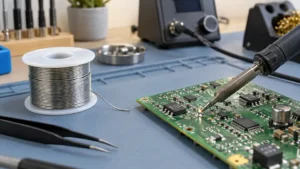
Learning how to solder wires to a circuit board starts with one practical goal: heat the wire conductor and the PCB pad together so solder can wet bot…
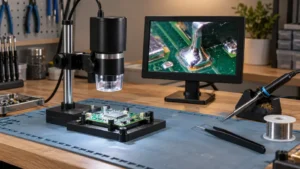
A digital microscope for soldering has to do more than enlarge a circuit board. You need enough working room for a soldering iron and tweezers, a stan…