Jesse
Jesse is the editor behind Soldering Gear, where he covers soldering irons, stations, rework equipment, and the tools that belong on a practical electronics bench. His work focuses on comparing product specifications, features, compatibility, and intended uses so readers can make more informed buying decisions.
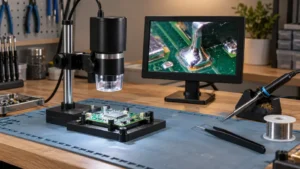
A digital microscope for soldering has to do more than enlarge a circuit board. You need enough working room for a soldering iron and tweezers, a stan…
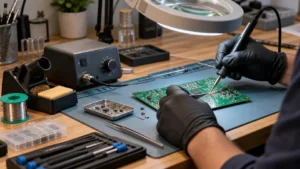
Small SMD parts punish sloppy heat control. A pad lifts, a tiny capacitor skitters away, or a neighboring component suddenly looks suspiciously shiny,…
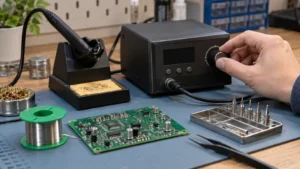
A soldering station gives the operator control over tip temperature while providing a secure stand for the handpiece. Using one effectively requires m…
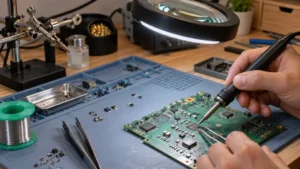
Small SMD joints expose weak soldering tools quickly. A tip that is too broad can bridge neighboring pads, a sluggish heater can make you hold heat on…
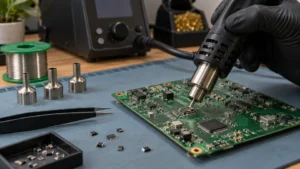
Small SMD parts punish sloppy heat. A nozzle that is too broad can warm neighboring components, while excessive airflow can send a loose resistor skit…
What tools do you need for soldering electronics? A practical basic kit consists of a temperature-controlled soldering iron or station, a compatible t…
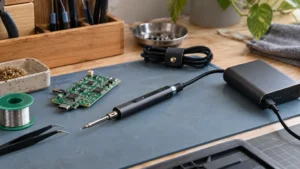
A USB-C soldering iron can turn a bulky bench setup into a tool that travels in a laptop bag, repair kit, or drawer. The appealing part is convenience…
Choose solder by matching four characteristics to the work: alloy, flux chemistry, wire diameter or paste form, and process requirements. For general …
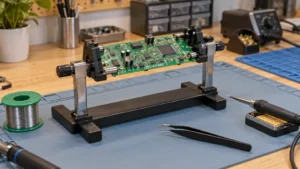
A PCB holder earns its keep the first time a board shifts as a soldering iron touches a joint. A loose circuit board can turn a clean repair into a fr…
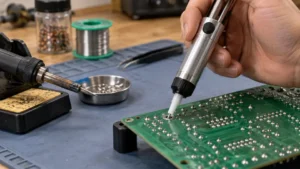
A desoldering pump earns its place beside a soldering iron the moment a component refuses to leave a circuit board cleanly. Heat loosens the joint, th…