Jesse
Jesse is the editor behind Soldering Gear, where he covers soldering irons, stations, rework equipment, and the tools that belong on a practical electronics bench. His work focuses on comparing product specifications, features, compatibility, and intended uses so readers can make more informed buying decisions.
Power cords become surprisingly restrictive once soldering moves away from a dedicated workbench. Repairing a wire inside a vehicle, touching up a PCB…
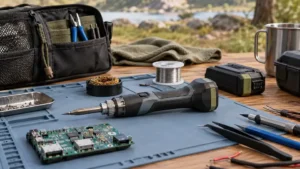
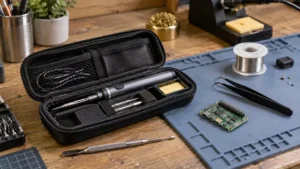
A portable soldering iron earns its place when the workbench is a kitchen table, a tool bag, a garage shelf, or the back of a vehicle. The right model…
For typical hand-soldered electronics, a useful starting region is roughly 315 to 350°C (600 to 660°F) for tin-lead solder and about 340 to 370°C (645…
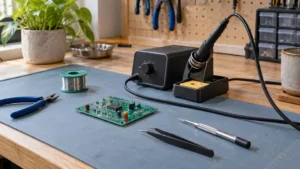
A first soldering setup can feel deceptively simple. Pick a station, set the temperature, touch the tip to the joint, and wait for the shiny little be…
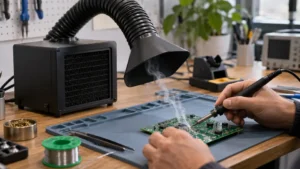
Rosin smoke curls upward fast, often reaching your face before you finish feeding solder into a joint. A good solder fume extractor keeps that plume c…
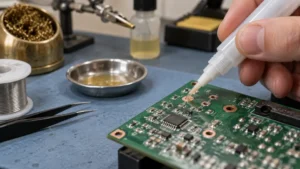
What is flux in soldering? Flux is a chemical preparation that helps molten solder bond to metal surfaces. As the joint is heated, flux removes or dis…
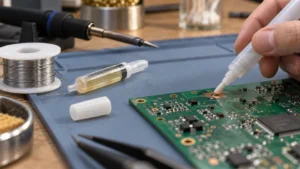
A good soldering flux can turn a stubborn, dull joint into a clean connection that wets smoothly with a light touch of the iron. Buyers usually look f…
A small spool of solder can decide whether an electronics repair feels clean and controlled or turns into a sticky, overheated mess. For PCB work, the…
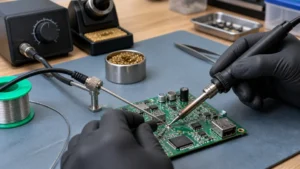
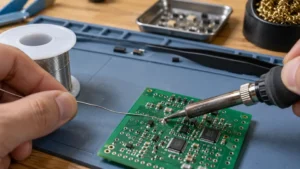
Using a soldering iron successfully depends on transferring heat into the parts being joined, then feeding solder to those heated surfaces. The solder…
A soldering microscope earns its place on an electronics bench when your eyes begin losing the battle against tiny pads, hairline bridges, and crowded…