Best Solder for Electronics: 9 Picks in 2026

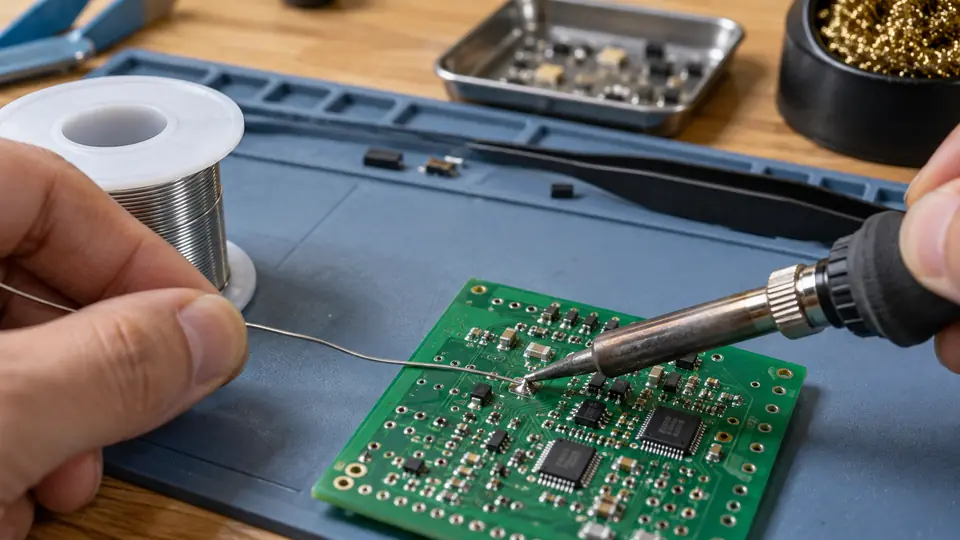
A small spool of solder can decide whether an electronics repair feels clean and controlled or turns into a sticky, overheated mess. For PCB work, the useful choices usually come down to alloy, wire diameter, flux core, melting behavior, and spool size. A thick wire can feed too much material onto a small pad, while an ultra-thin wire may feel slow on larger terminals. The wrong flux or an unsuitable alloy can create extra cleanup and frustrating joints.
The 63/37 tin-lead alloy appears frequently in this category because it melts at about 183°C and transitions quickly from liquid to solid. That can make joint formation easier, although lead-containing solder requires careful handling, hand washing, appropriate ventilation, and compliance with local rules. Diameter matters just as much. The 0.6mm MAIYUM is better suited to fine work, while a 1.0mm wire such as TOWOT feeds more solder into larger connections. For most general electronics benches, the 0.8mm MAIYUM 100g spool offers the most balanced starting point.
These products differ in quantity, wire size, flux formulation, and intended level of precision. The comparison below gives extra weight to PCB suitability and useful control rather than treating a larger spool or a higher marketing claim as automatic proof of better performance.
Quick Answer
Best Overall: MAIYUM 63/37 Rosin Core 0.8mm 100g offers a practical diameter, a 1.8% rosin core, and enough material for regular repairs.
Best for Fine-Pitch Work: Kester 44 63/37 0.020-inch uses a much finer diameter that gives better control around small pads and closely spaced connections.
Best for Precision and Quantity: MAIYUM 63/37 Rosin Core 0.6mm 100g combines a fine wire with a larger 100g quantity.
Best Budget Pick: Twocorn 63/37 0.8mm 50g keeps the familiar alloy and 1.8% flux format in a compact spool.
Best Solder for Electronics Comparison Table
| Product | Best For | Alloy and Flux | Diameter or Format |
|---|---|---|---|
| MAIYUM 63/37 0.8mm 100g | General electronics work | 63/37, 1.8% rosin | 0.8mm spool |
| Kester 44 63/37 | Fine-pitch joints | 63/37, RMA rosin | 0.020-inch tube |
| MAIYUM 63/37 0.6mm 100g | Small pads and SMD work | 63/37, 1.8% rosin | 0.6mm spool |
| TOWOT 63/37 1.0mm | Larger joints and wires | 63/37, 1.8% flux | 1.0mm, 50g |
| HengTianMei 63/37 0.8mm | DIY electronics repair | 63/37, 1.8% rosin | 0.8mm, 50g |
| HGMZZQ 60/40 0.8mm | General-purpose repairs | 60/40, 2.2% flux | 0.8mm, 50g |
| MAIYUM 63/37 0.8mm 50g | Portable repair kits | 63/37, 1.8% rosin | 0.8mm spool |
| Twocorn 63/37 0.8mm | Lower-cost electronics work | 63/37, 1.8% rosin | 0.8mm, 50g |
| MAIYUM 60W Soldering Iron Kit | All-in-one starter setup | Includes 0.6mm solder | 60W kit, 200 to 450°C |
The detailed reviews below explain how each alloy, diameter, quantity, and format changes the buying decision.
1. MAIYUM 63/37 Rosin Core Solder Wire 0.8mm 100g — Best Overall

A 0.8mm wire sits in a useful middle ground for electronics. It is small enough for many through-hole and general PCB joints, yet it does not require the repeated feeding that can make a very fine wire feel tedious on connectors, switches, and larger terminals. This MAIYUM spool uses a 63/37 tin-lead alloy with 1.8% rosin core and a listed melting point of 183°C.
The 100g quantity is the practical advantage here. Someone repairing a few loose wires may prefer a smaller roll, but a bench that sees radios, toys, cables, or circuit boards can burn through small spools surprisingly quickly. The listing describes smooth flow and strong joints, though those results still depend on a clean surface, suitable tip temperature, and proper technique. Lead content also means this is a product for careful handling rather than casual contact.
Pros
- Balanced 0.8mm diameter for many general electronics joints
- 63/37 tin-lead alloy with a listed 183°C melting point
- 1.8% rosin core reduces the need to apply separate flux for routine joints
- 100g quantity suits a regularly used repair bench
- Suitable for circuit boards, cables, radios, toys, and household electronics repairs
Cons
- Contains lead and requires careful handling and hygiene
- 0.8mm is less precise than a fine-pitch 0.5mm or 0.6mm wire
This is the most broadly useful spool in the group because its diameter does not force the buyer toward one narrow job. Choose it for general PCB repair, through-hole assembly, and wire work where a steady feed matters. Pick a finer option for dense SMD pads, or a thicker wire for large metal surfaces that need more material per feed.
To buy this product, click here.
2. Kester 44 Solder Wire 63/37 0.020-inch — Best for Fine-Pitch Work

Fine-pitch soldering rewards restraint. A narrow wire lets the user introduce a smaller amount of material near closely spaced leads, small pads, and delicate connections, and the Kester 44 uses a 0.020-inch diameter for that kind of control. The product information identifies a 63/37 tin-lead alloy and an RMA rosin formulation, placing it firmly in the electronics-soldering lane.
The 3/4-ounce tube is compact, with the listing describing approximately 48 feet of wire. That format is convenient beside a small repair station or in a portable electronics case, though it gives up the bulk quantity offered by the 100g spools. The RMA designation is useful information, but it does not remove the need to decide whether residue should be cleaned for the specific board and application.
Pros
- Very fine 0.020-inch diameter supports controlled solder feeding
- 63/37 alloy suits many traditional electronics repairs
- RMA rosin formulation is identified in the product information
- Compact tube is convenient for a small bench or portable kit
- Listing describes approximately 48 feet of solder wire
Cons
- Small package is less suitable for high-volume soldering
- Fine wire can be slow on large terminals and heavy wire connections
Choose Kester 44 when the joint is small enough that overfeeding is the bigger problem. It makes sense for fine-pitch components and careful rework, while the MAIYUM 0.8mm spools are more efficient for ordinary through-hole and cable repairs. Since the listing identifies lead and rosin chemistry, plan your ventilation, hand cleaning, and residue-management routine before starting.
To buy this product, click here.
3. MAIYUM 63/37 Rosin Core Solder Wire 0.6mm 100g — Best for Precision and Quantity

There is a noticeable practical difference between 0.6mm and 0.8mm wire when the work area becomes crowded. The thinner MAIYUM format allows smaller feeds around compact pads and component leads, while its 100g spool avoids the short supply associated with many precision rolls. It uses the same 63/37 tin-lead alloy and 1.8% flux content listed for the brand’s other electronics wire.
The listed 183°C melting point makes this a traditional low-melting electronics solder, and the rosin core is intended to help the solder wet the joint. A fine wire still cannot compensate for oxidized metal, a dirty tip, or insufficient heat transfer, so the user must prepare the joint properly. Its strength is control, especially for circuit boards, small repair work, and assemblies where a large bead would be awkward.
Pros
- 0.6mm diameter gives finer feed control than 0.8mm wire
- 100g quantity is generous for a precision-oriented spool
- 63/37 tin-lead alloy has a listed 183°C melting point
- 1.8% rosin core supports routine electrical soldering
- Suitable for circuit boards and detailed DIY repair work
Cons
- Thinner wire takes more feeding on large joints
- Contains lead and needs careful handling
This spool is a strong fit for a bench that moves between small PCB pads and ordinary component work. It gives more control than a 1.0mm wire without forcing the buyer into a tiny pocket-sized quantity. If most projects involve thick wire, large connectors, or broad terminals, the 0.8mm or 1.0mm choices will feel quicker.
To buy this product, click here.
4. TOWOT 63/37 Rosin Core Solder Wire 1.0mm — Best for Larger Joints

Large solder joints can make fine wire feel like trying to fill a bucket with an eyedropper. TOWOT takes the opposite approach with a 1.0mm diameter, supplying more solder per length for larger terminals, wires, and conventional through-hole connections. Its listed alloy is 63% tin and 37% lead, with 1.8% flux and a 50g package.
The product information names circuit boards, radios, televisions, and household-appliance repair among its applications. That broad list does not mean the wire is ideal for every pad size. A 1.0mm feed needs more control near dense leads, and the user may prefer a smaller diameter for SMD work. For larger joints, however, the format can reduce the amount of repeated feeding needed to form a complete connection.
Pros
- 1.0mm diameter feeds a substantial amount of solder per pass
- 63/37 alloy has a listed low melting point of 183°C
- 1.8% flux content is identified in the product details
- 50g package is compact for a dedicated larger-joint spool
- Applications include boards, wires, radios, and appliance repair
Cons
- Too coarse for many closely spaced or fine-pitch joints
- Smaller 50g quantity may not suit frequent bench work
Pick TOWOT for wire repairs, larger through-hole connections, and projects where a 0.6mm feed would feel painfully slow. It ranks below the middle-diameter choices for general electronics because precision work demands more restraint. A mixed bench can reasonably keep this beside a fine wire rather than expecting one diameter to handle every connection.
To buy this product, click here.
5. HengTianMei Tin Lead 63/37 Rosin Core 0.8mm — Best for DIY Repair

HengTianMei follows the familiar electronics formula: 63/37 tin-lead alloy, 0.8mm wire, 1.8% flux, and a 50g package. That combination is easy to place in a general repair drawer because it covers many everyday jobs without leaning too far toward fine SMD work or heavy wiring. The listing gives a melting point of 183°C and describes use with circuit boards, motors, radios, televisions, and stereo equipment.
The 0.8mm diameter is the center of its appeal. A loose speaker wire, a through-hole component, and a small connector can all be approached with the same spool, although dense pads still benefit from a finer feed. The package is also small enough to carry between a home workbench and a repair box. The product contains lead, so the compact format should not encourage careless handling or food-area use.
Pros
- 0.8mm diameter suits a broad range of electronics repairs
- 63/37 alloy and 1.8% rosin core are clearly identified
- Listed 183°C melting point supports lower-temperature soldering work
- 50g package is convenient for occasional projects
- Product information names circuit boards, motors, radios, and stereos
Cons
- 50g quantity is smaller than the 100g MAIYUM options
- 0.8mm wire lacks the fine control of 0.6mm or 0.020-inch solder
This is a sensible choice for occasional repair work where a full-size production spool would sit unused. It gives the familiar 63/37 behavior and a middle-width feed without adding unusual application requirements. Frequent users may prefer the MAIYUM 100g format, while fine-pitch work calls for the Kester tube or 0.6mm wire.
To buy this product, click here.
6. HGMZZQ 60/40 Tin Lead Rosin Core 0.8mm — Best 60/40 Option

HGMZZQ gives buyers a different alloy choice without changing the familiar 0.8mm format. The wire is listed as 60% tin and 40% lead, with 2.2% flux and a 50g quantity. That makes it easy to compare with the many 63/37 spools in this group, but the alloy distinction should be treated as a real purchasing factor rather than a label to ignore.
The listing describes even melting, good flow, and use with household appliances, stereos, headsets, toys, and circuit boards. Those are useful application cues, though the product information does not provide independent measurements of joint quality or flow performance. The 0.8mm diameter remains suitable for general work, while the 50g size keeps the spool compact for a modest repair kit.
Pros
- 60/40 tin-lead alloy provides an alternative to 63/37 formulas
- 0.8mm diameter suits general electrical and PCB repairs
- 2.2% flux content is listed clearly
- 50g spool fits a compact repair setup
- Product information names headsets, stereos, toys, and appliances
Cons
- 50g quantity is limited for frequent soldering
- Contains lead and is less specialized for fine-pitch work
HGMZZQ makes sense for a buyer who specifically wants a 60/40 wire in a conventional 0.8mm size. The 63/37 products remain easier to recommend as general picks because they are more consistently represented across the comparison, but this spool can suit repairs where the user already prefers 60/40 solder. Keep alloy consistency in mind when adding material to an existing joint.
To buy this product, click here.
7. MAIYUM 63/37 Rosin Core Solder Wire 0.8mm 50g — Best Compact Spool
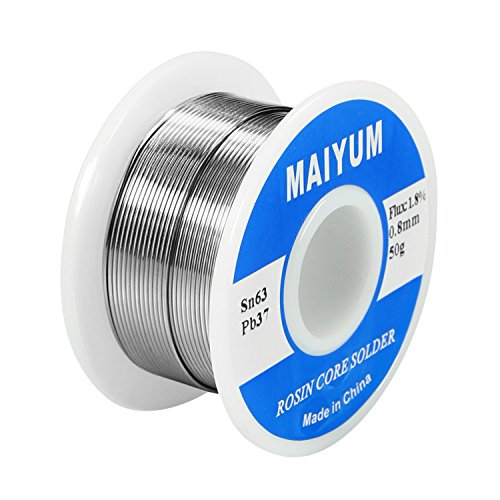
This is the smaller version of the MAIYUM 0.8mm formula, with the same listed 63/37 tin-lead alloy, 1.8% rosin core, and 183°C melting point. The difference is quantity. A 50g spool takes up less room and makes sense for a backup drawer, a portable electronics case, or a user who handles only occasional repairs.
For a quick connector repair at the kitchen table, a school electronics project, or a small radio fix, the compact roll avoids committing to a larger supply. It still uses lead, and the product information lists circuit boards, cables, radios, toys, and other electrical devices as applications. The wire diameter is broad enough for general work but remains less controlled than 0.6mm solder around tightly packed pads.
Pros
- 0.8mm diameter is suitable for many general repairs
- 63/37 tin-lead alloy is clearly identified
- 1.8% rosin core is built into the wire
- 50g format is convenient for occasional or portable work
- Listed melting point is 183°C
Cons
- Smaller quantity offers less value for frequent users
- Lead-containing wire requires careful cleanup and handling
Select this spool when storage space and project frequency matter more than maximum quantity. It is closely related to the 100g MAIYUM pick, so the decision is mainly about how much solder belongs on the bench. A regular repairer should step up to 100g, while a casual user may appreciate the smaller commitment.
To buy this product, click here.
8. Twocorn 63/37 Solder Wire 0.8mm 50g — Best Budget-Oriented Pick
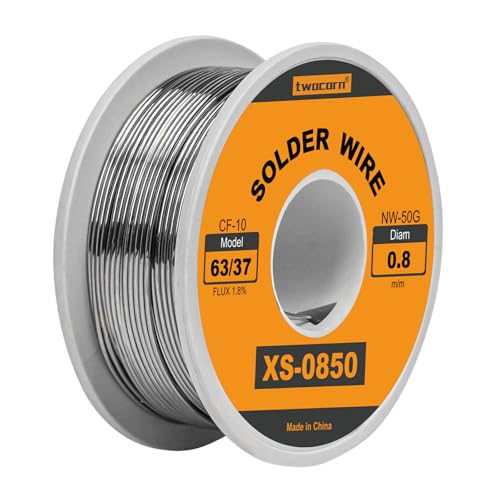
Twocorn uses the same broad recipe many electronics users seek: 63% tin, 37% lead, 0.8mm diameter, and 1.8% rosin flux. The listing describes it as high-purity, no-wash wire for circuit boards, radios, televisions, appliances, and other electronic products. That combination gives the spool a familiar place in a general-purpose repair kit.
The 50g roll is compact and easier to justify for a first electronics project than a large workshop spool. At the same time, no-wash or no-clean language should not be treated as a universal instruction to leave residue untouched. Board cleanliness, flux activity, and the application should guide cleanup decisions. The listing also carries a lead warning, so routine hygiene remains part of using this solder responsibly.
Pros
- 63/37 alloy is suitable for many traditional electronics jobs
- 0.8mm wire offers a practical general-purpose feed size
- 1.8% rosin flux is specified
- Compact 50g package suits occasional work
- Product information lists circuit boards and household electronics
Cons
- 50g quantity is modest for a busy repair bench
- Lead content requires careful handling and disposal practices
Twocorn is a reasonable lower-cost route into conventional electronics soldering if the buyer wants a standard 0.8mm, 63/37 format. It does not offer the fine control of Kester or the larger supply of MAIYUM 100g, but those trade-offs are straightforward. Use it for general repairs rather than dense precision work.
To buy this product, click here.
9. MAIYUM 60W Soldering Iron Kit — Best Starter Bundle With Solder

This product is a complete soldering kit rather than a standalone spool, but it is relevant for someone searching for an electronics soldering setup that includes usable solder from the start. The package lists a 60W, 110V pencil-style iron with adjustable temperatures from 200 to 450°C, five interchangeable tips, a stand, sponge, 0.6mm solder wire, and no-clean rosin flux paste.
That bundle changes the buying decision. A reader who already owns a temperature-controlled iron should choose one of the dedicated solder wires above, while someone starting with an empty workbench may value the included accessories more than spool quantity. The listing describes a ceramic heating core and approximately 15-second heat-up, but that is a product claim rather than an independently measured result. The 110V requirement also matters for the intended electrical setup.
Pros
- Includes 0.6mm solder wire for finer electronics work
- Adjustable temperature range from 200 to 450°C is listed
- Five interchangeable tips are included
- Package includes a stand, sponge, and rosin flux paste
- 60W, 110V pencil iron provides a complete starting setup
Cons
- It is a full kit rather than a dedicated solder-wire purchase
- 110V power requirement may limit use in some electrical environments
This bundle belongs on the shortlist for someone assembling a first electronics bench and needing both the tool and consumables. It is a poor fit for a buyer who wants a large solder spool or a particular professional tip ecosystem. Check the included wire quantity and the local voltage requirements before ordering, then treat the included solder as a starter supply rather than a replacement for a purpose-selected spool.
To buy this product, click here.
Buying Guide
Choose the Alloy Before the Spool Size
The alloy affects how solder behaves as it melts and solidifies. The 63/37 products in this comparison contain 63% tin and 37% lead, with a listed melting point around 183°C. HGMZZQ uses a 60/40 tin-lead formula instead. Neither label automatically makes a joint good. Clean metal, suitable heat, correct tip contact, and steady feeding still matter, but alloy consistency becomes useful when repairing or reworking an existing assembly.
Lead-containing solder also calls for sensible habits. Keep food and drinks away from the bench, wash hands after handling it, avoid creating dust, and use suitable ventilation and fume control. Follow applicable local requirements for storage and disposal.
Match Wire Diameter to the Joint
Diameter changes how quickly solder enters the joint. The 0.6mm MAIYUM and 0.020-inch Kester options suit small pads and fine-pitch connections because they allow smaller feeds. A 0.8mm spool is a useful general size for ordinary PCB and wire work. TOWOT’s 1.0mm wire is more practical for larger terminals, but it can flood a tight cluster of pins quickly.
Many electronics benches benefit from two sizes rather than one supposedly universal wire. Keep a fine spool for precision work and a 0.8mm or 1.0mm spool for larger joints.
Understand Rosin-Core and RMA Terminology
Rosin-core wire contains flux inside the solder, so the user feeds solder and flux together. The listed 1.8% flux content on several products gives a useful comparison, while Kester identifies an RMA rosin formulation and HGMZZQ lists 2.2% flux. Flux helps remove surface oxides and improve wetting, but it does not repair badly contaminated metal.
Terms such as no-wash or no-clean describe intended residue behavior, not a universal cleaning rule. Follow the product directions and judge the board, residue, and application before leaving deposits in place.
Quantity Affects More Than Storage
A 50g spool is compact and sensible for occasional repairs, classroom projects, or a portable kit. A 100g spool is more convenient for a bench that handles repeated jobs because it reduces interruptions and replacement orders. The fine MAIYUM 0.6mm version is unusual in offering a precision diameter with the larger quantity.
Do not choose quantity at the expense of control. A large spool of wire that is too thick for the work can create more frustration than a smaller, better-matched roll.
Check Whether You Need Solder Wire or a Full Kit
The MAIYUM 60W kit includes 0.6mm solder, but its primary product is the iron and accessory bundle. That may be useful for a new bench, yet it is a different purchase from replacing an empty solder spool. Buyers with an existing iron should focus on alloy, diameter, flux, and quantity. New users should also verify voltage, included tips, stand quality, and the exact amount of solder supplied.
Best Solder for Electronics FAQ
What solder alloy is best for electronics?
Several products here use 63/37 tin-lead solder, a traditional electronics alloy with a listed melting point of about 183°C. It is a practical choice for many repairs, but it contains lead and requires careful handling. The correct alloy can also depend on the existing assembly, regulations, and whether the project requires lead-free solder.
Is 0.6mm or 0.8mm solder better for circuit boards?
Neither diameter wins every job. A 0.6mm wire gives more control on small pads, fine-pitch leads, and detailed rework. A 0.8mm wire feeds more material per pass and handles general PCB, through-hole, and wire connections efficiently. If the bench covers several types of work, keeping both sizes can be useful.
Is 1.0mm solder too thick for electronics?
It can be too coarse for dense SMD work, where a small excess of solder can bridge neighboring pads. It remains useful for larger through-hole joints, terminals, and wires. TOWOT’s 1.0mm format is better treated as a specialized larger-joint option than as a universal electronics wire.
Does rosin-core solder need extra flux?
Often, routine joints can be completed with the flux already inside the wire, but extra flux may help with oxidized surfaces or difficult rework. Apply it sparingly and match the flux to electronics use. No-clean or RMA wording does not mean every residue can be ignored in every application.
Is leaded solder safe to use for electronics?
Leaded solder is widely associated with traditional electronics work, but it requires responsible handling. Use appropriate ventilation, avoid eating or drinking at the bench, wash hands after use, and keep the material away from children and pets. Follow local rules for lead-containing products and waste.
Should I buy solder wire or a soldering iron kit?
Buy solder wire when you already have a suitable iron and need the correct alloy or diameter. A kit such as the MAIYUM 60W package makes more sense for a new setup because it includes an iron, tips, stand, sponge, flux, and 0.6mm solder. Check the kit’s voltage and the included solder quantity before ordering.
Final Verdict
The MAIYUM 63/37 0.8mm 100g spool is the strongest overall choice for general electronics work. Its middle-width wire is easier to control than a 1.0mm feed on ordinary boards and less slow than a very fine wire on connectors and through-hole joints. The 63/37 alloy, 1.8% rosin core, and 100g quantity create a balanced package for a regularly used repair bench.
Choose Kester 44 for the finest work, MAIYUM 0.6mm 100g when precision and quantity matter together, and TOWOT 1.0mm for larger joints. Twocorn and the smaller MAIYUM spool suit occasional projects, while the MAIYUM kit is the practical route for someone starting without an iron or accessories. Match the wire to the pad size, confirm the alloy you need, and treat lead handling and flux cleanup as part of the purchase decision.

- Jesse
Jesse is the editor behind Soldering Gear, where he covers soldering irons, stations, rework equipment, and the tools that belong on a practical electronics bench. His work focuses on comparing product specifications, features, compatibility, and intended uses so readers can make more informed buying decisions.
- Best Cordless Soldering Iron: 9 Picks in 2026 September 28, 2026
- Best Portable Soldering Iron: 9 Picks in 2026 September 27, 2026
- What Temperature for Soldering Electronics? September 26, 2026
- Best Soldering Station for Beginners: 9 Picks in 2026 September 25, 2026
- Best Solder Fume Extractor: 9 Picks in 2026 September 24, 2026