Best Desoldering Wick: 9 Picks in 2026

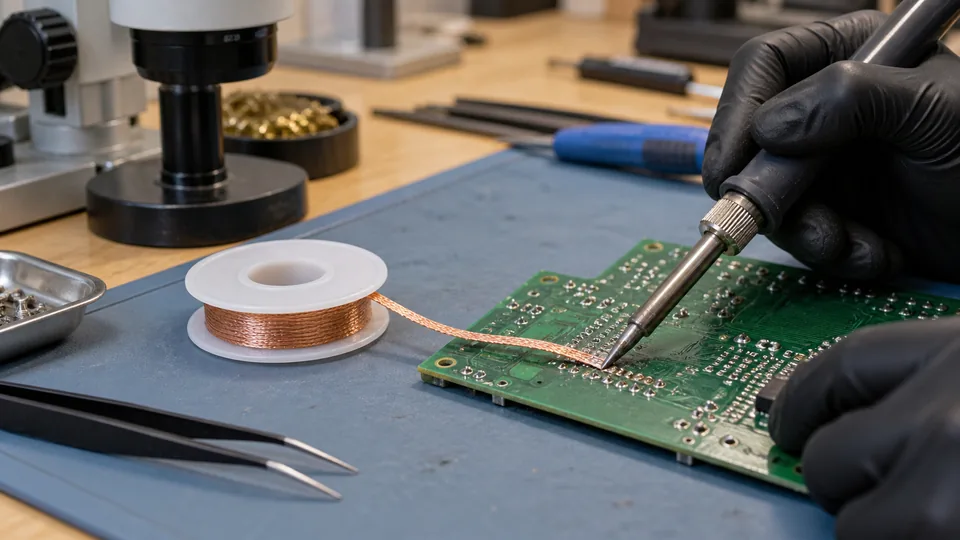
Desoldering wick looks simple on the bench: lay copper braid over a solder joint, press a heated iron on top, and watch the molten solder disappear into the weave. The buying decision gets trickier with small pads, crowded SMD work, old oxidized joints, and through-hole connections that need a wider braid. Width, length, flux treatment, residue, and spool format all affect how controlled the process feels.
A narrow 0.060-inch braid can suit fine pads, while a 0.1-inch roll is more useful for ordinary PCB joints and keyboard switches. Pre-fluxed wick saves a step, but a separate flux paste kit gives more control over stubborn or oxidized solder. Quantity matters too. A five-foot precision spool may be sensible for occasional repair, while several 10-foot rolls make more sense for a busy workbench. The JoTownCand three-size kit earns the strongest overall position because its 0.08, 0.1, and 0.12-inch widths cover small SMD pads through larger joints without forcing one braid to do every job.
The comparison below weighs the supplied braid sizes, lengths, flux formats, residue claims, storage options, and intended applications. Some picks are compact precision rolls, while others favor bulk quantity or a complete wick-and-flux setup.
Quick Answer
- Best Overall: JoTownCand 3 Pack Rosin Flux Solder Wick Braid for its three widths and pre-coated rosin flux.
- Best Precision Pick: Chemtronics 80-2-5 Soder-Wick Rosin SD for fine 0.060-inch braid and Type R rosin.
- Best Bulk Option: Lesnow 5-Piece Solder Wick Braid Set for keeping multiple 10-foot rolls on hand.
- Best Complete Kit: Lesnow Solder Flux Paste and Solder Wick Braid for combining braid with 10cc of no-clean flux paste.
Best Desoldering Wick Comparison Table
| Product | Best For | Braid Size | Length and Format |
|---|---|---|---|
| JoTownCand 3 Pack Rosin Flux Solder Wick Braid | Mixed PCB work | 0.08, 0.1, 0.12 in | Three 10-foot spools |
| Chemtronics 80-2-5 Soder-Wick Rosin SD | Fine pads and static-sensitive work | 0.060 in | 5-foot spool |
| Lesnow 5-Piece Solder Wick Braid Set | Regular repair stock | 0.1 in | Five 10-foot rolls |
| HLFLYG Solder Wick Braid 3-Pack | General PCB maintenance | 0.1 in | Three 10-foot rolls |
| Lesnow Solder Flux Paste and Solder Wick Braid | Wick and flux in one kit | 0.1 in | 10-foot braid plus 10cc paste |
| Crivon Solder Flux Paste and Desoldering Wick | Rework with controlled flux application | Not specified | Wick plus flux syringe |
| Essmtuin Solder Wick Braid 100Ft | High-volume bench use | 0.1 in | 100 feet |
| TOWOT Solder Wick Braid | Single-roll PCB repair | 0.1 in | 10-foot roll |
| MG Chemicals 425-NS No Clean Super Wick | No-clean process requirements | 0.075 in | 5-foot spool |
The detailed reviews explain how each braid size, flux arrangement, and quantity changes the practical choice at the soldering bench.
1. JoTownCand 3 Pack Rosin Flux Solder Wick Braid — Best Overall

The strongest feature here is choice. The kit includes 0.08-inch, 0.1-inch, and 0.12-inch braid, with each spool measuring 10 feet. A fine strip can sit over a small SMD pad without covering a broad area, while the wider roll gives more surface for larger through-hole joints. That range is far more useful than a single middle-width braid in a drawer full of mixed repairs.
The listing identifies the copper braid as pre-coated with rosin flux, so there is no need to reach for a separate flux bottle before starting ordinary rework. That can make a difference during a quick keyboard-switch repair or a board cleanup where the iron, braid, and replacement part are already crowding the mat. The supplied information also describes sealed, precision-wound spools and low residue, although actual results still depend on heat, joint size, and technique.
Pros
- Three widths cover fine SMD pads, ordinary PCB joints, and larger connections.
- Each spool provides 10 feet of braid.
- Pre-coated rosin flux is ready to use without a separate flux application.
- Pure copper braid is identified for solder absorption and heat transfer.
- Suitable for PCB, phone, laptop, and general electronics rework.
Cons
- Pre-fluxed braid gives less control than applying a separate flux type yourself.
- The listing does not clearly identify a storage case or dispenser.
This is the most balanced pick for a drawer that handles everything from delicate pads to ordinary through-hole cleanup. Choose it if you want one purchase to cover several joint sizes. A specialist who almost always works on tiny pads may prefer the narrower Chemtronics braid, while a repair shop that burns through wick quickly may want the 100-foot Essmtuin roll.
To buy this product, click here.
2. Chemtronics 80-2-5 Soder-Wick Rosin SD — Best for Fine Pads

At 0.060 inches, this braid is the precision specialist in the group. That narrow profile is useful when a large strip would overlap adjacent pads or make it harder to see the joint under the iron tip. Picture a small SMD footprint with a stubborn bridge between pins. A fine braid lets you target the solder more carefully, provided the iron tip and hand control are equally suited to close work.
The product information lists a 5-foot spool, Type R rosin flux, and static-dissipative bobbin packaging. It also describes the flux as noncorrosive and identifies the braid as intended to reduce ionic contamination. Those claims make the product attractive for controlled electronics rework, but the shorter length means it is a precision roll rather than a bulk replenishment option. The narrower braid also has less physical coverage for large joints.
Pros
- 0.060-inch width suits small pads and closely spaced connections.
- Type R rosin flux is identified as noncorrosive.
- Static-dissipative bobbin packaging is listed for static-sensitive handling.
- Product information states that it will not leave ionic contamination on boards.
- Compact 5-foot spool is practical for a precision station.
Cons
- Five feet is shorter than the 10-foot and 100-foot alternatives.
- The narrow width is less suitable for broad or heavy solder joints.
Chemtronics makes the most sense beside a fine tip and a magnified view of the joint. It is a focused choice for careful board work where placement matters more than raw quantity. Pick a wider option for through-hole connector cleanup or frequent switch desoldering, where the extra coverage can make the job less fiddly.
To buy this product, click here.
3. Lesnow 5-Piece Solder Wick Braid Set — Best Bulk Pack

Five separate 10-foot rolls give this Lesnow set a straightforward advantage: plenty of standard-width braid ready for repeated repairs. The listed 0.1-inch width sits in a useful middle ground for PCB pads, keyboard switches, wire connections, and common through-hole work. It is the sort of pack that can live in a shared workshop drawer, with a fresh roll available when the first becomes saturated with solder.
The braid uses a geometrically precise copper weave, and the product information describes a no-clean format intended to leave a clean working area. A standard width also makes technique familiar. Place a short cut over the joint, heat through the braid, and move to a clean section when the copper is full. There is no range of sizes here, so tiny SMD pads may call for more careful positioning than they would with a 0.060-inch strip.
Pros
- Five individual rolls provide 50 feet in total.
- 0.1-inch width suits many general PCB and component-removal tasks.
- Copper weave is described as precise for solder absorption.
- No-clean design is listed for low-residue work.
- Separate rolls make it easy to keep backup material at the bench.
Cons
- Only one 0.1-inch width is identified.
- The listing does not clearly specify a dispenser or storage box.
This pack is a sensible choice for regular maintenance, classroom benches, and repair drawers where running out halfway through a job is a nuisance. It gives up the fine-width flexibility of JoTownCand, but its five-roll format is more convenient for steady consumption. For occasional use, a shorter specialist spool may create less unused stock.
To buy this product, click here.
4. HLFLYG Solder Wick Braid 3-Pack — Best Standard-Width Value

HLFLYG keeps the format simple: three rolls, each 10 feet long and 0.1 inches wide. That standard width is a practical match for common solder joints, circuit-board repair, keyboards, and component disassembly. If the workbench sees a steady stream of ordinary joints rather than tiny micro-SMD pads, the uniform format avoids sorting through several sizes before every repair.
The listing describes tightly braided copper, no-clean construction, and low residue. It also explains the basic use clearly: place the braid over the joint, heat it with the soldering iron, and let the copper absorb the molten solder. That makes the pack easy to understand, although its fixed width offers less flexibility than a mixed-size kit and the product information does not identify extra flux paste.
Pros
- Three 10-foot rolls provide 30 feet of braid.
- 0.1-inch width suits general PCB and keyboard work.
- Tightly braided copper construction is listed for solder absorption.
- No-clean, low-residue format can reduce cleanup steps.
- Clear, uncomplicated setup suits routine rework.
Cons
- All three rolls use the same 0.1-inch width.
- No separate flux paste is identified as included.
Choose HLFLYG for predictable, repeated jobs where quantity matters more than width selection. It is a better match for a general repair drawer than for a fine-pitch SMD station. The three-roll format also lets a busy bench keep one roll near the iron, another near the inspection area, and a spare in storage without splitting the pack into tiny pieces.
To buy this product, click here.
5. Lesnow Solder Flux Paste and Solder Wick Braid — Best Wick and Flux Kit

This kit pairs a 10-foot, 0.1-inch copper braid with approximately 10cc of no-clean flux paste. That combination is handy when a dry joint or oxidized surface resists the first pass. A small amount of paste can help solder flow into the braid, while the standard-width wick handles everyday PCB cleanup, keyboard switch work, and component removal.
The listing identifies the paste as halogen-free and non-corrosive, with good fluidity, and describes the copper weave as improving absorption. Those are product-listing claims rather than independent test results, so they should be treated as guidance. The real attraction is workflow convenience. Instead of discovering that the wick drawer is full but the flux syringe is empty, both parts arrive together in one compact repair kit.
Pros
- Combines 10 feet of 0.1-inch braid with approximately 10cc of flux paste.
- Flux paste is listed as halogen-free and non-corrosive.
- Copper braid is described as precisely woven for solder absorption.
- Suitable for PCB correction, keyboard switches, and component removal.
- Provides a compact starting setup for rework.
Cons
- Only one braid width is identified.
- The listing does not clearly specify a dispenser or applicator for the paste.
This is a useful choice for a repair kit that needs both removal material and extra flux in the same box. It suits occasional board work especially well, since the paste can help with joints that do not readily wet the braid. A multi-width braid kit remains better for a bench handling very small and very large joints.
To buy this product, click here.
6. Crivon Solder Flux Paste and Desoldering Wick — Best for Controlled Flux Application

Crivon takes the same basic wick-and-flux idea and puts emphasis on the paste syringe. The listing describes a controlled-viscosity rosin flux intended to stay on PCB traces and pads rather than spreading freely across the board. That can be useful during a small rework job where a tiny application near the joint is preferable to brushing flux over a larger area.
The kit is described for solder removal, bridge cleanup, SMD work, and general circuit maintenance. Its braid absorbs excess solder, while the flux supports solder flow during the apply, remove, and rework cycle. The exact braid width and length are not clearly identified in the supplied product information, so buyers who need a known 0.060-inch or 0.1-inch strip should choose a product with those measurements stated.
Pros
- Includes solder wick and a flux paste syringe in one kit.
- Controlled dispensing is described for targeted PCB application.
- No-clean rosin flux is listed as low residue.
- Intended for PCB repair, SMD work, and solder-bridge cleanup.
- Supports both solder removal and follow-up rework.
Cons
- The supplied information does not clearly specify braid width or length.
- The kit adds flux, but buyers seeking bulk wick get less quantity detail than with roll-based packs.
Crivon is most appealing if flux control is central to the job and exact wick dimensions are secondary. The syringe can be convenient around small pads, but the unspecified braid measurements create a purchasing question for precision work. Confirm the current listing details if the physical width is critical to your board layout or tip choice.
To buy this product, click here.
7. Essmtuin Solder Wick Braid 100Ft — Best for High-Volume Use

Essmtuin is built around quantity. The listing identifies a 100-foot length with a 0.1-inch width and flux treatment, making it suited to a bench that goes through braid regularly. That amount can be useful for repeated board cleanup, through-hole component removal, and repair work where cutting a fresh section is routine rather than occasional.
The fixed 0.1-inch width remains the practical center of the product. It can cover ordinary joints effectively, but it will feel less delicate over dense micro-SMD pads than the Chemtronics 0.060-inch braid. The product information also describes low residue and use alongside a vacuum desoldering tool and soldering iron. That suggests a supporting role in broader through-hole rework rather than a complete replacement for a heated suction tool.
Pros
- 100 feet provides substantial replenishment stock.
- 0.1-inch width is suited to common PCB joints.
- Flux-treated braid is listed for easier solder removal.
- No-clean design is described as low residue.
- Can complement a soldering iron and vacuum desoldering tool.
Cons
- The single 0.1-inch width limits precision-size selection.
- A large roll may be excessive for occasional repair work.
Essmtuin belongs on a busy shared bench where running short of braid is more annoying than storing a large roll. It is also a sensible option for repeated through-hole jobs, provided the operator still uses suitable heat and avoids holding the iron on a pad longer than necessary. For small, infrequent repairs, a compact five-foot roll may be easier to manage.
To buy this product, click here.
8. TOWOT Solder Wick Braid 10ft — Best Straightforward Single Roll

TOWOT offers a familiar workbench format: one 10-foot roll of 0.1-inch copper braid with no-clean flux treatment. Its tightly woven construction is described as supporting capillary action, which is the basic mechanism that draws molten solder into the braid once the joint and wick are heated together. There are no extra sizes or separate paste containers to sort through.
That simplicity can be valuable for a first repair drawer or a station dedicated to ordinary PCB work. The listing names pads, components, connections, laboratories, schools, workshops, and home projects as intended uses. It does not provide a fine-width option, so the braid is better suited to standard joints than crowded fine-pitch pads where a narrower strip would offer more control.
Pros
- 10-foot length provides useful everyday stock.
- 0.1-inch width suits common PCB repair tasks.
- Finely braided copper is listed for heat transfer and solder absorption.
- No-clean, low-residue format can simplify cleanup.
- Suitable for home, school, lab, and workshop use.
Cons
- Only one width is identified.
- No flux paste or storage box is listed as included.
TOWOT is a sensible middle-ground roll for someone who wants standard braid without committing to a large multi-roll pack. It fits keyboard switches, ordinary PCB pads, and component replacement particularly well. If a repair involves both tiny SMD pads and large through-hole joints, JoTownCand gives more useful range for the same basic workflow.
To buy this product, click here.
9. MG Chemicals 425-NS No Clean Super Wick — Best No-Clean Specialist

MG Chemicals uses a 0.075-inch braid, placing it between the ultra-fine Chemtronics strip and the more common 0.1-inch rolls. That middle width may suit a bench that moves between small electronics pads and ordinary connections, although the listing does not provide a wider size for larger joints. The spool is 5 feet long, so this is a compact consumable rather than a bulk supply.
The no-clean formulation is the main reason to choose it. The product information states that remaining flux residue does not have to be cleaned and lists static-free use, plastic compatibility, and high insulation-resistance performance associated with specified testing claims. Those statements describe the product listing, not independent testing in this review. For buyers whose process already favors no-clean braid and a short, controlled roll, the format is tidy and focused.
Pros
- 0.075-inch width offers a middle ground for controlled PCB work.
- No-clean format is identified for low-maintenance rework.
- Static-free use is listed.
- Product information identifies suitability around plastics.
- Compact 5-foot spool is easy to keep at a dedicated station.
Cons
- Five feet provides less stock than the multi-roll and 100-foot options.
- The listing does not identify multiple braid widths.
MG Chemicals is a good fit for a tidy electronics bench that values a defined no-clean process and a moderately fine braid. It is less compelling for high-volume work, where the short spool can disappear quickly, or for a mixed repair drawer that needs several widths. Pick it over Chemtronics when 0.075 inches is a better match for your usual joints than the narrower 0.060-inch strip.
To buy this product, click here.
Buying Guide
Braid Width Changes Control
Width is one of the most useful specifications on a desoldering wick package. A narrow 0.060-inch braid can be easier to position over a small pad, while a 0.1-inch strip gives broader coverage for ordinary PCB joints. Wider braid can be useful on larger connections, but it may overlap nearby pads on dense boards. A mixed-size kit such as JoTownCand is useful when the bench handles both scales.
Flux Treatment Affects the Workflow
Pre-fluxed braid is ready to place over a joint, which keeps a quick repair moving. A separate flux paste kit gives more control when a joint is oxidized or reluctant to flow. “No-clean” describes the intended residue process, not a promise that every board requires zero cleaning. Follow the product instructions and the requirements of the assembly being repaired.
Length Matters More Than It First Appears
A 5-foot spool can be perfectly reasonable for occasional precision work, while several 10-foot rolls suit regular repairs. A 100-foot roll is aimed at high consumption and needs a sensible storage spot. Quantity alone does not make a braid better, but it can reduce interruptions when each saturated section is cut away and discarded.
Match the Wick to the Joint and Iron Tip
Desoldering wick needs heat from the iron to melt the solder before the braid can absorb it. A tip that contacts the braid across its width helps transfer heat, while excessive dwell time can put unnecessary heat into a pad or component. The advertised braid width does not guarantee removal speed. Joint size, solder condition, tip geometry, flux, and technique all affect the result.
Use Separate Tools for Heavy Through-Hole Work
Wick is useful for cleaning pads and removing excess solder, but larger through-hole joints can be easier with a desoldering pump or heated vacuum tool. The Essmtuin listing specifically describes use alongside a vacuum desoldering tool and soldering iron. Treat wick as part of a removal setup rather than assuming one consumable will handle every large joint efficiently.
Check the Exact Included Format
Some products list several rolls, while others include a flux syringe or paste. A product may mention compatibility with a repair workflow without listing a storage box, dispenser, or extra applicator. Confirm the current product page if those details matter. The braid size and length should be clear before ordering, especially for fine-pitch board work.
Best Desoldering Wick FAQ
What Width of Desoldering Wick Should I Use?
For many ordinary PCB joints, 0.1-inch braid is a practical starting point. Smaller SMD pads may benefit from a narrower 0.060-inch or 0.075-inch strip, while larger joints may respond better to a wider braid. A three-size kit is useful if the work varies from tiny pads to through-hole connections.
Is Pre-Fluxed Wick Better Than Plain Wick?
Pre-fluxed wick is convenient because it is ready to place over the joint. A separate flux paste gives more control over how much flux reaches a particular area and can help with oxidized solder. The better choice depends on whether speed or application control matters more in your repair routine.
How Do You Use Desoldering Wick?
Place a fresh section of braid over the solder, then put the heated iron tip on top of the braid and joint. Once the solder melts, it is drawn into the copper weave. Remove the braid and iron together, then cut off the saturated portion before moving to the next joint. Avoid keeping heat on a pad longer than necessary.
Can Desoldering Wick Remove Through-Hole Solder?
It can help clear remaining solder from a through-hole pad, but large or deep joints may be easier with a solder sucker or heated vacuum tool. Braid is especially useful for cleanup after most of the solder has already been removed. Joint size and available heat affect the result.
Does No-Clean Wick Leave No Residue?
No-clean wick is intended to leave low or manageable residue, but that does not mean every board will require no cleaning. Flux amount, board condition, solder type, and the assembly requirements all matter. Use the product information as a guide and clean the board when the application calls for it.
How Much Desoldering Wick Should I Keep on Hand?
Occasional repair work may need only a 5-foot spool. Regular PCB maintenance is better served by several 10-foot rolls, while a repair bench with high consumption may benefit from a 100-foot supply. Buying more length is useful only if the braid width matches the joints you actually handle.
Final Verdict
JoTownCand takes the top position because its three widths make the purchase useful across a broader range of electronics work. The pre-coated rosin braid reduces setup steps, while the 10-foot length of each spool gives enough material for repeated repairs without moving straight to a bulk roll. Chemtronics is the sharper choice for fine pads and a defined Type R rosin format, especially where the 0.060-inch width matters more than total length.
Lesnow’s five-roll pack is the practical quantity choice, Essmtuin suits high-volume use, and the Lesnow or Crivon kits make sense for repairs that need separate flux application. TOWOT and HLFLYG keep the standard 0.1-inch format simple, while MG Chemicals offers a shorter no-clean roll with a moderately fine 0.075-inch width. Match the braid to the joint size, keep suitable flux nearby, and use a pump or vacuum tool for heavy through-hole work rather than asking one wick to handle every solder-removal task.

- Jesse
Jesse is the editor behind Soldering Gear, where he covers soldering irons, stations, rework equipment, and the tools that belong on a practical electronics bench. His work focuses on comparing product specifications, features, compatibility, and intended uses so readers can make more informed buying decisions.
- Best Soldering Iron for Phone Repair: 9 Picks in 2026 October 27, 2026
- Best Hot Air Rework Station for Phone Repair: 9 Picks in 2026 October 26, 2026
- Why Is My Soldering Iron Not Melting Solder? October 25, 2026
- Best Portable Solder Fume Extractor: 9 Picks in 2026 October 24, 2026
- Best Desoldering Wick: 9 Picks in 2026 October 23, 2026