Best Solder for SMD: 9 Picks in 2026

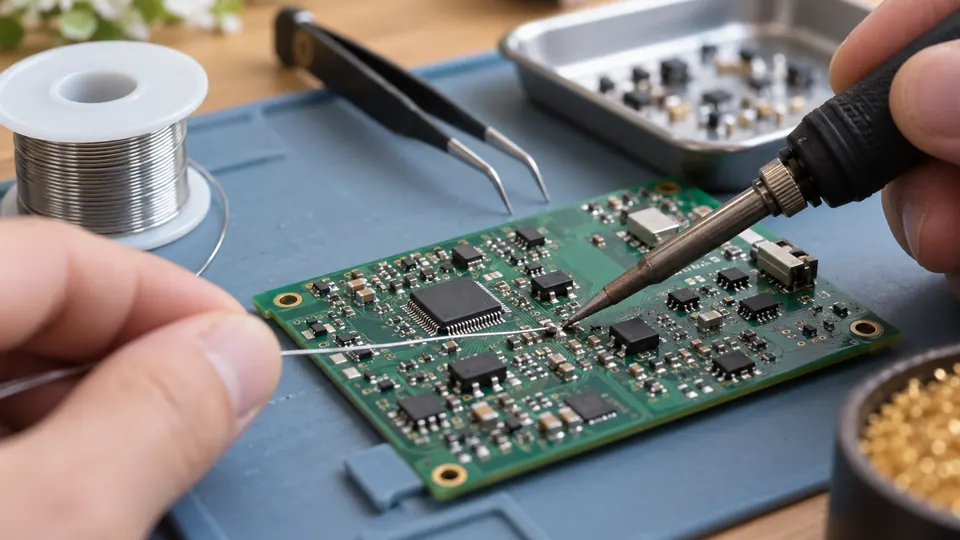
Small SMD pads punish sloppy material choices. A thick solder wire can dump too much metal onto a tiny joint, while a paste with the wrong melting behavior can expose a delicate board to more heat than necessary. The best solder for SMD work needs to match the component scale, rework method, alloy preference, and amount of control you need at the tip.
There is more to the decision than choosing lead-free or leaded solder. Wire diameter affects how easily you can meter solder onto a pad, while paste is better suited to placing material across several SMD contacts before heating. Flux also matters because oxidation, poor wetting, and excess residue can turn a quick repair into a messy cleanup job. The SoPagre 0.3 mm lead-free wire earns the strongest overall position here because its narrow diameter and Sn99 Ag0.3 Cu0.7 alloy are aimed directly at fine electronics work.
The products below include solder wire, solder paste, low-temperature rework alloy, and a few closely related flux and wick choices for SMD repair. Each serves a different bench task, so the right pick depends on whether you are placing a tiny amount of solder, reflowing a group of pads, or removing an existing component.
Quick Answer
- Best Overall: Ultra-Thin Solder Wire 0.01 in 0.3 mm for controlled hand soldering on small pads.
- Best Low-Temperature Paste: SoPagre Sn42/Bi58 Lead-Free Solder Paste for SMD work where a 138°C melting point is useful.
- Best Complete Rework Kit: Sn42/Bi58 Solder Paste, Flux, and Wick Kit for replacing components with several materials in one package.
- Best for Leaded Reflow Work: SoPagre Sn63/Pb37 Solder Paste for buyers who specifically need a 63/37 tin-lead paste.
Best Solder for SMD Comparison Table
| Product | Best For | Alloy or Type | Key Detail |
|---|---|---|---|
| Ultra-Thin Solder Wire 0.01 in 0.3 mm | Fine hand soldering | Sn99 Ag0.3 Cu0.7 | 217°C melting point |
| SoPagre Sn42/Bi58 Lead-Free Solder Paste | Low-temperature SMD work | 42% tin, 58% bismuth | 138°C melting point |
| Sn42/Bi58 Paste, Flux, and Wick Kit | Component replacement | Lead-free paste | Paste, flux, and wick included |
| SoPagre Sn63/Pb37 Solder Paste | Leaded SMD reflow | 63% tin, 37% lead | 183°C melting point |
| FAST CHIP Removal Alloy | IC removal | Low-melting removal alloy | 4.5 ft total length |
| JoTownCand Flux and Desoldering Wick Kit | Precision rework | Fluxed copper wick | Multiple dispensing tips |
| JoTownCand Three-Pack Solder Wick | Removing solder from pads | Rosin-flux copper braid | Three widths, 10 ft each |
| No-Clean Solder Flux Paste Four-Pack | Controlled flux application | Lead-free rosin flux | Four 10 cc syringes |
| RICOMART Solder Paste and Wick Kit | Leaded repair and removal | Sn63/Pb37 paste | Paste, flux, and 10 ft wick |
The detailed reviews explain where each material fits, what its specifications change at the bench, and which trade-offs deserve attention before ordering.
1. Ultra-Thin Solder Wire 0.01 in 0.3 mm — Best Overall
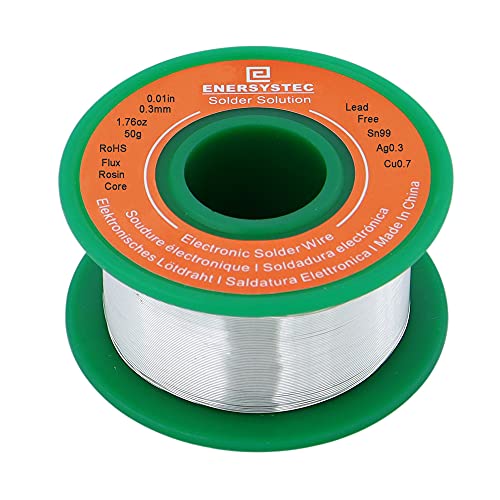
A 0.3 mm wire gives the operator a much smaller stream of solder than the thicker wire often used for larger through-hole joints. That difference is easy to appreciate around 0603 parts, fine connector pins, and small SMD pads where a quick touch can otherwise leave a blob. The listing identifies this product as a lead-free Sn99 Ag0.3 Cu0.7 alloy with a stated melting point of 217°C, making it a direct fit for hand-applied electronics soldering.
The rosin core helps keep the process compact because flux is built into the wire, although extra flux can still be useful on oxidized pads or difficult rework. Its 50 g quantity suits a repair drawer or regular electronics bench, while the very small diameter favors measured feeding over fast coverage. This is the material to reach for when your main problem is controlling how much solder reaches a tiny joint, rather than reflowing a whole group of pads at once.
Pros
- Very narrow 0.3 mm diameter suits small SMD pads.
- Sn99 Ag0.3 Cu0.7 lead-free alloy is specified for electronics soldering.
- Rosin core supplies flux during hand application.
- The listed 217°C melting point gives a clear reference for setup planning.
- 50 g provides a useful quantity for repeated repair work.
Cons
- Lead-free solder generally requires more heat than low-temperature bismuth paste.
- Very thin wire feeds slowly on larger joints and broad ground areas.
This is the strongest choice for hand soldering because its format gives you direct control over solder volume. It suits small component repair, connectors, and fine electronics assembly better than general-purpose thick wire. Choose a paste instead if the job involves many pads at once or a reflow process, and remember that the listed alloy and melting point do not by themselves guarantee a particular joint temperature.
To buy this product, click here.
2. SoPagre Sn42/Bi58 Lead-Free Solder Paste — Best Low-Temperature Paste

The standout specification here is the 138°C melting point of its 42% tin and 58% bismuth alloy. That is substantially lower than the 217°C figure listed for the lead-free wire above, which can matter when working near heat-sensitive materials or boards that should not spend long periods at elevated temperature. The syringe format also lets you place paste directly across small SMD pads without unwinding or trimming wire.
Its product information lists a 10.5% flux content, no-clean formulation, and a push-type design intended to provide smoother dispensing. Those details point toward controlled placement, especially for repair jobs involving small component footprints. Paste is less convenient than wire for touching up one isolated joint, but it becomes attractive when several pads need a consistent deposit before heating.
Pros
- 138°C melting point supports low-temperature SMD rework.
- 42/58 tin-bismuth alloy is clearly identified.
- Syringe format allows targeted paste placement.
- Listed 10.5% flux content is integrated into the formulation.
- No-clean designation may reduce post-work cleanup for suitable applications.
Cons
- Low-temperature bismuth solder is a specialized choice rather than a universal replacement for standard wire.
- The listing does not specify a paste weight in the product title used here.
This paste makes the most sense for small-component work where reducing the stated melting point is more valuable than using a familiar conventional alloy. It is a strong alternative to fine wire for pad arrays and low-temperature repair, but buyers should match the alloy to the existing board and joint requirements. Use the syringe carefully, because excess paste can create more cleanup than a single strand of 0.3 mm wire.
To buy this product, click here.
3. Sn42/Bi58 Solder Paste, Flux, and Wick Kit — Best Complete Rework Kit

Replacing an SMD component often requires more than fresh solder. You may need paste for the new part, flux to improve wetting, and wick to clear the old joint. This kit brings those steps together with 30 g of Sn42/Bi58 paste, 10 cc of no-clean soldering flux, and solder wick. Its low-temperature paste is listed at 138°C, giving it the same basic thermal focus as the standalone SoPagre bismuth paste.
The kit format is useful beside a repair station because a single purchase covers placement and cleanup. The flux is described as lead-free, halogen-free, non-corrosive, and free-flowing, while the wick is intended to leave a small amount of residue. The trade-off is that a bundle gives you less freedom to select a different wire diameter or flux chemistry for a particular board, but it is convenient for mixed rework sessions.
Pros
- Combines 30 g of low-temperature paste with flux and wick.
- 138°C Sn42/Bi58 formulation is suited to lower-temperature SMD tasks.
- Includes materials for both component installation and solder removal.
- Flux is listed as lead-free and halogen-free.
- Wick helps clear existing solder before replacement work.
Cons
- Bundle contents may be more than needed for a buyer who only wants solder paste.
- The listing does not identify the wick width in the supplied information.
This is a sensible bench kit for repair sessions where the old component must come out before the replacement goes in. It ranks below the standalone fine wire for routine single-joint soldering because paste and wick are more specialized, yet the combination is more practical for a complete SMD replacement sequence. Check the existing board and component requirements before choosing a bismuth alloy simply because it melts at a lower temperature.
To buy this product, click here.
4. SoPagre Sn63/Pb37 Solder Paste — Best for Leaded SMD Reflow

Some electronics work calls for a traditional 63/37 tin-lead alloy rather than a lead-free formulation. This SoPagre paste identifies its composition clearly as 63% tin and 37% lead, with a listed melting point of 183°C. It is supplied in a 50 g can and is described for circuit boards, ICs, BGA and SMD work, so its format is aimed at placing solder across multiple contacts rather than feeding one small strand by hand.
The eutectic composition is the main reason this paste attracts experienced electronics buyers who already work with leaded solder. Its stated 183°C melting point gives a defined reference for the reflow process, but the presence of lead brings handling and cleanup responsibilities that should not be ignored. This is a focused choice for compatible repair and assembly work, not a universal paste for every workspace or board.
Pros
- Clearly identified Sn63/Pb37 alloy.
- Listed 183°C melting point suits leaded reflow planning.
- 50 g can provides a substantial paste quantity.
- Product information specifically names SMD, BGA, IC, and circuit-board applications.
- Eutectic alloy composition is straightforward to identify for compatible work.
Cons
- Contains lead, so handling and disposal require appropriate precautions.
- Can packaging may be less convenient for highly localized hand application than a syringe.
Choose this paste when the alloy is part of the process requirement, not because a lower melting point automatically means better SMD results. The 183°C specification is useful for planning, while the can format favors repeated paste application or broader reflow work. Buyers seeking a lead-free option should move toward the bismuth paste or 0.3 mm wire instead.
To buy this product, click here.
5. FAST CHIP Removal Alloy for SMD Rework — Best for IC Removal

Removing an IC can be more difficult than placing a new one, particularly when several leads are still bonded to the board. This product is a low-melting removal alloy supplied in 6.5-inch pieces, with 4.5 feet total length stated in the title. Its purpose is to keep solder molten across the removal area long enough to lift the component without relying on a hot-air station.
That makes it a specialized rework material rather than a normal solder wire for everyday joints. The included instructions may help buyers understand the intended process, and the listing states that the alloy has no shelf life. For a repair drawer, the pre-cut pieces are easy to separate and handle, though a user who mainly assembles new SMD parts will likely gain more from narrow wire or paste.
Pros
- Low-melting alloy is intended for SMD and IC removal.
- Can support chip removal without a hot-air station, according to the listing.
- Supplied in convenient 6.5-inch pieces.
- 4.5 ft total length provides multiple rework sessions.
- Instructions are included.
Cons
- Specialized for removal rather than routine new-joint soldering.
- The supplied information does not state the alloy composition or melting point.
This is the right kind of purchase for a bench that regularly sees IC replacement and difficult multi-lead removal. It does not replace ordinary solder, and the missing alloy specification means you should follow the included directions rather than plan around an assumed temperature. Keep it alongside fresh solder and wick, because removing a chip and installing its replacement are separate jobs.
To buy this product, click here.
6. JoTownCand Rosin Flux Desoldering Wick and Flux Paste Kit — Best for Precision Rework

Fine SMD rework often needs careful solder removal and a small amount of fresh flux. This kit pairs rosin-coated copper wick with two flux syringes, so the braid can be applied directly while the paste can be placed around tight pads. The package also lists metal-thread, Luer-lock, and TT tapered dispensing tips, which gives the user several ways to control where the flux lands.
The flux is described as lead-free, halogen-free, no-clean, and low-residue, while the wick is intended for PCB, phone, laptop, keyboard, Arduino, and appliance work. Those application claims indicate broad repair intent, but they do not provide a measured removal rate or guarantee compatibility with every board finish. The two 0.35 oz syringes are useful for repeated work, particularly where flux gets consumed faster than braid.
Pros
- Combines pre-fluxed desoldering wick with two flux syringes.
- Includes three dispensing-tip styles for different application areas.
- Flux is listed as lead-free, halogen-free, and no-clean.
- Suitable product information covers SMD, BGA, PCB, phone, and laptop repair.
- Two flux syringes support longer use than a single small applicator.
Cons
- It is primarily a rework and desoldering kit, not a source of fresh solder alloy.
- The wick width and total braid length are not clearly specified in the supplied information.
This kit belongs beside a fine solder wire or paste, where it can handle pad cleanup before the new joint is made. It is especially useful for users who dislike reaching for a separate flux bottle during delicate work. Buyers who only need solder for assembly should skip the extra wick and choose a direct solder product instead.
To buy this product, click here.
7. JoTownCand Three-Pack Rosin Flux Solder Wick — Best Wick Width Selection

Wick width changes how easily you can match the braid to a pad or soldered area. This three-pack includes 0.08, 0.1, and 0.12 inch widths, with each size listed as 10 feet long. The smallest braid is better aligned with micro SMD cleanup, while the wider options can cover larger joints without requiring several narrow passes.
Each braid is described as pure copper and pre-coated with rosin flux, so additional flux is not required for the basic process. That convenience makes the spools easy to keep near a soldering iron, though a no-clean claim does not mean every board will need zero cleaning. The product is for removing solder, so pair it with fresh wire or paste when a component must be installed afterward.
Pros
- Three widths cover different SMD and through-hole cleanup tasks.
- Each listed width provides 10 feet of braid.
- Pre-coated rosin flux removes the need for separate flux during basic use.
- Pure copper construction is clearly identified.
- Spool format makes the braid easy to store and dispense.
Cons
- It removes solder rather than supplying new solder for assembly.
- The listing does not provide a measured absorption rate or detailed residue-cleaning procedure.
This is the most flexible wick choice in the group because the three widths let you match the braid to the work area instead of forcing one size onto every pad. It suits repair benches that handle both fine SMD joints and somewhat larger connections. For a single tiny repair, one spool may be enough, but the multipack becomes more useful as the range of board sizes grows.
To buy this product, click here.
8. No-Clean Solder Flux Paste Four-Pack — Best Flux Quantity

Flux paste is useful when solder needs help wetting a small, oxidized, or awkwardly shaped pad. This product supplies four 10 cc syringes with a push-style applicator and two fine tips, so the user can place a controlled amount around SMD contacts rather than spreading liquid across the board. The listing identifies the formula as lead-free, halogen-free, non-corrosive when used as directed, and based on high-activity rosin flux.
The four-syringe format makes this a practical stock-up choice for a repair bench, while the listing gives a shelf-life claim of up to 12 months before use when stored away from heat and sunlight. That detail is useful, but the syringes still need to be capped tightly to limit drying. Flux improves solder flow, yet it is not solder itself, so this product needs to be paired with wire or paste.
Pros
- Four 10 cc syringes provide a substantial flux supply.
- Push-type delivery supports controlled application on tight pads.
- Two fine tips are included.
- Formula is listed as lead-free, halogen-free, and no-clean.
- Product information covers PCB, SMD, SMT, and general electronics repair.
Cons
- It contains flux only, so solder must be purchased separately.
- The supplied information says slight thickening can occur in very cold conditions.
This is a strong companion for the 0.3 mm wire, particularly when a small amount of extra flux can keep the joint flowing without flooding the board. It also works with solder paste and desoldering tasks, giving it broader bench utility than a single-purpose applicator. Choose a smaller package if your repair volume is low and storage time matters more than quantity.
To buy this product, click here.
9. RICOMART Sn63/Pb37 Solder Paste and Wick Kit — Best Leaded Rework Bundle

This bundle is built around a simple repair sequence: apply or refresh solder with Sn63/Pb37 paste, use no-clean flux to improve wetting, then clear unwanted material with 10 feet of 0.1-inch wick. The listing identifies 30 g of solder paste, 10 cc of high-activity rosin flux, and the wick in the package. For leaded SMD work, having all three materials together can save a trip to the parts drawer.
The 0.1-inch braid is broader than the finest wick in the three-pack, which may suit general pad cleanup better than highly confined micro work. The product information emphasizes low residue and PCB repair, but it does not provide the paste melting point or a detailed storage specification. That missing information matters for process planning, so buyers should confirm the current label and follow the product directions.
Pros
- Includes Sn63/Pb37 paste, flux, and 10 feet of solder wick.
- 30 g paste quantity supports multiple repair jobs.
- 10 cc high-activity rosin flux is included.
- 0.1-inch wick is suited to broader SMD and PCB cleanup.
- Bundle covers both solder application and removal.
Cons
- Contains lead, requiring appropriate handling and cleanup practices.
- The supplied information does not state the paste melting point.
This kit suits a repair drawer that favors leaded materials and wants a compact set for removing and replacing components. It is less precise than the 0.3 mm wire for a single tiny hand-soldered joint, but more complete for mixed rework. Skip it if you need a lead-free process or if the unknown paste temperature would make your workflow difficult to plan.
To buy this product, click here.
Buying Guide
Wire Diameter Controls Solder Volume
For hand soldering SMD parts, a narrow wire is usually easier to meter than a thick strand. The 0.3 mm wire reviewed above is aimed at tiny pads because each short feed adds a relatively small amount of material. That does not make it ideal for every connection. Large ground planes and broad terminals can consume more heat and solder, where paste or a thicker wire may be more efficient.
Choose the Alloy Before Choosing the Package
Lead-free Sn99 Ag0.3 Cu0.7 wire, Sn42/Bi58 paste, and Sn63/Pb37 paste behave differently because their alloys and listed melting points differ. The bismuth paste is listed at 138°C, the leaded paste at 183°C, and the fine lead-free wire at 217°C. Those numbers help plan the process, but they do not tell you the actual temperature at the joint or guarantee that a board and component can tolerate the full heating cycle.
Paste Suits Groups of Pads
Paste is useful when several SMD contacts need material placed before heating. Syringes give you a direct way to position it, while a can may be better suited to repeated application over a larger set of footprints. Paste is less convenient than wire for one quick touch-up, and the amount applied deserves attention because too much can bridge neighboring pads.
Flux Chemistry and Residue Still Matter
No-clean flux can reduce cleanup, but the label should not be read as a promise that every board needs no cleaning under every condition. Rosin, activity level, residue, and the surface being soldered all influence the result. A syringe is especially useful for SMD work because it keeps flux close to the joint instead of spreading it across a wider area.
Keep Removal Materials Separate From Fresh Solder
Wick and low-melting removal alloy are valuable during repair, but they solve a different problem from fresh solder. Wick pulls molten solder away from a pad, while removal alloy can help keep several IC leads molten during chip extraction. A practical SMD bench often needs both removal material and a controlled source of new solder.
Lead-Free and Leaded Materials Need Different Handling
The Sn63/Pb37 products contain lead, while the fine wire and bismuth paste are identified as lead-free. Alloy choice should match the board, process, and handling practices. Use appropriate ventilation, avoid transferring residue to food or shared surfaces, and follow the product instructions for cleaning and disposal.
Best Solder for SMD FAQ
What solder diameter is best for SMD work?
A narrow diameter such as 0.3 mm gives better control on small pads because less solder is delivered with each feed. Larger wire can still be useful for broad terminals and ground connections, but it is easier to overfeed a tiny joint with it.
Is solder paste better than solder wire for SMD?
Neither is universally better. Wire is convenient for one-off hand soldering and touch-ups, while paste is better suited to placing solder across multiple SMD pads before heating. Choose based on the process, component layout, and amount of control required.
What is the advantage of Sn42/Bi58 solder paste?
The products reviewed here list a 138°C melting point for the Sn42/Bi58 alloy. That lower stated melting point can be useful for certain low-temperature rework tasks, but the alloy should still be compatible with the existing board and component requirements.
Is lead-free solder suitable for small electronics?
Yes, lead-free solder is widely used for electronics work, and the 0.3 mm Sn99 Ag0.3 Cu0.7 wire in this roundup is listed for fine electronics soldering. Its stated melting point is higher than the bismuth paste, so the process may require more heat than a low-temperature formulation.
What does no-clean flux mean?
No-clean describes a flux formulation intended to leave limited residue under suitable use. It does not mean the residue should always be ignored. Follow the product directions and clean the board when residue, contamination, or the application requires it.
Can solder wick replace solder?
No. Solder wick removes molten solder from a joint. It is useful for pad cleanup and component removal, but fresh wire or paste is needed to create a new solder joint.
Should I choose leaded or lead-free solder paste?
Match the alloy to your process and handling requirements. The lead-free bismuth paste offers a listed 138°C melting point, while the Sn63/Pb37 paste is a leaded formulation listed at 183°C. Leaded materials require appropriate handling, hygiene, and disposal practices.
Final Verdict
The Ultra-Thin 0.3 mm Sn99 Ag0.3 Cu0.7 wire is the strongest overall choice for regular hand-soldered SMD work because its narrow diameter gives you better control over solder volume, and its alloy and stated melting point are clearly identified. For low-temperature work, the SoPagre Sn42/Bi58 paste is the more specialized pick. Its 138°C specification and syringe format make it useful for carefully planned SMD rework, while the larger Sn42/Bi58 kit adds flux and wick for a fuller replacement workflow.
Buyers who prefer leaded materials can choose the SoPagre Sn63/Pb37 paste or the RICOMART bundle, while the FAST CHIP alloy and JoTownCand wick products make more sense for removal than assembly. Match the product to the task in front of you. Use fine wire for a single small joint, paste for groups of pads, low-melting alloy for difficult IC extraction, and flux or wick as supporting materials rather than substitutes for solder. A precise alloy and format choice will usually matter more than buying the largest package on the shelf.

- Jesse
Jesse is the editor behind Soldering Gear, where he covers soldering irons, stations, rework equipment, and the tools that belong on a practical electronics bench. His work focuses on comparing product specifications, features, compatibility, and intended uses so readers can make more informed buying decisions.
- Best Soldering Iron for Microsoldering: 9 Picks in 2026 November 10, 2026
- Best Soldering Station for PCB Repair: 9 Picks in 2026 November 9, 2026
- How to Desolder Electronics November 8, 2026
- Best Hot Air Rework Station for PCB Repair: 9 Picks in 2026 November 7, 2026
- Soldering Iron Tip Shapes Explained November 6, 2026