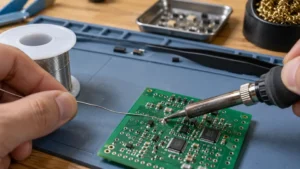
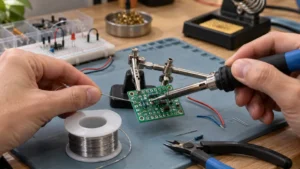
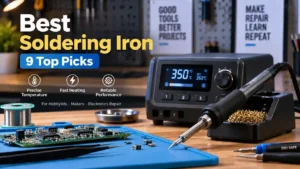
A small spool of solder can decide whether an electronics repair feels clean and controlled or turns into a sticky, overheated mess. For PCB work, the…
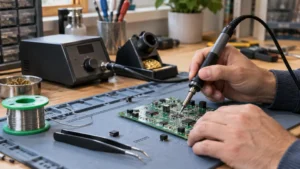
Using a soldering iron successfully depends on transferring heat into the parts being joined, then feeding solder to those heated surfaces. The solder…
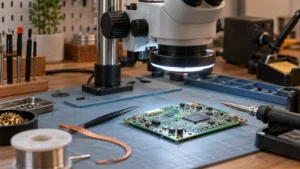
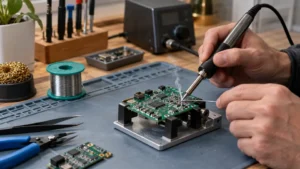
A soldering microscope earns its place on an electronics bench when your eyes begin losing the battle against tiny pads, hairline bridges, and crowded…
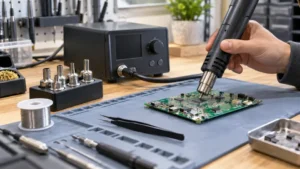
A hot air rework station earns its place on an electronics bench when a soldering iron cannot reach beneath a fine-pitch IC, loosen a stubborn connect…
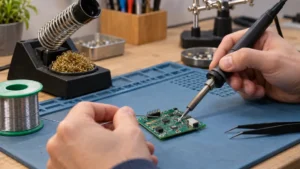
Learning how to solder electronics starts with one basic goal: heat the joint efficiently, apply solder to the heated parts, then allow the connection…
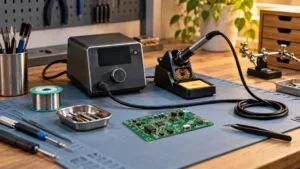
Choosing a soldering station for electronics is less about chasing the biggest wattage number and more about controlling heat at the joint. PCB work c…
A good electronics soldering iron must do more than get hot. PCB work moves between tiny pads, heavier ground planes, through-hole leads, wires, and h…
A good soldering station should make heat predictable, adjustment easy, and repeated joints less frustrating. That matters whether you are attaching w…
A soldering iron can be the difference between a clean, reliable joint and a frustrating afternoon of reheating pads, chasing cold connections, and wa…