Best Soldering Station for Electronics: 9 Picks in 2026

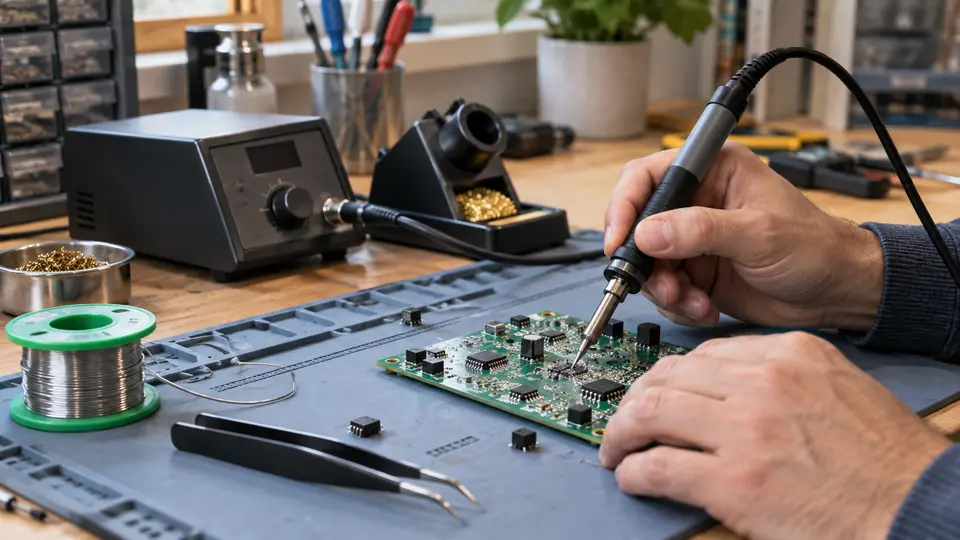
Choosing a soldering station for electronics is less about chasing the biggest wattage number and more about controlling heat at the joint. PCB work can move from a large through-hole connection to a tiny SMD pad in seconds, so useful temperature adjustment, a manageable handpiece, suitable tips, and dependable standby features matter far more than a flashy maximum temperature alone.
A station that looks attractive on paper can still be awkward at the bench. Some kits include helping hands, solder, tweezers, and a desoldering pump, while others focus on a better iron, tighter temperature control, or a broader handpiece system. Tip availability matters too. A station with a familiar tip family can be easier to maintain than one that depends on a less common replacement system.
This comparison weighs those practical differences across compact kits, established stations, and combination hot-air models. The Weller WE1010NA is the strongest overall choice for regular electronics work because its published temperature stability, temperature lock, standby functions, and 70-watt iron create a more controlled platform. Other picks make more sense for tight budgets, high-power work, or SMD rework.
Quick Answer
- Best Overall: Weller WE1010NA for controlled, repeatable electronics soldering.
- Best Premium Power: FNIRSI DWS-200 for buyers who want 200 watts, two handles, presets, and a large display.
- Best Value Station: YIHUA 926 III for a compact station with calibration, sleep mode, tips, and useful bench accessories.
- Best for SMD and Hot Air: YIHUA 862BD+ for a combined iron and hot-air rework setup.
Best Soldering Station for Electronics Comparison Table
| Product | Best For | Power and Range | Useful Features |
|---|---|---|---|
| Weller WE1010NA | Regular PCB work | 70W, stability of +/- 4°F | Temperature lock, standby, auto setback |
| FNIRSI DWS-200 | High-power and varied work | 200W, 212°F to 842°F | Two handles, TFT display, presets |
| Hakko FX888DX-010 | Established bench setups | Digital station | Rotary encoder control |
| WEP 927-IV | Preset-based electronics work | 110W, 194°F to 896°F | Three presets, magnifier, helping hands |
| YIHUA 926 III | Compact all-in-one setup | 60W, 194°F to 896°F | Calibration, sleep mode, six tips |
| WEP 926LED V3 | Lower-cost bench kits | 130W maximum claim, 392°F to 896°F | PID control, tips, pump, sleep mode |
| YIHUA 862BD+ | SMD and hot-air rework | 75W iron, 392°F to 896°F | Hot air, four nozzles, three displays |
| WEP 882D | Compact two-function rework | Iron to 896°F, hot air to 896°F | Variable air volume, calibration |
| Digital 100W Station Kit | Basic repair and DIY use | 100W, 356°F to 896°F | Auto hibernate, five tips, helping hands |
The detailed reviews below explain where each station fits, what its controls and accessories offer, and which compromises deserve attention before ordering.
1. Weller WE1010NA – Best Overall
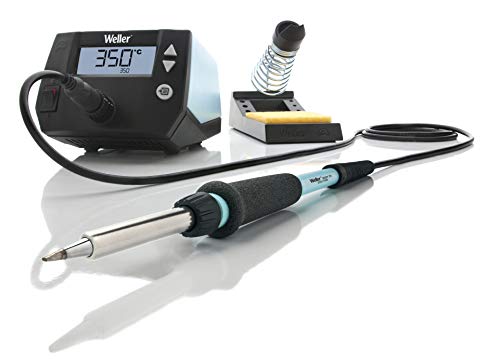
For electronics work, controlled heat is the central attraction of the Weller WE1010NA. The listing identifies a 70-watt station with temperature stability of plus or minus 4°F, or 2°C, and that is a more useful specification than maximum temperature alone. A stable setpoint can make repeated joints more predictable, especially when a board contains a mix of small pads and heavier ground connections.
The station includes a WEP70 iron, a heat-resistant silicone cable, a safety rest with sponge, and an ETA screwdriver tip measuring 1.6 mm. Temperature lock helps preserve a chosen setting, while standby and auto setback reduce idle heating. The supplied information does not list a broad assortment of included tips, so buyers planning specialized SMD work should confirm the correct replacement tip options before ordering.
Pros
- Published temperature stability of plus or minus 4°F, or 2°C.
- 70-watt iron offers a useful balance for general PCB work.
- Temperature lock helps prevent accidental setting changes.
- Standby and auto setback support more controlled idle use.
- Heat-resistant silicone cable is included with the handpiece.
Cons
- The supplied package lists one tip rather than a large tip assortment.
- The 120V station is less flexible for users outside the intended power setup.
The WE1010NA is the most defensible choice for someone who wants a focused electronics station rather than a large accessory bundle. It gives up the magnifier, helping hands, and extra consumables found in some lower-cost kits, but its published control features carry more weight for repeatable bench work. Choose another model if hot air, multiple handles, or a ready-to-use accessory collection matters more than station refinement.
To buy this product, click here.
2. FNIRSI DWS-200 – Best Premium Power

The FNIRSI DWS-200 takes a very different approach from compact 60-watt stations. Its listing specifies 200 watts, a built-in copper transformer, a 100V to 240V input range, and a 212°F to 842°F adjustable temperature range. That high power rating may appeal to work involving larger thermal masses, though wattage alone cannot establish tip recovery or joint performance.
Its 2.8-inch TFT screen can show temperature values, a temperature curve, or both. Three preset functions reduce repeated menu adjustments, and the package includes F210 and F245 handles plus nine tips. The F210 is described for precision work, while the F245 is aimed at SMD and higher-power jobs. Two adjustable helping hands add useful board support, although the station is more elaborate than necessary for occasional simple repairs.
Pros
- 200-watt station provides substantial available heating power.
- 100V to 240V input range offers broader power compatibility.
- F210 and F245 handles cover precision and higher-power applications.
- Large TFT display includes value and temperature-curve views.
- Nine soldering tips and two helping hands are included.
Cons
- The 842°F maximum is lower than several compact stations listed here.
- Its advanced controls and larger accessory set may be excessive for basic repairs.
This is a strong fit for a busy bench where one handle may be set up for fine work and another for heavier joints. The adjustable temperature range and presets are useful, but the listing does not provide a direct stability figure or thermal recovery measurement. Buyers who value power and handle flexibility can accept that uncertainty, while those prioritizing documented temperature stability may prefer the Weller.
To buy this product, click here.
3. Hakko FX888DX-010 – Best for a Familiar Bench Station

The Hakko FX888DX-010 earns attention through a simpler promise: a digital soldering station with a rotary encoder intended to improve adjustment over the earlier FX888D interface. For a bench station, the control method matters because temperature changes should be quick and deliberate rather than buried in awkward button presses.
The supplied product information is brief, so it does not establish a wattage figure, temperature range, stability specification, included tip count, or accessory bundle. That limits how precisely it can be compared with the other stations here. Still, the model is a direct fit for electronics soldering, and the rotary encoder gives it a clear usability distinction for buyers who already prefer a dedicated station over an all-in-one kit.
Pros
- Rotary encoder provides a straightforward temperature-adjustment interface.
- Digital station format suits organized electronics workbenches.
- Direct soldering-station design avoids unnecessary hot-air hardware.
- Model information clearly identifies the FX888DX-010 version.
- Compact control-focused setup should appeal to buyers who value simplicity.
Cons
- The supplied information does not identify wattage or temperature range.
- Included tips and accessories are not clearly specified.
The FX888DX-010 makes sense for a buyer who places a high value on a recognizable station format and direct rotary control. It is harder to recommend for shoppers comparing specifications because key technical and package details are not provided here. Confirm the current listing contents and compatible tip information before purchase, particularly if the station will handle specialized SMD work.
To buy this product, click here.
4. WEP 927-IV – Best for Presets and Bench Accessories
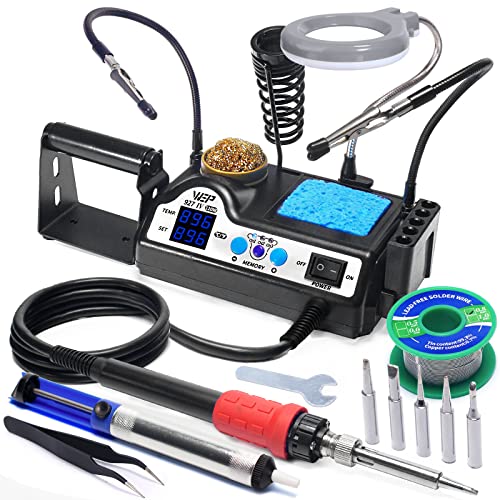
The WEP 927-IV is built around convenience without abandoning adjustable heat. Its listing gives the station a 110-watt heating element and a 194°F to 896°F setting range, with separate displays for the chosen temperature and the current temperature reading. That two-number display can help the user see whether the station is moving toward a setting instead of relying on a single number.
Three preset channels are particularly useful for a bench that moves between common soldering temperatures. The integrated holder, tip storage, wire dispenser, LED magnifier, and two helping hands keep small components from turning the work area into a scattered pile. The station uses WEP number 1400 tips, so replacement planning is part of the purchase decision rather than a detail to ignore.
Pros
- 110-watt heating element offers useful available power.
- Three preset channels speed up repeated temperature changes.
- Separate displays show set and actual temperature readings.
- LED magnifier and two helping hands support small-component work.
- Integrated holder, cleaner, dispenser, and tip storage save bench space.
Cons
- It uses WEP number 1400 tips, which narrows the stated tip system.
- The 110V to 127V design is intended for US power specifications.
This station suits a compact electronics bench where lighting, component holding, and quick temperature changes all matter. The magnifier is a basic visual aid, not a replacement for a proper inspection microscope, and the listing does not provide a temperature stability figure. For general PCB repairs and small assembly jobs, its broad kit and presets are more useful than the headline wattage alone.
To buy this product, click here.
5. YIHUA 926 III – Best Value Station Kit
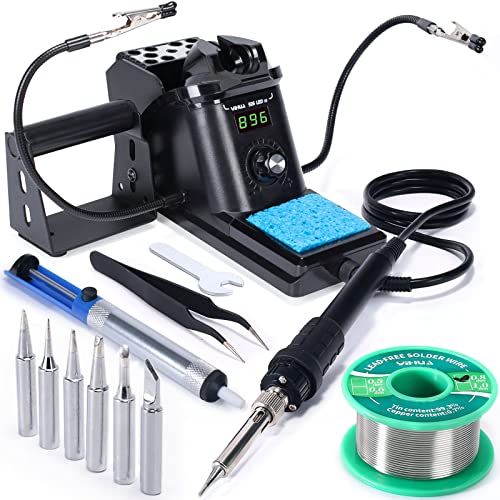
The YIHUA 926 III packs the features most people expect from a first electronics station into a relatively compact format. It offers a 60-watt iron, a 194°F to 896°F adjustable range, PID temperature stabilization, digital calibration, and a single control knob. Those controls make it easier to set a repeatable temperature than a basic plug-in iron with no display.
The package is unusually broad for a compact station. It includes six number 1200/900M series tips, two helping hands, lead-free solder, an ESD-safe tweezers claim in the listing, a solder sucker, wire dispenser, and sponge. Adjustable sleep timers of 5, 10, or 30 minutes help reduce idle heat. The supplied power specification is 110V to 127V, so international users need to verify voltage requirements carefully.
Pros
- PID temperature stabilization and digital calibration are included.
- Six 1200/900M series tips provide useful starting coverage.
- Two helping hands support board and component positioning.
- Adjustable sleep timers help reduce idle heating.
- Compact holder and rear mesh preserve limited bench space.
Cons
- 60 watts gives less stated power than several competing stations.
- The included lead-free solder may require different technique than leaded solder.
This is the station to choose when the goal is a complete, compact setup rather than a premium control platform. It is well matched to through-hole work, general PCB repairs, and learning temperature adjustment. Buyers handling large ground planes regularly may prefer more available power, while those needing hot-air rework should step up to a combination station.
To buy this product, click here.
6. WEP 926LED V3 – Best Compact Lower-Cost Kit

The WEP 926LED V3 targets the same crowded bench space as the YIHUA, but its listing emphasizes a 130-watt maximum claim and a PID microcontroller for temperature compensation. The adjustable range is 392°F to 896°F, controlled through a knob with a digital readout. The lower minimum setting is worth noticing because it gives less room for very low-temperature work than stations that begin around 194°F.
Five extra tips, solder wire, tweezers, a desoldering pump, and a tip cleaner make this a practical starter bundle. Its holder is built into the station body, and sleep mode activates after more than 10 minutes according to the listing. The product information does not identify the exact tip family, so replacement availability should be confirmed before the included tips are worn.
Pros
- PID control is listed for temperature compensation.
- Five extra tips and a desoldering pump are included.
- Integrated holder keeps the station footprint compact.
- Digital display supports Fahrenheit and Celsius switching.
- Sleep mode reduces idle temperature after a period of nonuse.
Cons
- The adjustable range begins at 392°F, limiting lower-temperature settings.
- The 130-watt figure is described as maximum power, not a direct measure of joint performance.
The V3 is a sensible fit for basic repairs, hobby boards, and workspaces where every inch matters. Its accessory bundle is more useful than a bare iron, but the lower temperature floor and unspecified tip family make it less flexible than the YIHUA 926 III. Treat the wattage as available heating capacity rather than a guarantee of faster recovery on every joint.
To buy this product, click here.
7. YIHUA 862BD+ – Best for SMD and Hot-Air Rework
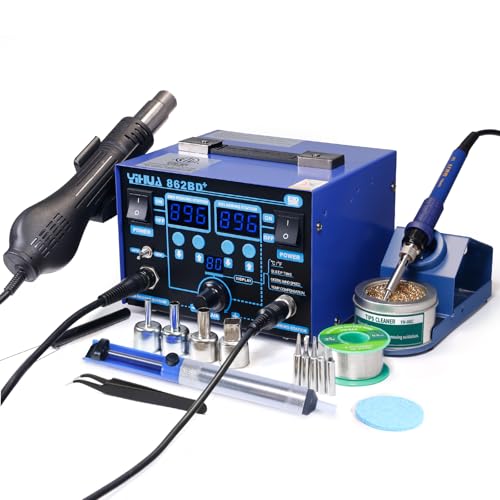
The YIHUA 862BD+ is the better match for a bench that needs more than a contact iron. It combines a soldering station with hot air, giving the user a way to work with SMD components and heat-sensitive rework tasks without buying two separate control units. The iron is listed at 75 watts with a 392°F to 896°F range, while the hot-air side has its own temperature and simulated air-volume displays.
Four hot-air nozzles, five soldering tips, lead-free solder, ESD-safe tweezers as described by the listing, a desoldering pump, brass wool, sponge, and IC popper are included. PID control checks the heating element every 20 milliseconds according to the product information, though that claim should not be treated as an independent measurement of joint temperature. The separate handpieces and safety receptacles add flexibility, but combination stations need more workspace and maintenance than a simple iron station.
Pros
- Combines a 75-watt soldering station with hot-air rework.
- Four hot-air nozzles and five soldering tips are included.
- Three digital displays show iron, hot-air, and air-volume settings.
- Adjustable sleep mode can be set from 0 to 99 minutes.
- Detachable iron and hot-air handpieces are identified in the listing.
Cons
- The 392°F minimum is less flexible for low-temperature iron settings.
- Hot-air set temperature should not be treated as actual component temperature.
This station belongs on a rework-oriented bench, especially where SMD removal and replacement are regular tasks. It is less appealing if the work consists solely of through-hole soldering because the hot-air hardware adds cost and footprint. Use airflow and temperature carefully around small components, and follow appropriate board, ventilation, and heat-management practices.
To buy this product, click here.
8. WEP 882D – Best Compact Two-Function Rework Station

The WEP 882D takes the combination-station idea and keeps it compact. It includes a soldering iron side and a hot-air side with separate LED displays, power switches, temperature controls, and air-volume adjustment. The soldering station adjusts from 392°F to 896°F, while the hot-air side is listed from 212°F to 896°F. That wider hot-air floor may be useful for gentler starting settings, although the actual component temperature will depend on airflow, nozzle, distance, and the board.
The package includes two solder wire spools, five tips, three hot-air nozzles, brass wool, tweezers, and a desoldering pump. Sleep mode for the iron, standby for hot air, automatic shutdown, Celsius and Fahrenheit conversion, and calibration functions make the control layout more practical for repeated work. The US voltage limitation remains relevant, and the listing does not provide measured airflow values.
Pros
- Combines contact soldering and adjustable hot air in one unit.
- Separate displays and controls simplify switching between functions.
- Three hot-air nozzles are included.
- Two solder wire spools and five tips broaden the starting kit.
- Sleep, standby, automatic shutdown, and calibration functions are listed.
Cons
- The iron temperature range begins at 392°F.
- No measured airflow specification is provided in the product information.
Choose the 882D when hot air is a genuine part of the repair process but bench space is limited. It has a more complete rework package than a basic iron station, yet the lack of airflow figures makes direct comparison harder for delicate SMD tasks. For ordinary solder joints, its second heating system may sit unused, making a focused station the cleaner choice.
To buy this product, click here.
9. Digital 100W Soldering Station Kit – Best for Basic Repair Work

This digital 100-watt station kit is aimed at straightforward electronics repair, home projects, and general board work. The listing gives it a 356°F to 896°F adjustable range, a digital temperature display, calibration, and a timer that can set auto hibernation from 0 to 600 seconds. The on/off switch is a welcome practical detail for a station that may sit on a home workbench between projects.
The package includes two helping hands, five tips, solder wire, a dispenser, sponge, tip cleaner, tweezers, a solder sucker, screwdriver, and mini wrench. A steel-pipe design with four vents and a silicone-sheathed handle are also described. The product information does not identify a tip family or temperature stability figure, so this is better viewed as a broad starter kit than a precisely documented production station.
Pros
- 100-watt station offers substantial listed power for general repairs.
- Temperature calibration and digital display are included.
- Auto-hibernate timer can be set from 0 to 600 seconds.
- Two helping hands and five tips support initial board work.
- On/off switch and silicone-sheathed handle add practical convenience.
Cons
- The listing does not identify a specific replacement-tip family.
- Temperature stability and recovery figures are not provided.
This kit works best for occasional repairs where a broad collection of accessories matters more than a documented control specification. It can cover common through-hole and electronics tasks, but buyers planning frequent SMD work should pay closer attention to tip availability and temperature behavior. The Weller or Hakko is a better focused station choice, while the 100-watt kit gives more tools immediately.
To buy this product, click here.
Buying Guide
Temperature Stability Matters More Than the Maximum Setting
Most of these stations reach temperatures high enough for common electronics soldering. That does not make their control systems equivalent. The Weller is the only product here with a supplied stability figure of plus or minus 4°F, while several others list PID control, calibration, or temperature displays without giving a comparable stability value. For small pads, repeatable heat is generally more useful than a dramatic maximum number.
Wattage Shows Available Power, Not Guaranteed Recovery
A 60-watt, 70-watt, 110-watt, or 200-watt rating can indicate how much electrical power the station may have available, but it does not independently prove how well the tip maintains heat on a joint. Heater design, tip mass, sensor placement, and the thermal load of the workpiece all matter. Use wattage as one comparison point rather than a complete performance ranking.
Match the Tip System to the Work
Tip geometry affects access to pads, solder volume, and heat transfer. The YIHUA 926 III includes six 1200/900M series tips, the WEP 927-IV identifies WEP 1400 tips, and the FNIRSI includes nine tips with two handles. Stations with unclear replacement-tip information deserve extra checking before purchase. Included tips are ready to use, while compatible or optional tips may need a separate order.
Decide Whether Hot Air Belongs on the Bench
A two-in-one station can be useful for SMD rework, but it also adds controls, nozzles, handpieces, and workspace demands. The YIHUA 862BD+ and WEP 882D provide both contact soldering and hot air. For ordinary wire, connector, and through-hole work, a focused soldering station is usually a simpler fit. Hot-air temperature settings are starting controls, not guarantees of the temperature reached by a component.
Useful Accessories Can Save Setup Time
Helping hands, a solder sucker, tip cleaner, wire dispenser, and spare tips can make a first bench easier to organize. The WEP 927-IV adds an LED magnifier, while several compact kits include two helping hands. These accessories should influence convenience, not override core concerns such as tip availability, temperature control, voltage, and handpiece usability.
Check Voltage Before Ordering
Many stations in this selection are specified for 110V to 127V or a US-standard plug. The FNIRSI DWS-200 is listed with 100V to 240V input, but the others should be matched to the intended electrical supply. A station’s temperature features do not matter if the power configuration is unsuitable for the workspace.
Best Soldering Station for Electronics FAQ
What temperature range is useful for electronics soldering?
A useful range depends on the solder alloy, tip, joint size, board, and component. Several stations here reach 896°F, but maximum temperature should not be treated as a recommendation for every joint. Start with an appropriate setting for the solder and connection, then adjust carefully while protecting components and the PCB.
Is higher wattage better for PCB work?
Higher wattage can provide more available heating power, which may help with larger joints or ground-plane connections. It does not automatically mean better low-mass electronics work or superior temperature stability. Control quality, tip geometry, heater design, and thermal recovery also shape the result.
Are helping hands worth having in a soldering station kit?
They can be useful for holding a PCB, wire, or connector while both hands remain available for the iron and solder. Their value depends on joint design and clamp adjustment. They are a convenience feature, not a substitute for a stable board holder or careful component placement.
Should I choose a station with hot air?
Choose hot air if you expect to remove or install SMD components that benefit from distributed heating. A two-in-one unit such as the YIHUA 862BD+ or WEP 882D can consolidate equipment. If your work is mostly through-hole or connector soldering, a dedicated iron station may be easier to control and maintain.
Does a digital display prove accurate temperature?
No. A display tells you the selected or reported value, but it does not by itself establish tip temperature, stability, or actual joint temperature. Calibration functions and published stability information provide more useful context, although the workpiece, tip, and solder still affect the joint.
What should I use for lead-free solder?
Lead-free solder generally requires careful heat control and clean tip maintenance. The YIHUA and several other kits include lead-free solder, but an included spool does not mean every setting is ideal for every alloy. Follow the solder manufacturer’s guidance and avoid assuming that one temperature works for all wire and joint combinations.
Final Verdict
The Weller WE1010NA is the strongest overall choice for regular electronics work because its 70-watt station pairs a practical power level with a published stability figure, temperature lock, standby, and auto setback. It is a focused tool rather than a giant starter bundle, and that is precisely why it ranks first for readers who care about repeatable PCB soldering more than a long accessory list.
The YIHUA 926 III is the more appealing value-oriented package, with six tips, helping hands, calibration, sleep settings, and a compact footprint. The FNIRSI DWS-200 is the premium power alternative, while the YIHUA 862BD+ and WEP 882D make sense when hot-air rework is part of the plan. Match the station to the actual joints, tip system, voltage, and workspace. A controlled 70-watt station can be a better electronics tool than a higher-rated unit with less clearly documented behavior.

- Jesse
Jesse is the editor behind Soldering Gear, where he covers soldering irons, stations, rework equipment, and the tools that belong on a practical electronics bench. His work focuses on comparing product specifications, features, compatibility, and intended uses so readers can make more informed buying decisions.
- Best Cordless Soldering Iron: 9 Picks in 2026 September 28, 2026
- Best Portable Soldering Iron: 9 Picks in 2026 September 27, 2026
- What Temperature for Soldering Electronics? September 26, 2026
- Best Soldering Station for Beginners: 9 Picks in 2026 September 25, 2026
- Best Solder Fume Extractor: 9 Picks in 2026 September 24, 2026