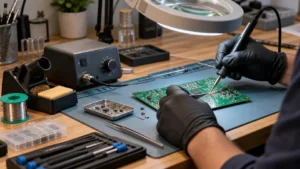
Small SMD parts punish sloppy heat control. A pad lifts, a tiny capacitor skitters away, or a neighboring component suddenly looks suspiciously shiny,…
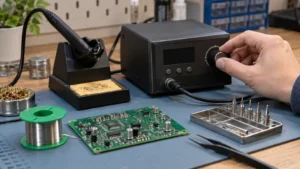
A soldering station gives the operator control over tip temperature while providing a secure stand for the handpiece. Using one effectively requires m…
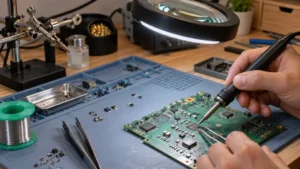
Small SMD joints expose weak soldering tools quickly. A tip that is too broad can bridge neighboring pads, a sluggish heater can make you hold heat on…
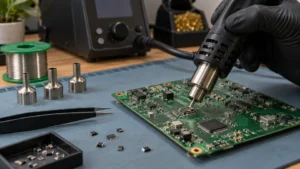
Small SMD parts punish sloppy heat. A nozzle that is too broad can warm neighboring components, while excessive airflow can send a loose resistor skit…
What tools do you need for soldering electronics? A practical basic kit consists of a temperature-controlled soldering iron or station, a compatible t…
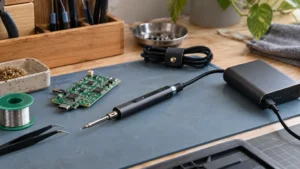
A USB-C soldering iron can turn a bulky bench setup into a tool that travels in a laptop bag, repair kit, or drawer. The appealing part is convenience…
Choose solder by matching four characteristics to the work: alloy, flux chemistry, wire diameter or paste form, and process requirements. For general …
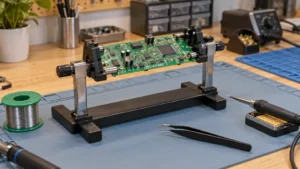
A PCB holder earns its keep the first time a board shifts as a soldering iron touches a joint. A loose circuit board can turn a clean repair into a fr…
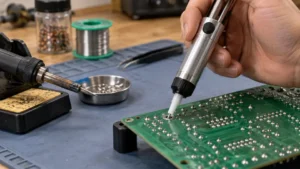
A desoldering pump earns its place beside a soldering iron the moment a component refuses to leave a circuit board cleanly. Heat loosens the joint, th…
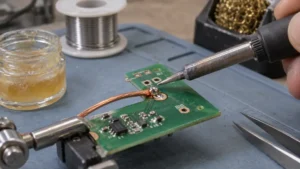
Solder that refuses to stick is usually failing to wet the surface. The most common reasons are oxidation, contamination, inadequate flux, poor heat t…