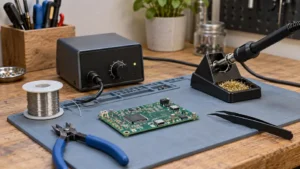
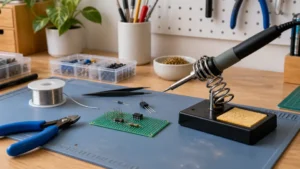
A budget soldering station should give you controlled heat, a usable stand, and enough thermal capacity for ordinary electronics work without turning …
A first soldering project often starts with a small circuit board, a loose wire, or a kit spread across the kitchen table. Then the iron heats up, the…
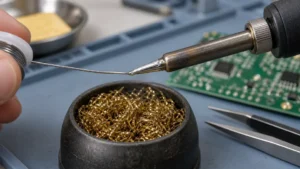
Tinning a soldering iron tip means covering its working surface with a thin layer of solder. This layer limits oxidation and improves thermal contact …
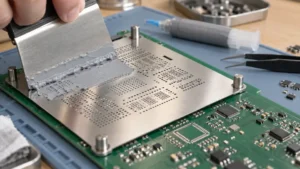
Solder paste for SMD work has to do several jobs at once. It must place cleanly on small pads, hold components in position, melt at a temperature suit…
A good helping-hands tool turns a fussy soldering job into a controlled one. Instead of pinning a PCB against a coffee mug or chasing a loose wire acr…
A reliable soldered wire splice starts with clean conductors, a stable mechanical connection, and enough heat transfer to let solder wet the wires. Th…
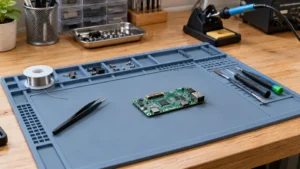
A soldering mat has one simple job: give hot tools, solder, flux, screws, and delicate boards a controlled place to land. The best options make a cram…
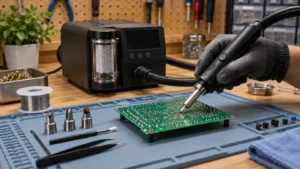
Removing a stubborn row of through-hole solder can turn a five-minute repair into a hot, messy wrestling match. A good desoldering station changes tha…
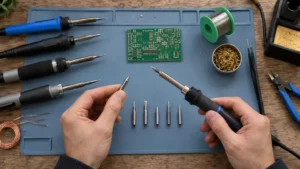
The right soldering iron is determined by the joints you expect to make, their thermal demand, the space around them, and where you will work. For reg…
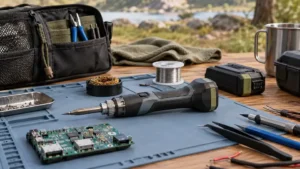
Power cords become surprisingly restrictive once soldering moves away from a dedicated workbench. Repairing a wire inside a vehicle, touching up a PCB…