How to Clean a Soldering Iron Tip

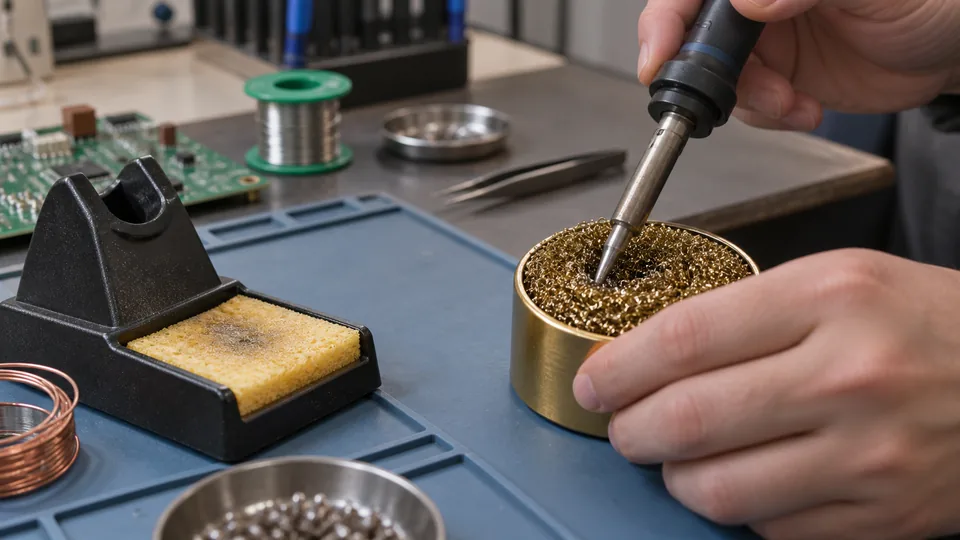
A soldering iron tip transfers heat properly only where solder can wet its surface. If the working area looks dark, rejects molten solder, or makes heat transfer feel inconsistent, clean it while hot with brass tip wool or a damp soldering sponge, then immediately coat it with fresh solder. That final coating, called tinning, protects the plated surface from further oxidation.
Routine cleaning should be gentle. Most modern tips have a thin iron-plated working surface over a copper core. Filing, sanding, or scraping can break through that plating and permanently shorten the tip’s life.
Routine Tip Cleaning During Soldering
For normal flux residue and light oxidation, use brass tip-cleaning wool or a cellulose sponge intended for soldering. Keep compatible solder and flux available so the cleaned surface can be retinned without delay.
- Heat the iron to its normal working setting. The appropriate setting depends on the solder alloy, tip geometry, joint size, and station behavior. A hotter setting is rarely a useful substitute for proper cleaning.
- Remove loose residue. Insert the tip into brass wool and twist it gently once or twice. If using a sponge, dampen it with water, squeeze out the excess, and wipe each side of the tip briefly. The sponge should be moist rather than saturated.
- Apply fresh solder immediately. Feed a small amount of solder onto the cleaned working surfaces. The solder should spread into a thin, continuous coating instead of gathering into an isolated ball.
- Remove the excess. Give the tip one light wipe in brass wool or on the sponge. Leave a visible film of solder on the surface. Do not wipe it completely dry.
- Check wetting before returning to the joint. A serviceable tip should accept solder across its intended contact area. If solder continues to pull away from dark patches, move to the restoration process rather than repeatedly wiping or raising the temperature.
Clean the tip whenever residue interferes with wetting, rather than wiping it after every contact by habit. Excessive wiping removes the protective solder layer and exposes the hot plating to air more frequently.
Brass Wool or a Damp Sponge?
Both methods can clean a plated soldering tip, but they behave differently.
| Cleaning method | Useful characteristics | Limitations |
|---|---|---|
| Brass tip-cleaning wool | Removes routine residue with little temperature drop and does not require water | Can collect solder and flux debris, so the holder needs periodic emptying or replacement |
| Damp cellulose sponge | Provides a simple visual wipe and removes loose flux residue effectively | Cools the tip during contact, especially if the sponge is too wet or the wipe lasts too long |
Use brass wool made for soldering equipment. Steel wool is harder, can damage plating, and may leave steel fragments around the work area. Scouring pads and abrasive household cleaners are unsuitable for routine tip care.
A soldering sponge should be clean and free from soap or cleaning chemicals. A brief wipe is enough. Repeatedly pressing the tip into a waterlogged sponge creates unnecessary temperature cycling and may slow recovery on irons with limited thermal capacity.
How to Restore a Black or Oxidized Tip
A dark tip that will not accept solder has usually developed an oxide layer. Light oxidation may respond to fresh flux and solder. More stubborn oxidation may require a compatible tip-tinning compound.
Try Fresh Solder and Flux First
- Bring the tip to a suitable working temperature.
- Touch compatible electronics flux to the affected working area. Flux-core solder may supply enough flux for mild oxidation, while a separate flux can improve contact on a reluctant surface.
- Feed solder onto the tip while the flux is active.
- Rotate the iron so solder reaches each plated working face.
- Wipe gently, then apply another thin solder coating.
If the solder begins spreading across the surface, continue with one more cleaning and tinning cycle. Stop if the tip remains black after a few attempts. Repeated heating and aggressive wiping can worsen oxidation without restoring damaged plating.
Use Tip Tinner for Stubborn Oxidation
Tip tinner combines solder with cleaning agents that can break through heavier surface oxidation. Check that the product is suitable for the tip, soldering process, and manufacturer’s maintenance guidance.
- Heat the tip within the tinner product’s specified operating conditions.
- Press only the oxidized working area lightly into the compound.
- Move or rotate the tip until the surface accepts a solder coating.
- Wipe off residue with brass wool or a damp soldering sponge.
- Apply normal solder to leave the tip fully tinned.
Tip tinner is a restoration product rather than the preferred cleaner for every solder joint. Some formulations use active chemistry that can be harder on tip plating if used excessively. Follow the product instructions and remove remaining residue after treatment.
How to Tell Whether Cleaning Worked
Judge the result by solder wetting and heat-transfer behavior. A restored tip should show these signs:
- Solder spreads over the intended working faces.
- The coating remains attached instead of retreating into a bead.
- The wetted area contacts the joint without dark oxide separating the surfaces.
- Solder melts through normal thermal contact without unusually long dwell time.
Surface brightness can vary with solder alloy and flux, so a mirror-like appearance is not required. The more useful indicator is a stable, continuous solder film.
When the Tip Cannot Be Restored
Cleaning cannot repair plating that has cracked, dissolved, or worn through. Replace the tip if it has pits, holes, deep erosion, exposed copper, or a distorted working surface that no longer holds solder. A tip that repeatedly turns black soon after careful restoration may also have compromised plating.
Before discarding a tip, confirm that the apparent problem is not caused by another part of the setup:
- Poor thermal contact inside the handpiece: A loose, incorrectly installed, or incompatible tip may heat unevenly.
- Contaminated solder or unsuitable flux: Plumbing flux, acid flux, and other corrosive materials can damage electronics tools and assemblies.
- Excessive idle temperature: Leaving a tip hot and bare accelerates oxidation.
- Insufficient contact area: A very fine point may struggle to transfer heat into a larger joint despite being clean.
- Heavy joint contamination: Oxides, coatings, or dirt on the workpiece can make a healthy iron tip appear ineffective.
If a replacement tip also refuses to wet, stop increasing the temperature and inspect the solder, flux, tip compatibility, heater contact, and station operation.
Practices That Damage Soldering Tips
Avoid methods that remove or attack the plated surface:
- Filing or sanding plated tips
- Scraping with a knife or other hardened metal tool
- Cleaning with steel wool or abrasive pads
- Dipping the tip into acid flux or plumbing chemicals
- Holding the iron at an unnecessarily high setting
- Leaving the heated tip bare after cleaning
- Applying heavy pressure against a sponge, cleaner, or joint
Solid copper tips used with some specialized or older irons may permit reshaping under their manufacturer’s instructions. That practice does not apply to common iron-plated tips. If the tip construction is uncertain, treat it as plated and avoid abrasion.
Keep the Tip Clean Between Uses
Apply a generous solder coating before placing a hot iron in its stand for an extended pause. For shutdown, coat the working surface, switch off the iron, and let the solder remain while the tip cools. The solidified layer limits exposure of the plating to air during storage.
At the next session, heat the iron, wipe away the old coating, and apply fresh solder. Keep the brass wool holder clear of accumulated solder fragments, and replace a sponge that has become charred, contaminated, or physically degraded.
Work around the hot tip carefully, keep its stand stable, and wear eye protection where splatter is possible. Flux produces fumes when heated, so use ventilation appropriate for the materials and workspace. After handling lead-containing solder or contaminated cleaning debris, wash your hands before eating or touching your face.

- Jesse
Jesse is the editor behind Soldering Gear, where he covers soldering irons, stations, rework equipment, and the tools that belong on a practical electronics bench. His work focuses on comparing product specifications, features, compatibility, and intended uses so readers can make more informed buying decisions.
- Best Soldering Iron for Phone Repair: 9 Picks in 2026 October 27, 2026
- Best Hot Air Rework Station for Phone Repair: 9 Picks in 2026 October 26, 2026
- Why Is My Soldering Iron Not Melting Solder? October 25, 2026
- Best Portable Solder Fume Extractor: 9 Picks in 2026 October 24, 2026
- Best Desoldering Wick: 9 Picks in 2026 October 23, 2026