Best Soldering Flux for Electronics: 9 Picks in 2026

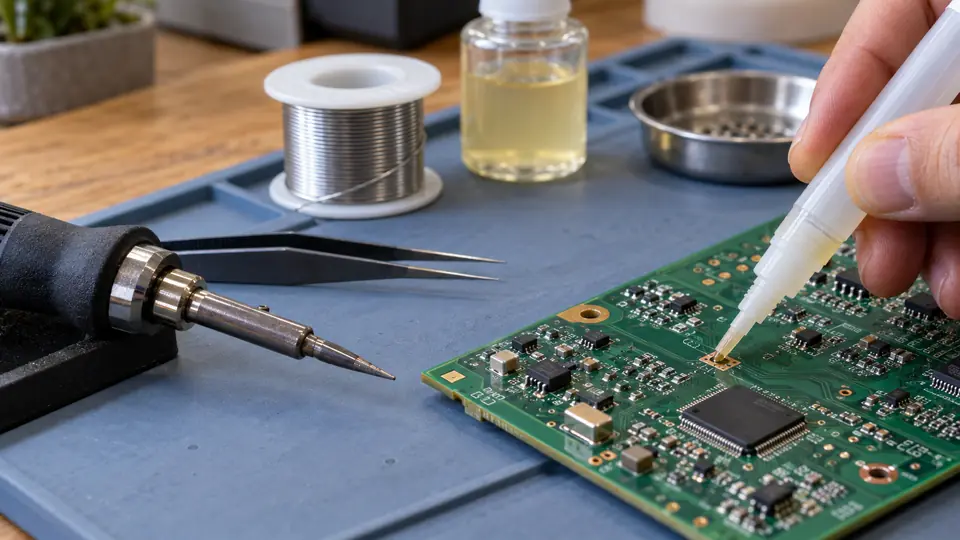
A small bead of flux can decide whether a solder joint turns smooth and shiny or sits stubbornly on the pad like a cold lump. That is why buyers searching for the best soldering flux for electronics usually want more than a generic paste. They need a formulation that helps solder wet copper, component leads, and PCB pads without creating a corrosive mess afterward.
Flux format matters as much as chemistry. Liquid flux spreads quickly across a connector or oxidized joint, while paste stays put on a tiny SMD pad. No-clean products can reduce cleanup, but that label does not mean every residue should remain on a board forever. The strongest choices here are electronics-focused rosin or RMA formulas, with application methods suited to the work. The SRA 135 Rosin Paste earns the top spot because its semi-solid texture gives controlled placement across both circuit boards and copper wire.
The products below range from liquid droppers and jars to syringe pastes bundled with desoldering braid. Some suit occasional repairs, while others make more sense for a bench that sees repeated rework. The comparison weighs flux type, application control, residue claims, package format, and the practical difference between a standalone flux and a repair kit.
Quick Answer
Best Overall: SRA Solder 135 Rosin Paste is the strongest all-around choice for electronics because its semi-solid RA flux is easy to place on boards or wire and is listed for both leaded and lead-free solder.
Best Liquid Flux: Liquid Solder Flux Dropper suits broad coverage, connector work, and rework where a thin liquid layer is useful.
Best for Small SMD Rework: No Clean Solder Flux Paste, 4 Pack uses syringe dispensing and fine tips for controlled placement around small pads.
Best Soldering Flux for Electronics Comparison Table
| Product | Best For | Format | Key Detail |
|---|---|---|---|
| SRA Solder 135 Rosin Paste | Overall electronics use | Semi-solid paste | RA flux, 2 oz jar |
| Liquid Solder Flux Dropper | General PCB and connector work | Liquid | RMA, 30 ml |
| Desoldering Wick and Flux Paste Kit | Repair and rework | Paste and wick | 10cc flux paste |
| Crivon Flux Paste and Wick Kit | Controlled PCB rework | Syringe and wick | Low-residue rosin paste |
| BEEYUIHF Liquid Flux Dropper | Lead-free soldering | Liquid | RMA, 30 ml, two tips |
| No Clean Flux Paste, 4 Pack | SMD and repeated repairs | Syringe paste | Four 10cc syringes |
| BEEYUIHF Rosin Solder Flux | Jar-based bench work | Rosin paste | Two jars, 40g each |
| TOWOT Liquid Solder Flux | Simple liquid application | Liquid | No-clean RMA formula |
| Kaisiking Flux and Desoldering Wick Kit | Precision rework | Paste and wick | 10cc paste, 3m wick |
The detailed reviews explain how each format behaves at the bench and where its trade-offs matter.
1. SRA Solder 135 Rosin Paste, Best Overall
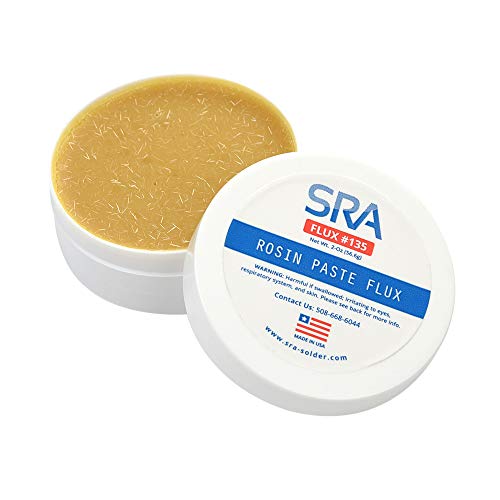
A semi-solid flux is often the sweet spot for electronics repair. It can be dabbed onto a PCB pad with a tool, or used to coat copper wire before soldering, without immediately running into nearby components. SRA 135 is listed as type RA rosin flux, with an active temperature range of 93 to 315°C. That range gives the product a clear electronics focus rather than the harsher behavior associated with plumbing flux.
The 2-ounce jar also makes this a practical bench supply for projects that move between circuit boards, wire ends, and small repairs. The paste format favors controlled application, especially for a board where excess liquid could spread under components. It is listed for leaded and lead-free solder, though the correct iron temperature still depends on the solder and joint. This is the option I would reach for first when one flux needs to handle a mixed repair drawer.
Pros
- Semi-solid texture allows controlled placement on pads and wire.
- Listed for both leaded and lead-free solder.
- RA rosin formulation is intended for electrical and electronics work.
- 2-ounce jar provides a useful amount for regular bench work.
- Suitable for PCBs, copper wire, audio gear, computers, and hobby projects.
Cons
- Jar application is less precise than a fine syringe tip.
- RA flux may call for more cleanup judgment than a minimal-residue RMA product.
Choose SRA 135 if you want a traditional paste that can cover several electronics jobs without fuss. It suits a workbench where wire tinning and PCB repair happen side by side. A syringe paste may be better for dense SMD placement, while a liquid dropper may spread more easily across large connector contacts.
To buy this product, click here.
2. Liquid Solder Flux Dropper, Best Liquid Flux

Liquid flux earns its keep when a joint needs a thin, even coating. This 30 ml dropper uses an RMA rosin formula, and the listing describes it as suitable for electronic soldering with leaded and lead-free materials. Liquid can wick along a connector pin or spread across an oxidized surface quickly, which is handy when a paste would need to be worked into place.
The product information also identifies the formula as chloride-free, zinc-chloride-free, and ammonium-chloride-free, with non-corrosive and non-conductive dried residue claims. Those details support its intended PCB use, but a careful technician still applies only what the joint needs and cleans residue when the board or application calls for it. The dropper format is compact and easy to keep beside a soldering station.
Pros
- RMA rosin formula is intended for electronics soldering.
- Liquid consistency spreads across pins, pads, and wire ends.
- 30 ml bottle offers a practical general-purpose quantity.
- Listed for leaded, lead-free, gold, silver, copper, and tin alloys.
- Chloride-free and zinc-chloride-free according to the product information.
Cons
- Liquid can spread farther than intended on tightly packed boards.
- A dropper offers less pinpoint control than a fine syringe tip.
This is a strong match for connectors, cable ends, through-hole joints, and general rework. Pick a paste instead for tiny SMD pads where staying exactly in one spot matters more than fast coverage. Storage should also keep the cap sealed, since liquid flux is less forgiving of an open container than a jar.
To buy this product, click here.
3. Desoldering Wick and Soldering Flux Paste Kit, Best Compact Repair Kit

A repair job often has two beats: add flux so fresh solder flows, then remove excess solder so the part can come free. This kit pairs 10cc of no-clean flux paste with desoldering wick, giving a compact way to handle both stages. The product information describes the paste as high-activity rosin intended to help remove oxide from the soldering surface.
That pairing is especially useful beside a small iron for switch replacement, connector repair, or correcting a bridge on a PCB. The wick is not a substitute for a dedicated flux bottle when large areas need coating, but the combined format keeps the basic rework tools together. The listing emphasizes low residue, although residue expectations should still be judged by the board, flux amount, and cleaning requirements.
Pros
- Combines flux paste and desoldering wick in one kit.
- 10cc paste format suits targeted PCB repair.
- High-activity rosin is intended to help with oxidized surfaces.
- No-clean positioning can reduce routine cleanup.
- Useful for solder removal and fresh-joint preparation.
Cons
- The kit provides less flux than a larger standalone jar.
- Wick width and length are not clearly identified in the product information.
This belongs in a small repair box where versatility matters more than maximum volume. It is a sensible first purchase for occasional board correction, while a dedicated paste or liquid product makes more sense for repeated production-style work. Use the wick with controlled heat and avoid pulling against a pad that has not fully released.
To buy this product, click here.
4. Crivon Flux Paste and Desoldering Wick Kit, Best for Controlled Rework

The Crivon kit takes the apply, remove, and rework cycle seriously. Its syringe paste is described as having a balanced viscosity that stays on PCB traces rather than immediately running across the board. That quality matters around SMD parts, where a tiny excess can turn a clean repair into a sticky cleanup job.
The package also includes copper desoldering braid, so it can help with excess solder and bridges after a component has been placed. The listing identifies the flux as low-residue, no-clean rosin paste and describes compatibility with PCB, SMD, and general electrical work. Those are useful claims for repair, but no-clean should still be treated as a convenience rather than a command to skip inspection and cleaning.
Pros
- Syringe format supports targeted application on PCB pads.
- Paste is described as stable on traces during dispensing.
- Includes copper solder wick for removing excess solder.
- Listed for SMD, PCB repair, and electrical maintenance.
- Low-residue rosin format can simplify routine rework.
Cons
- The listing does not clearly state the wick length or width.
- A combined kit may provide less standalone flux than a larger jar.
Pick Crivon for a repair drawer that regularly handles bridges, component replacement, and uneven joints. It is more task-focused than a simple jar, while the SRA paste remains the better choice for broad wire and board coverage. Buyers who already own desoldering braid may prefer to spend their budget on a dedicated flux container instead.
To buy this product, click here.
5. BEEYUIHF Liquid Solder Flux Dropper, Best Liquid Option for Lead-Free Work
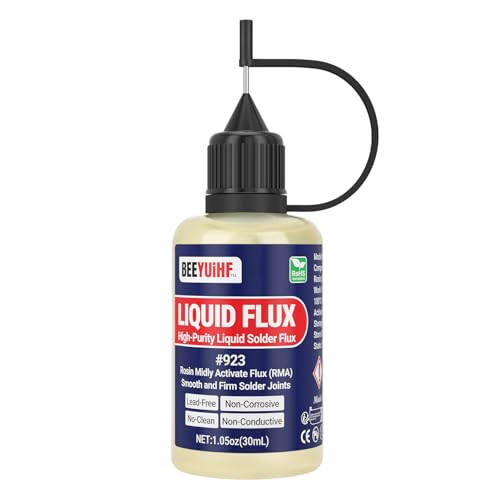
This BEEYUIHF liquid flux is built around an RMA rosin formula identified as #923. The listing describes it as lead-free, chloride-free, halogen-free, non-flammable, and suitable for electronic repair. Its liquid consistency should be useful for audio cable connectors, PCB joints, and SMD work where a quick coating helps solder wet the surface.
The bottle includes two tapered tips and a sealing cap. That is a small detail, but it changes the feel of application: a broad squeeze can cover a wire end, while a narrow tip can place a smaller amount near a pad. The 30 ml size mirrors the practical range of a general bench bottle, and the product information describes low volatility and a mild odor rather than an aggressive chemical profile.
Pros
- RMA rosin formula is aimed at electronics repair.
- Two tapered tips allow different application styles.
- 30 ml squeeze bottle provides controlled liquid dispensing.
- Listed for PCB, audio connector, SMD, and rework applications.
- Lead-free, chloride-free, and halogen-free claims are stated in the listing.
Cons
- Liquid still requires care around tightly spaced components.
- The listing does not identify a dedicated cleaning procedure.
This is a good fit for someone who prefers liquid over jar paste and wants a little more tip flexibility. The two-tip setup gives it an advantage over a basic dropper, although a syringe remains more precise for very small pads. Apply sparingly, inspect the finished joint, and follow the solder and board maker’s cleaning requirements.
To buy this product, click here.
6. No Clean Solder Flux Paste, 4 Pack, Best for SMD Precision

Small SMD pads reward restraint. A syringe with a fine tip can put flux exactly where it belongs, without flooding neighboring contacts. This package includes four 10cc syringes, and the product information describes the paste as lead-free, halogen-free, non-corrosive, and suitable for PCB, SMD, SMT, and general electronics repair.
The four-pack is useful for a busy repair drawer because each syringe can remain capped until needed. The listing gives up to 12 months of shelf life before use when stored away from heat and sunlight, and it warns that the paste may thicken in very cold conditions. That makes sealing and storage part of the product’s practical performance, especially after a long afternoon of phone, appliance, or instrument repairs.
Pros
- Four 10cc syringes provide multiple sealed portions.
- Fine tips support controlled placement on small pads.
- Listed for PCB, SMD, SMT, phones, appliances, and instruments.
- Lead-free, halogen-free, and non-corrosive claims suit electronics use.
- Product information gives storage and shelf-life guidance.
Cons
- Paste can thicken in very cold environments.
- Four syringes take more storage space than one small tube or jar.
Choose this set if precise application and repeated small repairs matter more than broad coverage. The multiple syringes are handy for a bench that uses flux often, while a liquid dropper remains faster for long connector rows or wire bundles. Keep the cap fitted tightly after each use so the paste stays workable.
To buy this product, click here.
7. BEEYUIHF Rosin Solder Flux, Best Two-Jar Supply

Jar flux has a familiar bench rhythm. Open the lid, pick up a small amount, and place it directly on the joint or soldering tip. This BEEYUIHF product uses #7523 RMA rosin flux and is supplied as two jars containing 40g each according to the listing. The moderate-viscosity format should stay more settled than liquid flux while remaining workable around PCB and component leads.
The product information identifies the residue as non-corrosive and describes the formula as lead-free, chloride-free, and suitable for SMD, BGA, LED, PCB, IC, and CPU repair. It also gives a suggested soldering temperature range of 100 to 400°C. That figure is a product guideline, not a promise that every joint should be heated to the upper end, since solder alloy, pad size, component sensitivity, and board construction all matter.
Pros
- Two-jar package provides a substantial supply for bench work.
- RMA rosin format is intended for electronics repair.
- Moderate viscosity supports controlled jar application.
- Listed for SMD, BGA, LED, PCB, IC, and CPU work.
- Product information identifies the flux as ROH0 under J-STD-004 and J-STD-004B.
Cons
- Jar application is less precise than a syringe for tiny pads.
- The larger quantity may be unnecessary for occasional repairs.
This product makes sense for a bench that wants jar flux available for frequent rework and tinning. The two-container format can also keep a spare sealed while the first is in use. Pick a smaller syringe or liquid bottle if your projects are occasional and involve only a handful of joints at a time.
To buy this product, click here.
8. TOWOT Liquid Solder Flux, Best Simple Dropper

TOWOT keeps the format straightforward: a 30 ml liquid RMA rosin flux with a precision dropper. The listing says the high-purity formula is intended to promote wetting and smooth solder flow, while the no-clean formulation leaves minimal non-conductive, non-corrosive residue. For a basic electronics setup, that makes the bottle easy to understand and easy to keep near the iron.
There are fewer published details here than with some of the other products in this group. The listing does not clearly identify tip accessories, a temperature range, or a broader alloy list. That does not make it unsuitable, but it limits how confidently it can be matched to specialized work. It is better viewed as a simple general-purpose liquid for PCB repair and DIY projects than as a highly specified rework chemistry.
Pros
- 30 ml bottle suits general bench use.
- RMA rosin formula is aimed at electronics and PCB repair.
- Liquid format spreads easily across soldering surfaces.
- No-clean positioning can reduce routine residue cleanup.
- Precision dropper supports more controlled dispensing than an open jar.
Cons
- Published product information gives fewer formulation details than some alternatives.
- Liquid application can spread beyond a small target area.
TOWOT is a sensible pick for a modest repair station that wants liquid flux without a large accessory bundle. Select a syringe paste for dense SMD work, or choose the SRA jar if your bench alternates between wire and board jobs. Before ordering, check the current listing for the exact dropper configuration.
To buy this product, click here.
9. Kaisiking Flux and Desoldering Wick Kit, Best for Precision Rework

Kaisiking combines 10cc of no-clean flux paste with 3m of 0.1-inch braided desoldering wick. That pairing is aimed at focused rework rather than broad-area fluxing. The product information describes high-activity rosin paste for oxidized PCB surfaces and a syringe plunger intended to resist blockage, which could be useful when applying small amounts repeatedly.
The 0.1-inch braid is a stated size, giving the kit a clearer fit for ordinary board rework than listings that omit wick dimensions. It may suit bridge removal, component replacement, and small repair jobs where flux and braid need to sit within reach. The listing uses strong performance language, so treat those statements as product claims rather than independent test results.
Pros
- Includes 10cc of no-clean flux paste and 3m of wick.
- Wick width is identified as 0.1 inch.
- Syringe design is described as resistant to plunger blockage.
- Rosin paste is intended for oxidized PCB surfaces.
- Compact format suits a toolbox or small repair station.
Cons
- 10cc is a smaller flux quantity than a full-size jar.
- The kit is less useful if you already have plenty of desoldering braid.
This is a practical choice for targeted rework, especially if the same drawer needs both fresh-joint preparation and solder removal. It gives up the volume and broad coverage of a jar, but the defined braid size and syringe format make the kit easier to match to small board repairs. A standalone flux remains preferable for routine wire tinning or large connector work.
To buy this product, click here.
Buying Guide
Match the Flux Format to the Joint
Liquid flux is useful when a thin layer must travel across a connector, wire end, or several exposed surfaces. Paste is easier to contain around a small PCB pad, especially when a syringe tip can place a tiny bead exactly where the iron will work. A jar gives a comfortable middle ground for general bench repairs, but it usually needs a separate applicator for fine SMD work.
R, RMA, and RA Describe Different Flux Behavior
Rosin formulas are common in electronics because they are intended to help solder wet oxidized metal surfaces. RMA means rosin mildly activated, while RA indicates a more activated rosin category. The SRA 135 product is listed as RA, while several liquid products use RMA descriptions. Activity can help difficult joints, but residue handling and the board’s long-term requirements still matter.
No-Clean Does Not Mean Ignore the Board
No-clean products are intended to leave little residue or reduce the need for routine washing. They can be convenient on many repairs, but the right choice depends on how much flux was applied, how visible the residue is, and what the finished assembly requires. A tiny repair may look fine after heating, while a heavily fluxed board may still deserve inspection and cleaning with a suitable electronics-safe method.
Application Control Matters Around SMD Parts
Small pads and close component spacing make excess flux inconvenient. Syringes such as the four-pack product or the Crivon kit provide more direct placement than a broad liquid dropper. A fine tip does not guarantee a perfect repair, but it makes it easier to avoid flooding nearby contacts and wasting material.
Check Leaded and Lead-Free Compatibility
Several products are listed for leaded and lead-free solder. That describes intended use, not a universal temperature setting. Lead-free solder often behaves differently from leaded solder, and the iron temperature should follow the solder and component requirements rather than a flux label alone.
Separate Flux From Desoldering Accessories
A kit containing flux and wick can be excellent for repair, but the wick is not extra flux and the flux is not a substitute for a desoldering tool. Combined kits are convenient for bridge removal and component replacement. Standalone jars and droppers usually make more sense if the main job is soldering new joints or tinning wires.
Best Soldering Flux for Electronics FAQ
What type of flux is best for electronics?
Rosin, RMA, and RA fluxes intended for electrical or electronics work are the most relevant choices in this guide. Avoid assuming that general-purpose plumbing flux is suitable for a PCB. The product should clearly identify an electronics application and provide residue or cleaning information where possible.
Is liquid or paste flux better for circuit boards?
Neither format wins every job. Liquid spreads quickly across pins, connectors, and wire ends. Paste stays in place better on individual pads and small SMD areas. A repair bench that handles both jobs may benefit from keeping one liquid bottle and one controlled paste available.
Can no-clean flux be left on a PCB?
No-clean flux is intended to reduce or sometimes avoid post-solder cleaning, but the amount and type of residue still matter. Inspect the board after soldering. If residue is heavy, sticky, visible around sensitive areas, or inconsistent with the assembly requirements, use an appropriate electronics cleaning process rather than relying on the label alone.
Is RMA flux safe for lead-free solder?
Several RMA products in this roundup are listed for lead-free solder, including the liquid dropper options. That means the product is intended for that application, but it does not determine the correct iron setting or guarantee identical behavior with every alloy. Match the flux, solder, temperature, and cleaning approach to the specific repair.
How much flux should be applied?
Use enough to wet the joint and help the solder flow, then stop. A small bead or thin coating is usually easier to control than a board covered in liquid. Syringe paste can help with tiny pads, while a dropper may need a lighter touch around densely populated components.
Do I need separate flux if my solder wire has a flux core?
Flux-core solder already contains flux, but extra flux can help with oxidized surfaces, rework, desoldering, and difficult wetting. Apply it sparingly. Adding more flux does not compensate for a dirty tip, poor thermal contact, unsuitable solder, or a joint that has not been heated correctly.
Is soldering flux corrosive?
Some electronics flux products are described as non-corrosive, while flux chemistry and residue behavior vary by formulation. Plumbing and acid fluxes should not be treated as interchangeable with electronics flux. Read the product’s intended application and residue guidance, then inspect and clean the board when appropriate.
Final Verdict
SRA Solder 135 Rosin Paste is the strongest overall choice because it balances controlled paste application, electronics-focused rosin chemistry, broad project suitability, and a useful 2-ounce jar. It fits the messy reality of a bench where one repair involves copper wire and the next involves a circuit board. The Liquid Solder Flux Dropper is the better alternative for fast liquid coverage, while the four-pack syringe paste has the clearest fit for repeated small-pad work.
Choose a combined kit such as Crivon, the compact 10cc repair set, or Kaisiking if desoldering is part of the same job. Choose a jar when volume and general bench use matter more than pinpoint placement. Whichever format you select, apply less than you think you need, keep the iron tip clean, inspect the finished joint, and treat no-clean claims as a cleanup convenience rather than a substitute for sound electronics practice.

- Jesse
Jesse is the editor behind Soldering Gear, where he covers soldering irons, stations, rework equipment, and the tools that belong on a practical electronics bench. His work focuses on comparing product specifications, features, compatibility, and intended uses so readers can make more informed buying decisions.
- Best Soldering Iron for Phone Repair: 9 Picks in 2026 October 27, 2026
- Best Hot Air Rework Station for Phone Repair: 9 Picks in 2026 October 26, 2026
- Why Is My Soldering Iron Not Melting Solder? October 25, 2026
- Best Portable Solder Fume Extractor: 9 Picks in 2026 October 24, 2026
- Best Desoldering Wick: 9 Picks in 2026 October 23, 2026