Best Soldering Flux: 9 Picks in 2026

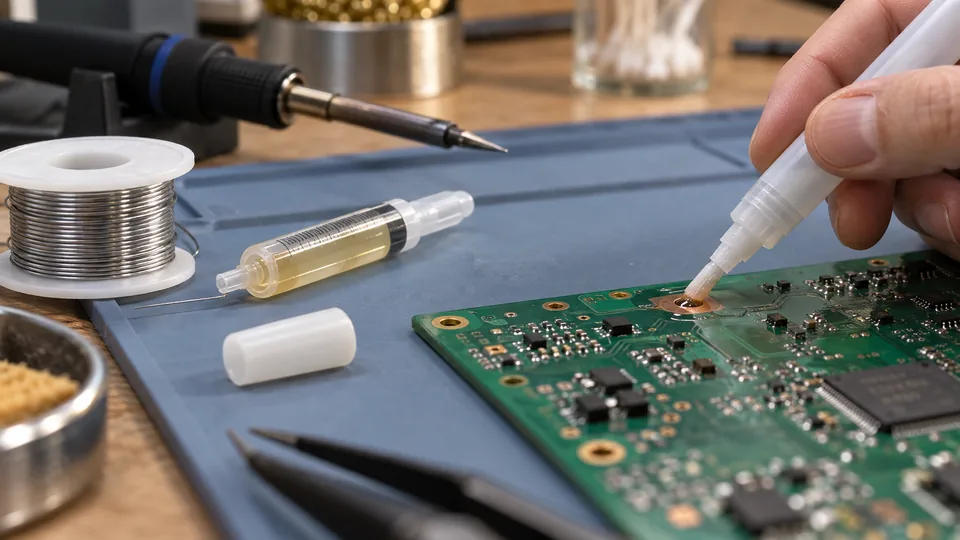
A good soldering flux can turn a stubborn, dull joint into a clean connection that wets smoothly with a light touch of the iron. Buyers usually look for flux after dealing with oxidized copper, solder that beads instead of spreading, or tiny PCB pads that refuse to accept fresh solder. The real choice is between liquid, paste, and syringe formats, then between rosin, RMA, RA, and no-clean formulations that behave differently during repair work.
Application method matters more than flashy wording on the jar. Liquid flux can spread across a pad or wick into a braid, while paste stays put on a small joint and is easier to control around SMD parts. A no-clean label can reduce cleanup, but it does not mean every residue should be ignored. Chemistry, residue, activity, quantity, and the type of soldering project all deserve attention. The SRA 135 Rosin Paste stands out as the strongest overall choice because its electronics-focused RA formula, semi-solid texture, and stated leaded and lead-free compatibility cover a wide range of bench work.
The products below include standalone fluxes and several flux-and-wick kits aimed at rework. They are ranked by how directly they suit electronics soldering, how clearly their application method is described, and how useful their format should be for everyday PCB repair. A compact syringe may suit delicate pads, while a larger jar or multipack makes more sense for repeated work.
Quick Answer
- Best Overall: SRA Solder 135 Rosin Paste for controlled application on PCBs and copper wire.
- Best Liquid Flux: Liquid RMA Solder Flux Dropper for spreading flux across pads, wires, and rework areas.
- Best for Precision Repairs: No Clean Solder Flux Paste, 4-Pack for small pads, SMD work, and repeated applications.
- Best Flux and Wick Kit: Crivon Flux Paste and Desoldering Wick Kit for apply, remove, and rework tasks in one package.
Best Soldering Flux Comparison Table
| Product | Best For | Format | Standout Detail |
|---|---|---|---|
| SRA Solder 135 Rosin Paste | General electronics work | Paste in 2 oz jar | RA formula, 93 to 315°C active range |
| Liquid RMA Solder Flux Dropper | PCB and wire soldering | Liquid, 30 mL | Neutral-pH RMA formula |
| BEEYUIHF Liquid Solder Flux | Controlled liquid application | Liquid, 30 mL | Two tapered tips and cap |
| No Clean Solder Flux Paste, 4-Pack | SMD and repeated repairs | Four 10cc syringes | Fine tips and lead-free formula |
| Crivon Flux Paste and Desoldering Wick Kit | PCB rework | Syringe paste and braid | Apply-and-remove workflow |
| 2 Jar Rosin Soldering Flux | High-volume bench use | Two 35 g jars | Large combined quantity |
| 10g Solder Flux Paste | Small repair jobs | Paste in metal tin | Brush, swab, squeeze, or dip application |
| Kaisiking Flux and Desoldering Wick | Compact rework kits | 10cc paste and 3 m wick | Plunger-focused syringe design |
| Lesnow Flux Paste and Wick Braid | Through-hole and PCB corrections | 10cc paste and 10 ft braid | 0.1-inch copper desoldering wick |
The detailed reviews explain how each format behaves, where its stated chemistry fits, and which trade-offs matter before ordering.
1. SRA Solder 135 Rosin Paste — Best Overall
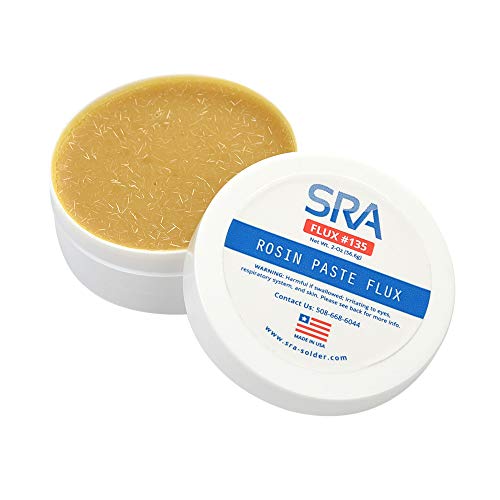
A semi-solid flux is often easier to manage than a thin liquid when a repair involves one pad, one wire, or a tight cluster of components. SRA 135 uses a wax-like paste consistency that can be dabbed onto a PCB or used on copper wire without immediately running across the board. The listing identifies it as type RA flux for electronics, with an active temperature range of 93 to 315°C (200 to 600°F), giving shoppers more useful information than a generic “high activity” label alone.
The 2-ounce jar also suits a repair bench that sees regular use. Its stated applications include circuit boards, car audio, computers, RC vehicles, gaming consoles, Arduino projects, and similar electronics. The formula is described as acid-free and suitable for leaded and lead-free solder. That breadth makes it a practical first choice, although the RA designation means users should still follow appropriate residue-cleaning practices for the specific board and application.
Pros
- Paste texture gives good control over small application areas.
- Listed as type RA flux for electronics.
- Specified active range spans 93 to 315°C.
- Suitable for leaded and lead-free solder according to the listing.
- 2-ounce jar supports repeated PCB and wire repairs.
Cons
- Jar format is less precise than a fine-tip syringe for very small SMD pads.
- RA flux may call for more deliberate residue management than a low-residue RMA product.
This is the best fit for readers who want one adaptable flux for routine board work, wire joints, and occasional rework. A liquid product may spread more easily across a broad oxidized area, while a syringe may be cleaner around dense components. Choose SRA 135 when controlled paste placement and clearly stated electronics compatibility matter more than ultra-fine dispensing.
To buy this product, click here.
2. Liquid RMA Solder Flux Dropper — Best Liquid Flux

Liquid flux earns its place when solder needs help moving across a joint instead of sitting in one concentrated spot. This 30 mL dropper uses an RMA, or rosin mildly activated, formulation intended for electronics. The product information says it helps remove oxides from tin-lead, lead-free, gold, silver, and copper alloys, which gives it a broad materials profile for common repair work.
The listing also describes a neutral-pH, non-corrosive formula with low volatility and no zinc chloride or ammonium chloride. Its liquid consistency should suit PCB pads, wire ends, desoldering work, and rework where a few drops can improve wetting. The dropper is less targeted than a fine syringe, so careful dosing matters around connectors and densely populated boards.
Pros
- Liquid format spreads easily over pads and wire ends.
- RMA formulation is intended for electronics soldering.
- 30 mL bottle provides a useful working quantity.
- Listed for leaded and lead-free solder applications.
- Product information identifies a neutral-pH, non-corrosive formula.
Cons
- Dropper application offers less pinpoint control than a fine syringe tip.
- Liquid flux can spread beyond the intended joint if applied too generously.
This option makes sense for repairers who regularly tin wires, refresh older joints, or want flux that can flow into a desoldering braid. It is less convenient for someone who prefers a paste that stays exactly where placed. Keep the bottle capped between uses and apply a small amount first, since excess liquid can make a compact board messier than necessary.
To buy this product, click here.
3. BEEYUIHF Liquid Solder Flux — Best Liquid Application Control
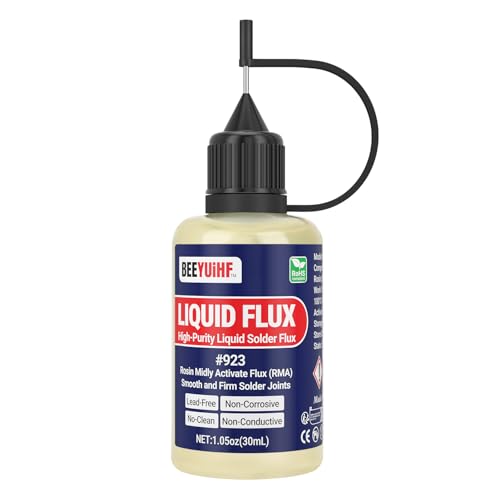
The squeeze-bottle format gives this liquid flux a small usability edge over a basic dropper. The listing includes two tapered tips and a sealing cap, allowing the user to direct the flow more carefully onto a connector, PCB pad, or cable end. It contains 30 mL of RMA liquid flux, and the product information describes it as high-purity rosin with no lead, halogens, or chlorides.
Its stated uses stretch from ordinary electronics repair to audio connectors, PCB soldering, SMD work, desoldering, and SMT rework. The formula is also described as non-corrosive and non-conductive after drying. Those claims support its intended electronics use, but they do not remove the need to control application and inspect the board after soldering, especially around fine-pitch components.
Pros
- Two tapered tips support more directed liquid placement.
- RMA rosin formula is listed for electronics and rework.
- 30 mL squeeze bottle is easy to store and dispense.
- Listed as lead-free, chloride-free, and halogen-free.
- Broad stated use range includes PCB, SMD, and audio connector work.
Cons
- Liquid consistency may still spread more than paste on vertical or crowded surfaces.
- The product information does not specify a measured activity range.
Pick this bottle if you like liquid flux but want more control than a wide-opening applicator provides. It is a sensible middle ground for cable repair and board work, while a syringe paste remains better for placing a tiny bead on one SMD pad. The included tips are useful, but check their fit and keep them sealed so the dispensing path does not dry out.
To buy this product, click here.
4. No Clean Solder Flux Paste, 4-Pack — Best for Precision Repairs

Small repairs often go better when flux stays in place instead of creeping under nearby components. This package contains four 10cc syringes with two fine tips, and the listing positions the paste for PCB, SMD, SMT, phone, appliance, and instrument repairs. The syringe format makes it easier to place a measured dab on a tight pad or along a solder bridge without coating the surrounding board.
The product information describes a high-activity rosin formula that is lead-free, halogen-free, and non-corrosive when used as directed. It also states that the paste leaves minimal residue and may be stored at room temperature for up to 12 months before use when kept away from heat and sunlight. That quantity suits a repair station with regular projects, though four containers require careful resealing to prevent drying.
Pros
- Four 10cc syringes provide separated portions for ongoing work.
- Fine tips support controlled placement on small pads.
- Listed for PCB, SMD, SMT, and general electronics repair.
- Lead-free, halogen-free, no-clean rosin formulation.
- Product information includes storage and resealing guidance.
Cons
- Paste can thicken in very cold conditions according to the listing.
- Syringes need tight recapping to limit drying between projects.
This is a strong match for detailed board repair where the difference between a tiny dab and a spreading puddle matters. It offers more supply than a single small syringe and more placement control than a jar. Buyers working on broad wire joints may find liquid flux faster, but the four-pack is more compelling for repeated SMD and rework sessions.
To buy this product, click here.
5. Crivon Flux Paste and Desoldering Wick Kit — Best Complete Rework Kit

A repair bench often needs to add solder, remove solder, and correct a bridge within the same five-minute stretch. This Crivon kit pairs no-clean rosin paste in a syringe with copper desoldering braid, creating a practical apply-and-remove setup for PCB rework. The listing says the paste stays stable on traces and supports controlled dispensing, which is useful around SMD parts where excess flux is easy to spread.
The included wick is intended to absorb excess solder during component replacement and bridge removal. That makes the kit more useful than a flux container alone for repairs involving mistakes or old joints. The listing supports PCB, SMD, microelectronics, and general electrical work, although it does not give a braid width or total length, so buyers who need a specific wick size should verify the current package details.
Pros
- Combines no-clean rosin paste with desoldering braid.
- Syringe format supports controlled placement on pads and traces.
- Useful for solder application, bridge removal, and component rework.
- Listed for PCB, SMD, and microelectronics tasks.
- Low-residue positioning may reduce routine cleanup.
Cons
- The listing does not clearly specify the wick length or width.
- Combined kits may offer less standalone flux quantity than a large jar.
Choose Crivon if your typical project includes corrections as well as fresh joints. The convenience comes from having both tools ready, while the trade-off is less certainty about braid dimensions than with the Lesnow kit below. For a compact repair pouch or occasional board work, this pairing keeps the workflow moving without requiring separate purchases.
To buy this product, click here.
6. 2 Jar Rosin Soldering Flux — Best for Larger Quantities

Two jars can be appealing when flux is used frequently on wire, board, and repair work rather than opened once for a single project. This package provides two 35-gram jars, for 70 grams total according to the listing. The semi-solid rosin paste is described as resistant to tipping and suitable for electronics, repair, rework, and several metals including copper, tin, and iron.
The available information emphasizes non-corrosive, non-conductive dry residue and oxidation resistance. Those characteristics fit the needs of general electronics soldering, while the jar format makes repeated dipping or brush application straightforward. The listing does not identify a formal R, RMA, or RA classification, so shoppers who need a specific flux chemistry should favor SRA 135 or one of the clearly labeled RMA liquids.
Pros
- Two 35-gram jars provide a substantial combined quantity.
- Semi-solid texture is less prone to spilling than liquid flux.
- Listed for lead-free electronics soldering and rework.
- Suitable for copper, tin, iron, and other listed metals.
- Rosin paste is described as non-corrosive and non-conductive when dry.
Cons
- Flux classification is not clearly identified in the product information.
- Jar application is less precise than a syringe for fine-pitch work.
This package suits a workshop that values quantity and simple access over ultra-fine placement. It is a reasonable pick for broad joints, repeated wire work, and general board repairs. Skip it if a specific chemistry classification or narrow applicator is central to your decision, since the listing leaves those details open.
To buy this product, click here.
7. 10g Solder Flux Paste — Best Budget-Size Tin
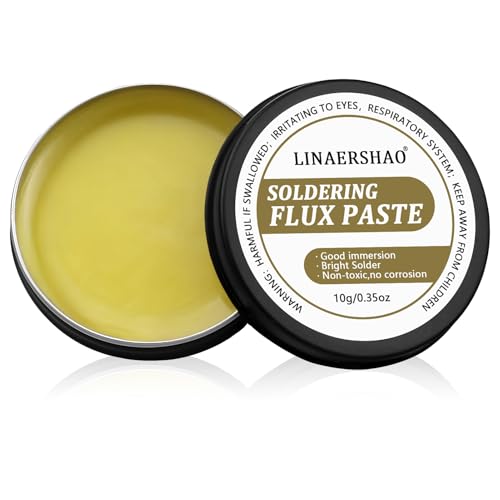
A small tin can be enough for the occasional controller repair, cable joint, or motherboard touch-up. This product contains 10 grams of yellow flux paste in a metal tin, and the listing says it can be applied by squeezing, brushing, using a cotton swab, or dipping. That flexibility is handy when one project involves both a visible wire joint and a smaller board pad.
The product information describes good wetting and weldability, minimal residue, little smoke, and no irritating odor. Its listed applications include mobile phone repairs, computer motherboards, and home appliances. Those statements make it a practical low-quantity option, but the listing does not specify a formal flux classification or detailed chemistry, which limits how confidently it can be matched to specialized work.
Pros
- Compact 10-gram quantity suits occasional repairs.
- Metal tin provides a straightforward storage format.
- Can be applied by brush, cotton swab, squeeze, or dipping.
- Listed for phones, motherboards, appliances, and general repairs.
- Product information describes minimal residue and low smoke.
Cons
- Small quantity is less suitable for frequent high-volume work.
- Flux chemistry and formal classification are not clearly specified.
This is a sensible entry point for a small toolbox where a large jar would sit unused for months. Its broad application guidance is useful, but the lack of a named classification means it is best treated as a general-purpose electronics paste rather than a chemistry-specific choice. Apply sparingly and clean the work area according to the needs of the board and flux residue.
To buy this product, click here.
8. Kaisiking Flux and Desoldering Wick — Best Compact Rework Kit

Kaisiking combines 10cc of no-clean flux paste with 3 meters of 0.1-inch braided desoldering wick. The defined braid width and length make this kit easier to plan around than a bundle with unspecified wick dimensions. The listing describes the copper braid as high absorption and the paste as high-activity rosin intended to help with oxidized PCB surfaces.
The syringe receives particular attention in the product information, which describes a slightly narrower plunger design intended to reduce friction and blockage. That could be useful for controlled applications, although the claim is listing-based rather than an independently measured result. With both flux and wick in one compact package, the kit is suited to board corrections, SMD work, and portable repair storage.
Pros
- Includes 10cc of no-clean paste and 3 meters of wick.
- Wick width is listed as 0.1 inch for predictable sizing.
- Syringe design is intended to support steady dispensing.
- Suitable for PCB repair, SMD work, and rework according to the listing.
- Compact combination supports both soldering and desoldering.
Cons
- Flux quantity is smaller than the jarred options in this roundup.
- Users who need a different braid width may need a separate wick.
Pick Kaisiking for a small repair case where defined wick dimensions matter and the flux syringe will see occasional detailed use. It gives a clearer desoldering specification than the Crivon kit, but less paste than the four-syringe package. The result is a focused rework companion rather than a high-volume flux supply.
To buy this product, click here.
9. Lesnow Flux Paste and Wick Braid — Best for Longer Desoldering Braid

Lesnow is aimed at repairs where desoldering braid gets used repeatedly. The package includes 10cc of no-clean flux paste and approximately 10 feet of 0.1-inch-wide wick, giving it a longer stated braid supply than the Kaisiking kit. The product information describes a woven copper construction intended to improve capillary action and solder absorption during PCB corrections.
The kit is described for removing relays, computer parts, old wires, and mechanical keyboard switches, as well as correcting mistakes on small boards. Its halogen-free, non-corrosive paste is positioned as a support for solder removal without damaging components. The long braid is the main reason to choose it, while the smaller 10cc flux quantity makes it less attractive as a standalone everyday paste.
Pros
- Includes approximately 10 feet of 0.1-inch desoldering wick.
- Copper braid construction is described as improving solder absorption.
- Contains 10cc of no-clean flux paste.
- Suitable for PCB corrections, wire removal, and switch rework.
- Flux is listed as halogen-free and non-corrosive.
Cons
- Flux quantity is limited compared with jarred products.
- The kit is more focused on desoldering than broad liquid-flux application.
Lesnow makes sense for a repair drawer that goes through braid quickly, particularly during through-hole corrections or repeated component removal. Buyers seeking a single flux for delicate placement may prefer the four-pack syringe product. Choose this kit when the stated 10-foot braid supply is more useful than having a larger container of paste.
To buy this product, click here.
Buying Guide
Flux Chemistry Should Match the Electronics Application
RMA, RA, and general rosin labels tell you more than a vague promise of “strong soldering.” SRA 135 is identified as RA, while the liquid products from the top of this list use RMA descriptions. RA flux can offer stronger oxide activity, while RMA is often chosen for a milder electronics-focused approach. The available product information does not provide a full chemical datasheet for every item, so avoid treating similar-looking jars as chemically identical.
Liquid, Paste, and Syringe Formats Behave Differently
Liquid flux spreads quickly and can reach wire strands, broad pads, and desoldering braid. Paste stays where it is placed and works well for a single joint or larger contact. Syringes offer the most deliberate placement around fine-pitch components, though the nozzle must be capped properly to limit drying. A bottle is convenient for coverage, while a syringe is better for restraint.
No-Clean Does Not Mean Every Board Needs Zero Cleanup
No-clean products are marketed around minimal residue and reduced post-soldering work. That can be convenient, but residue appearance, board sensitivity, and the repair environment still matter. A small amount of residue may be acceptable for one repair and undesirable on another. Follow the product directions, avoid flooding the board, and inspect the finished joint rather than assuming the label settles every cleaning question.
Application Control Matters Around SMD Components
Dense boards punish over-application. A fine syringe tip or tapered liquid tip helps place flux close to the joint without wetting a large area. The four-pack syringe product is especially suited to this kind of work because its listing identifies fine tips and SMD applications. For wide copper wire or larger pads, a jar or dropper may be faster and easier.
Quantity Has a Practical Role
A 10-gram tin is sensible for occasional repairs, while two 35-gram jars or a 2-ounce container better suit repeated bench work. Flux kits trade standalone quantity for the convenience of including desoldering braid. Check whether your projects consume more flux or more wick. A long braid package is useful only if the flux format also fits how you apply it.
Electronics Flux Is Different From Plumbing Flux
The products in this roundup are positioned for electronics, PCB, wire, or rework applications. Do not substitute an unidentified plumbing flux for board work simply because both products are called flux. Electronics repairs need a formulation and residue profile appropriate for electrical connections. The listing data here specifically identifies several products as acid-free, rosin, RMA, RA, halogen-free, or intended for electronics, which is more useful than a generic label.
Best Soldering Flux FAQ
What type of flux is best for electronics?
Rosin, RMA, and RA formulations labeled for electronics are the most relevant choices in this roundup. RMA liquid flux is useful for spreading over pads and wires, while RA paste can provide stronger activity and controlled placement. The right choice depends on the joint, the amount of oxidation, and how much residue management the project allows.
Is liquid or paste flux better?
Liquid flux is usually easier to spread across wire ends, broad pads, and desoldering braid. Paste is easier to keep on one joint and is less likely to run across a crowded board. Syringe paste gives the tightest control for SMD repair. Neither format is universally better, so match the consistency to the work area.
Can soldering flux be used with lead-free solder?
Several products here specifically state compatibility with lead-free solder, including SRA 135 and the liquid RMA options. Lead-free joints can require careful heat management and clean surfaces, but flux alone does not replace correct iron technique. Confirm the product listing if lead-free compatibility is a central requirement.
Does no-clean flux need to be cleaned?
No-clean flux is intended to leave limited residue and reduce the need for routine cleaning, but the label is not a guarantee that every board should remain untouched. Inspect the finished work, follow the product directions, and clean when residue is excessive, sticky, visually distracting, or unsuitable for the application.
Is rosin flux non-conductive?
The product information for several rosin options describes dry residue as non-conductive. That claim applies to the listed formulation and its dry state. Avoid using the statement as a reason to flood a circuit board, since excess residue can still interfere with inspection, maintenance, or the appearance of a repair.
What flux works best for desoldering wick?
Liquid flux can spread along the braid and help it contact an oxidized joint, while paste can stay concentrated on a specific connection. The Liquid RMA Dropper is suited to flowing application, and the Crivon, Kaisiking, and Lesnow kits include both flux and wick for this workflow. Use only enough flux to support the joint and avoid unnecessary board contamination.
Can I use electronics flux on copper wire?
Yes, several products are listed for copper wire, including SRA 135 and the liquid RMA options. A paste can be useful when dipping or coating a wire end, while liquid can wick between strands. Clean the wire first, apply a small amount, and let the solder flow through the joint rather than relying on a large pool of flux.
Final Verdict
SRA Solder 135 Rosin Paste is the strongest overall choice in this group because it combines a controlled semi-solid texture, a clearly identified RA electronics formulation, a stated active temperature range, and compatibility with leaded and lead-free solder. It is broad enough for PCB repair and copper wire without forcing every job into a liquid or syringe format. The Liquid RMA Dropper is the better alternative for spreading flux across wires, pads, and desoldering braid, while BEEYUIHF adds tapered-tip control for users who prefer a squeeze bottle.
For fine SMD work and repeated repairs, the four-pack syringe paste offers the most deliberate placement and a useful supply of separate containers. Crivon, Kaisiking, and Lesnow make more sense when desoldering is part of the regular workflow, with Lesnow offering the longest stated braid supply. Smaller jobs can stay with the 10g tin, while the two-jar option is better suited to a busy bench. Match the flux chemistry, consistency, quantity, and cleanup expectations to the board in front of you, then apply the smallest amount that helps the solder wet the joint cleanly.

- Jesse
Jesse is the editor behind Soldering Gear, where he covers soldering irons, stations, rework equipment, and the tools that belong on a practical electronics bench. His work focuses on comparing product specifications, features, compatibility, and intended uses so readers can make more informed buying decisions.
- Best Cordless Soldering Iron: 9 Picks in 2026 September 28, 2026
- Best Portable Soldering Iron: 9 Picks in 2026 September 27, 2026
- What Temperature for Soldering Electronics? September 26, 2026
- Best Soldering Station for Beginners: 9 Picks in 2026 September 25, 2026
- Best Solder Fume Extractor: 9 Picks in 2026 September 24, 2026